By Sir Paul Nwosu PhD || AlphaTimes
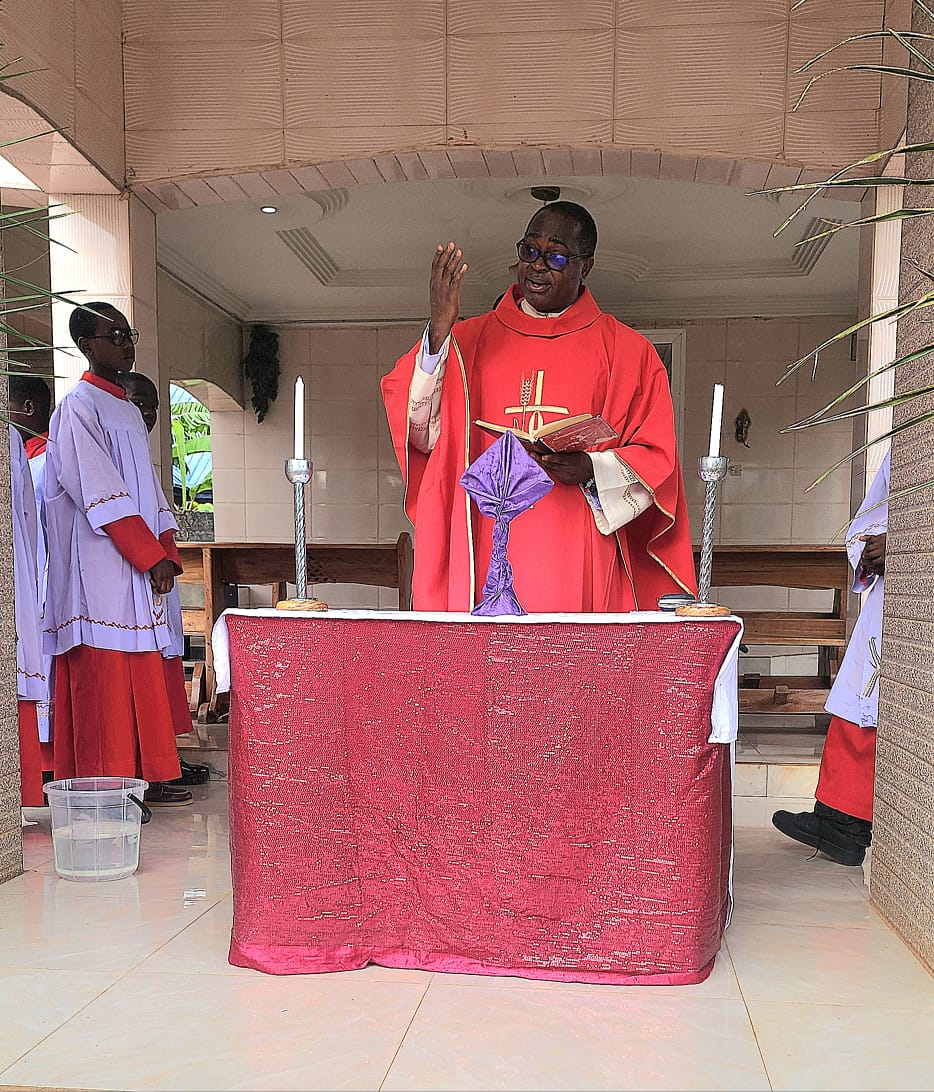
At the Marian Grotto of the Sacred Heart Chaplaincy, Ngozika, Fr. Maximus Okonkwo delivered a brief yet deeply reflective homily that set a solemn and fitting tone for Palm Sunday.
Drawing from the Gospel of Matthew (2:2–11), he urged the faithful to fully embrace the spiritual demands of the Lenten season by actively participating in the sacred activities of Holy Week, from Palm Sunday through the Easter Triduum to the joy of Resurrection Day. According to him, the sobriety and sacredness of this period must be evident not only in worship but also in our relationships with others.
To drive home this message, Fr. Okonkwo recalled a powerful episode from Things Fall Apart by Chinua Achebe. He referenced the incident in which Okonkwo violated the Week of Peace by beating his wife, an act considered a grave offense in his community. The severe punishment that followed underscored the seriousness with which even traditional societies observe sacred periods. If adherents of indigenous religion could be so disciplined, he argued, Christians, who worship the living God, ought to demonstrate even greater reverence and commitment to the Holy Week.

Reflecting on the Passion narrative, which he described as “Christological hymns”, Fr. Okonkwo examined key figures whose actions mirror both the frailties and strengths of human nature.
He began with Judas, noting that he left before the conclusion of the Last Supper, the first Mass Jesus Christ held. Drawing a contemporary parallel, Fr. Okonkwo warned that Christians who leave Mass before the final blessing are walking in the footsteps of Judas thereby missing the fullness of grace.
He then turned to Peter, who denied Jesus Christ out of fear. Unlike Judas, however, Peter repented bitterly and sought forgiveness. Judas, in contrast, compounded his betrayal by taking his own life. The lesson, Fr. Okonkwo stressed, is clear: God’s mercy is always available, but only to those who seek it.
Another figure he highlighted was Pontius Pilate, who recognized the truth yet chose convenience over justice, symbolically washing his hands of responsibility. Fr. Okonkwo likened this to modern political realities, where truth is often ignored or manipulated, and rightful outcomes are delayed or denied through institutional compromise. The “Pontius Pilate syndrome,” he warned, remains very much alive.
He also contrasted the two thieves crucified alongside Christ, one repentant and granted immediate mercy, the other defiant and unyielding, and got what he deserved.
Fr. Okonkwo challenged the congregation to engage in honest self-examination: Are we like the accusers who condemned Christ? Like Judas who betrayed Him? Or like Peter who faltered but returned? Are we like Pilate, who sees the truth yet refuses to stand by it?
He concluded by pointing to the examples of those who acted with courage and compassion, figures like Joseph of Arimathea and the faithful women who stood by Christ even in death. These, he urged, are the models Christians should emulate: steadfast, reflective and faithful until the end.
Fr. Maximus Okonkwo’s homily was a timely spiritual wake-up call. As Holy Week unfolds, it invites every believer to move beyond routine observance into sincere reflection and transformation. The message is simple but profound: this is the time to rethink, to self-correct and to retrace our steps so that, like the faithful few, we may journey with Christ not only to the Cross, but also to the glory of the Resurrection.