By Paul Nwosu
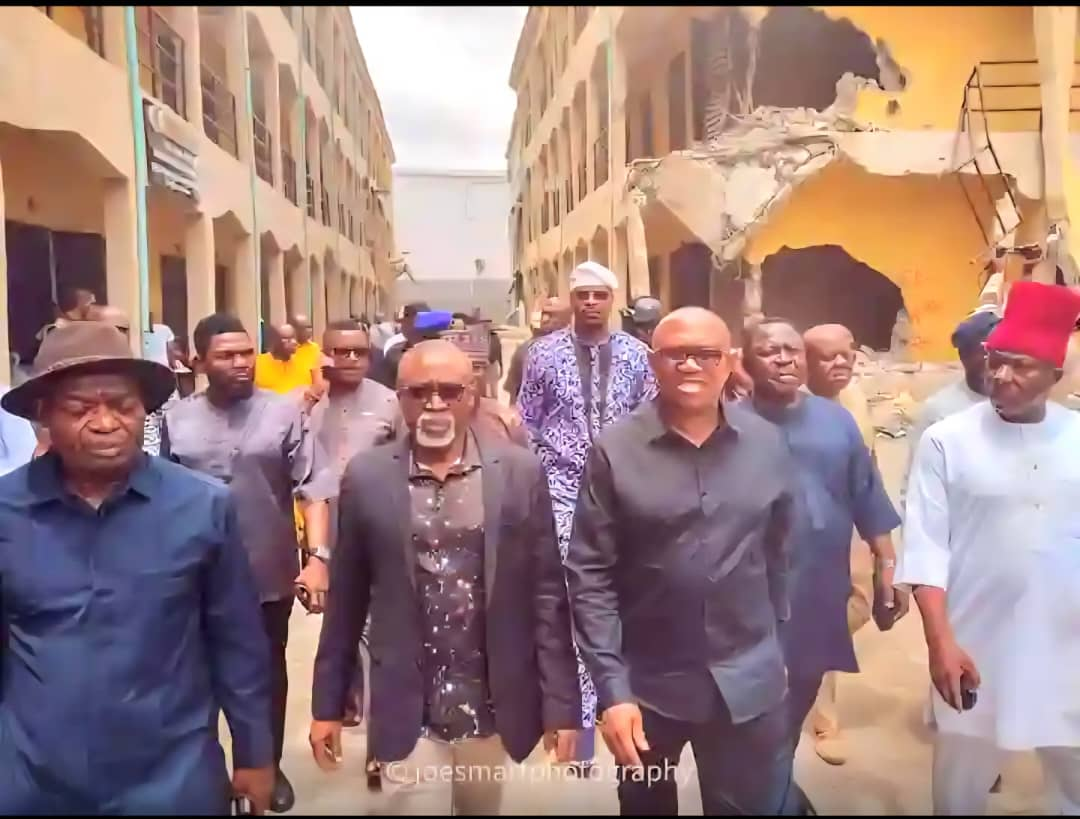
The ruins stretched endlessly across the once-bustling ASPAMDA Market at the Lagos International Trade Fair Complex. Shattered walls and mangled steel told a story of lives upended, dreams wrecked, and futures thrown into uncertainty.
It was here, among the dust and debris, that Peter Obi arrived, joined by Senators Enyinnaya Abaribe, Victor Umeh, Tony Nwoye, Col. Austin Akobundu, members of the House of Representatives, Segun Sowonmi, George Adegeye, Labour Party’s Lagos gubernatorial candidate Gbadebo Rhodes-Vivour, and Obidient Movement coordinator Tanko Yunusa.
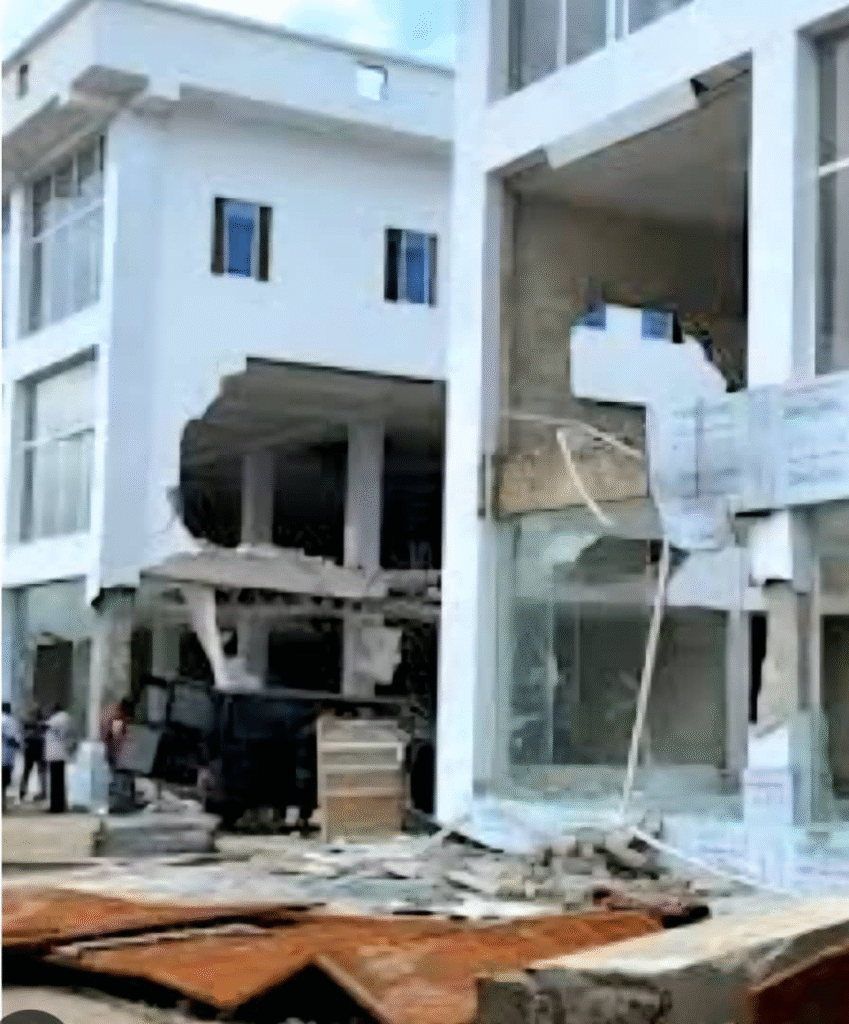
Together, they walked silently through the broken landscape, where plazas that once housed thriving businesses had been reduced to rubble, despite traders insisting they had obtained all requisite government approvals before construction. Have the authorities bothered to investigate their claim? If they did, what is the outcome?
What startled Obi was not only the magnitude of destruction but also the composure of the victims. Traders who had invested their life savings, often secured through punishing loans, showed remarkable restraint.
“I must commend them for their calm in the face of such painful loss,” Obi said, his voice heavy with emotion. “To destroy such legitimate investments without due process is not only unjust but economically destructive.”
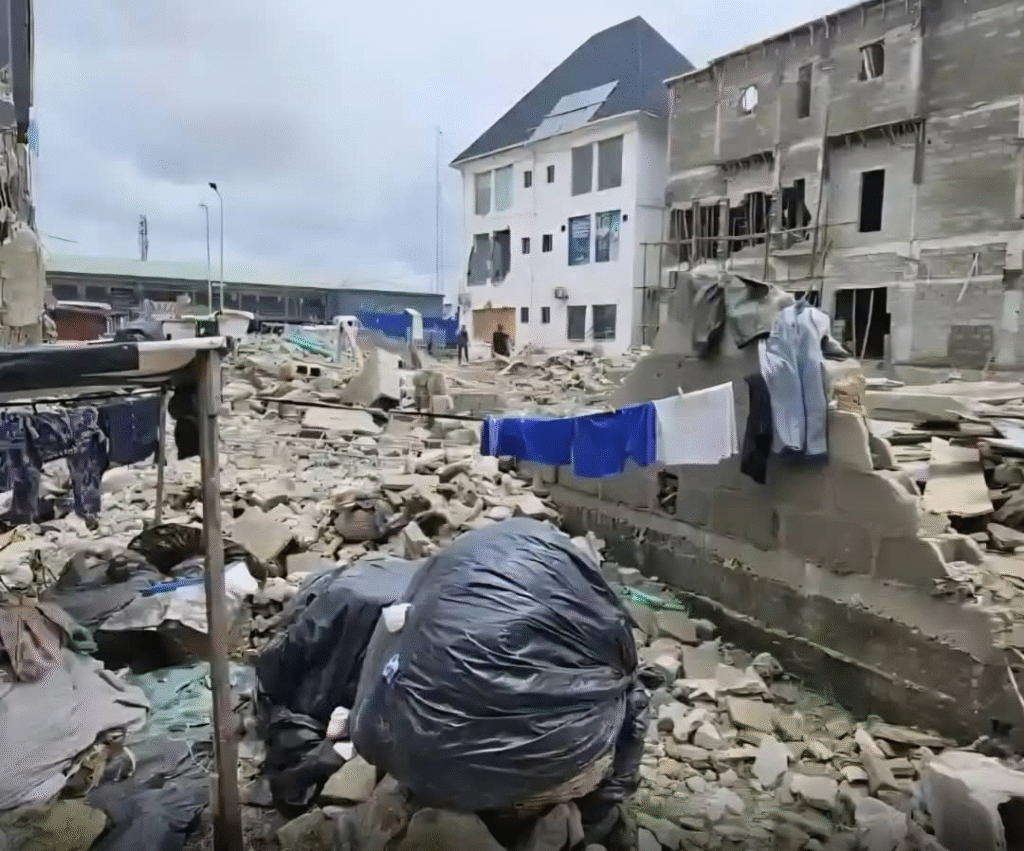
He spoke of the countless families whose livelihoods have now been cut adrift. The ripple effect, he warned, would stretch far beyond Lagos, back to the South-East, where the sweat and toil of these traders sustain schools, hospitals, and entire communities.
For decades, ASPAMDA was more than a marketplace. It was a symbol of Igbo enterprise, of resilience, of the will to build in the face of adversity. Its sudden demolition, many argue, is not just an attack on businesses but a strike against the very spirit of productivity Nigeria desperately needs.
“How do we preach investment abroad while dismantling it at home?” Obi asked pointedly. “A society that seeks progress must protect enterprise, encourage productivity, and defend the dignity of its citizens.”
The Senators and Representatives who accompanied Obi pledged to probe the circumstances surrounding the demolition. They vowed to uncover the truth and ensure that such selective clampdowns on legitimate enterprise do not recur.
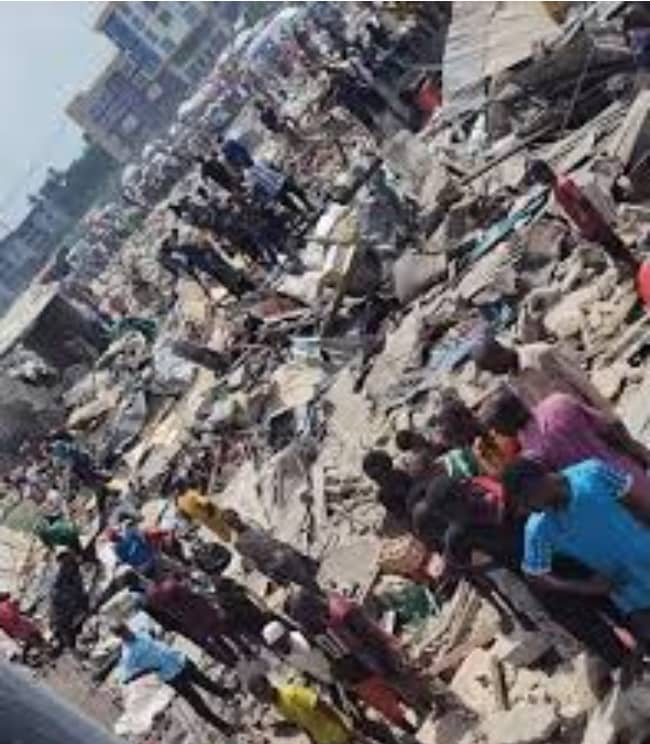
But for Obi, it is both ironical and morally indefensible that a country which claims to be open for business is brazenly destroying the sweat of its own citizens.
Let’s face it; the ASPAMDA tragedy is more than Lagos’ problem. It is a South-East problem, an Igbo problem, a Nigerian problem. The demolished plazas represent not just collapsed buildings but collapsed hopes for thousands whose economic lifelines are tethered to this market.
That is why Obi and the legislators’ visit has thrown up a greater responsibility. The South-East governors, as custodians of the welfare of their people, must rise above political rivalries and petty divisions. They must prevail on President Bola Ahmed Tinubu, who travels the globe shopping for investors, to first protect the ones he already has at home.
For what credibility does Nigeria’s investment drive hold if Igbo investments in Lagos are left vulnerable to what many traders describe as selective and punitive destruction?
The ruins of ASPAMDA stand today as more than broken walls. They are a test of Nigeria’s justice, a test of its compassion, and a test of its sincerity about fairness and unity.
If the nation truly seeks stability, shared prosperity, and the confidence of investors, incidents like this must have no place in its future.
And as Obi reminded us, in words that resonate deeply amid the wreckage: A new Nigeria is possible.
*Paul Nwosu PhD writes from Awka