By Paul Nwosu PhD || AlphaTimes
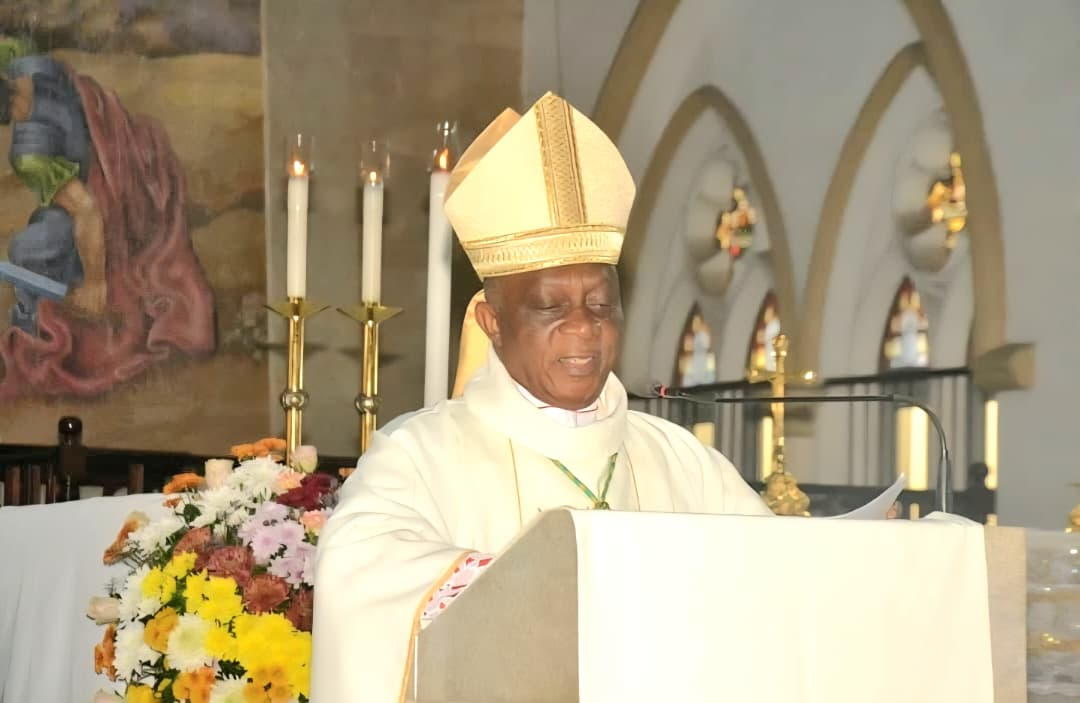
The 60th World Day of Social Communications was solemnly marked in the Archdiocese of Lagos with a Holy Mass celebrated by His Grace, Most Reverend Dr Alfred Adewale Martins, Archbishop of the Metropolitan See of Lagos, who used the occasion to amplify the urgent warning of Pope Leo XIV on the dangers posed by the unchecked rise of artificial intelligence and digital technology.
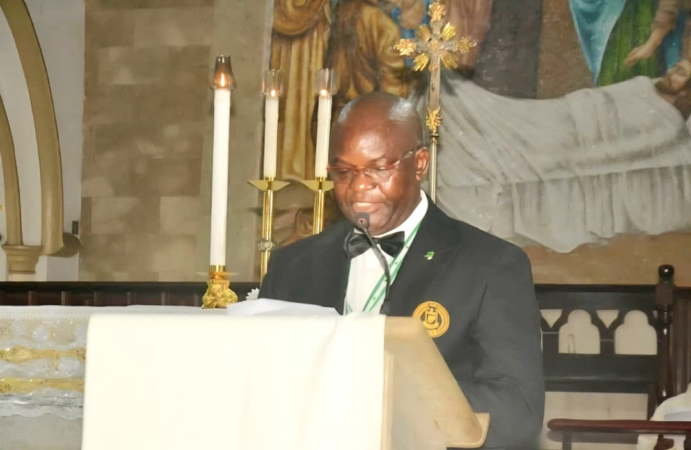
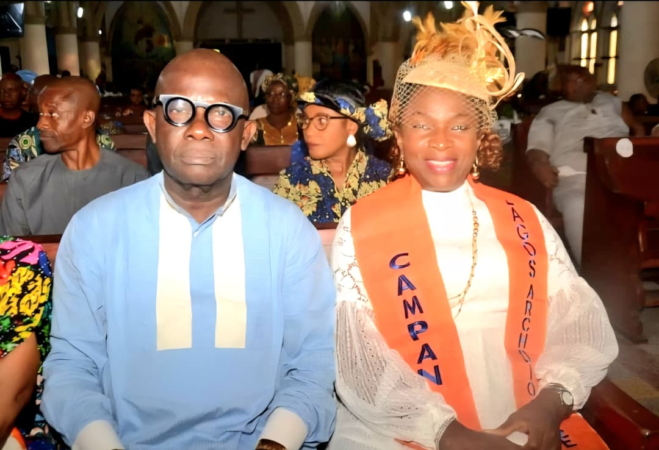
The celebration drew members of SIGNIS, the umbrella body of the Catholic Media Association of Nigeria (CAMPAN), alongside the Catholic Actors and Entertainers Association of Nigeria (CAEAN), who processed to the altar carrying their professional tools for blessing by the Archbishop.
Also present at the Mass was Sir Nosa Ehigiator, Metropolitan Grand Knight of the Lagos Metropolitan Council of the Knights of Saint Mulumba, who actively participated in the liturgy with members of his executive. During the homily, Archbishop Martins invited him to read the Pope’s message for the global celebration.

In the strongly worded message titled “Preserving Human Voices and Faces,” Pope Leo XIV raised alarm over the growing influence of artificial intelligence, warning that humanity risks losing its identity, creativity and authentic relationships if technology is allowed to dominate human interaction unchecked.

The Pontiff described human faces and voices as sacred gifts from God that reveal the uniqueness and dignity of every person. According to him, preserving these human features means preserving the divine image imprinted on humanity.
He warned that artificial intelligence systems are increasingly simulating human emotions, wisdom, relationships, and even creativity, thereby threatening the very foundation of human civilization.
“The challenge is not technological, but anthropological,” the Pope declared, stressing that safeguarding human faces and voices ultimately means safeguarding humanity itself.
Pope Leo XIV criticized social media algorithms designed solely to maximize engagement and profit, saying they reward outrage, shallow emotions, and division while discouraging critical thinking and meaningful reflection. He lamented that many people now depend on AI as an “omniscient friend” and “oracle of advice,” a trend he said could gradually weaken human intelligence, imagination and emotional depth.
He also expressed concern over AI-generated texts, music, videos and images, warning that human creativity is increasingly being replaced by anonymous machine-produced content. According to him, masterpieces of human genius are now being reduced to mere training material for machines.
The Pope further cautioned against the deceptive nature of AI-powered chatbots and virtual influencers, noting that many people can no longer distinguish whether they are interacting with real humans or automated systems designed to manipulate emotions and behavior.
He warned that technologies exploiting humanity’s desire for relationships could damage not only individuals but also the social and political fabric of society.
Another major danger identified in the message was the spread of misinformation, deepfakes and manipulated realities. The Pontiff noted that AI systems can fabricate convincing falsehoods capable of distorting truth, rewriting history, and eroding public trust.
Without transparency and proper regulation, he warned, a small group of powerful technology companies could gain enormous control over human thought, public debate, and even historical narratives.
To address these dangers, Pope Leo XIV proposed what he called a “possible alliance” between humanity and technology, anchored on three pillars: responsibility, cooperation, and education.
He called on tech companies to prioritize the common good above profit, urged lawmakers to regulate AI in defense of human dignity, and challenged media organizations to uphold truth and transparency rather than chase online engagement.
The Pope also advocated urgent introduction of media, information and AI literacy in schools and communities, especially for young people, so that society can better understand how algorithms shape perception, manipulate behavior and influence reality.
He emphasized the need to protect people’s images, voices and identities from abuse through cyberbullying, digital fraud, and deepfake technology.
“We need faces and voices to speak for people again,” the Pope declared. “We need to cherish the gift of communication as the deepest truth of humanity.”
The message resonated strongly with Catholic communicators and media practitioners gathered in Lagos, many of whom described it as a timely intervention in an age increasingly dominated by artificial intelligence and digital manipulation.