By Paul Nwosu PhD
When some public affairs commentators say some of our leaders don’t love the led, I’m inclined to believe them. When you mingle among ordinary Nigerians and experience their pain and agony over the lack of basic infrastructural amenities that are taken for granted even in poorer neighbouring countries, you begin to understand what informs these critics’ portrayal of our leaders in this manner.
My recent trip to Lagos by road was an ordeal, a harrowing experience unlike any I have ever had. The journey started from Awka through Onitsha into Asaba, where it was punctuated by diversions and meanderings through both tarred and untarred streets and lanes within the capital to avoid the cratered federal expressway, which has become a “Strait of Hormuz” with artificial mini lakes and ponds, making it difficult for drivers to know how to navigate without sinking. Since every vehicle was looking for an “Appian Way” to avoid the now destructive expressway, traffic jams developed in almost every alleyway inside Asaba. By the time we emerged onto the upper end of the expressway, it was already 11:30 a.m., even though we had left Awka at 7:10 a.m.
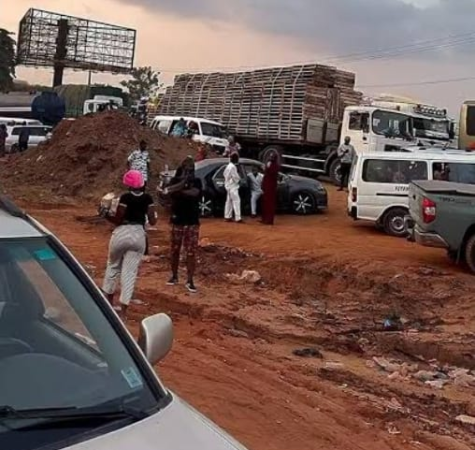
As we continued, the bus driver zigzagged from one side of the expressway to the other to avoid sections where the asphalt had been washed away and gradually turned into trenches. As we approached the Benin Bypass junction, traffic became chaotic. And because of the suspended roadworks, there are excavated earth rubbles here-and-there, scattered boulders, prefabricated concrete slabs and granite deposits, causing vehicles to frantically search for available spaces to meander through the sludge. Articulated trucks (trailers) and lorries we colloquially call “911” were toppling like packs of cards, spilling their cargoes, while others got stuck in the thick mud.
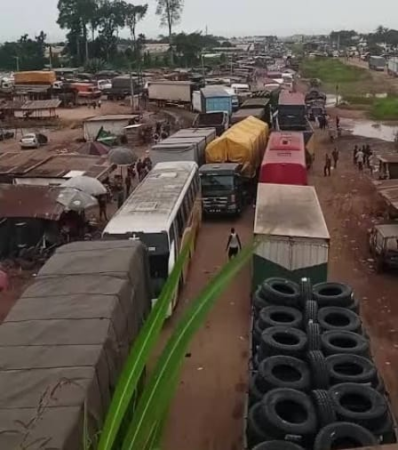
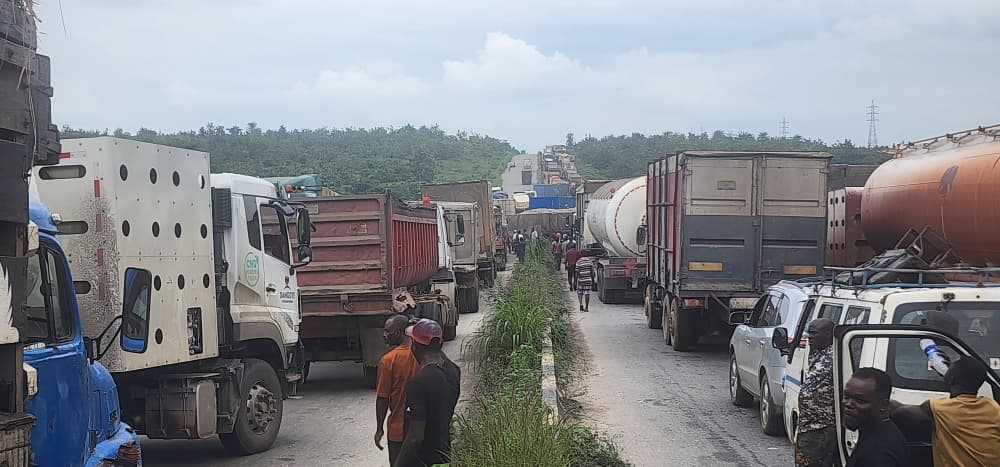
Those of us who survived the bypass axis did not know that an even greater ordeal lay ahead. Just before Okada, we encountered the mother of all gridlocks, a complete standstill. There was no movement. Passengers had to alight from their vehicles. The line of vehicles stretched as far as the eye could see. We were sitting ducks, and had bandits or kidnappers emerged from the forests on both sides of the road, they would have struck a gold mine, walking away unchallenged with a huge harvest of victims. But God was merciful. We spent a total of 4 hours and 56 minutes before the vehicles gradually began to snail forward. To cut a long story short, we finally arrived in Lagos at 11:12 p.m.
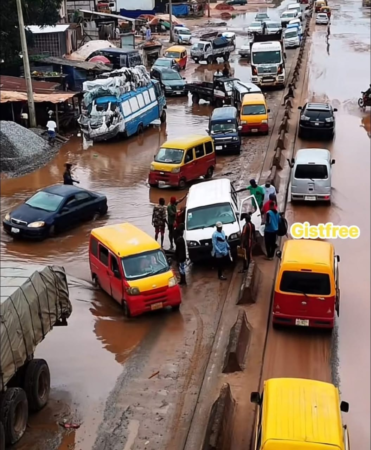
With this kind of harrowing experience, who can blame public affairs commentators and analysts who continue to question the wisdom of spending whopping sums on constructing the Coastal Highway instead of fixing existing federal highways that facilitate the smooth movement of commuters and goods?
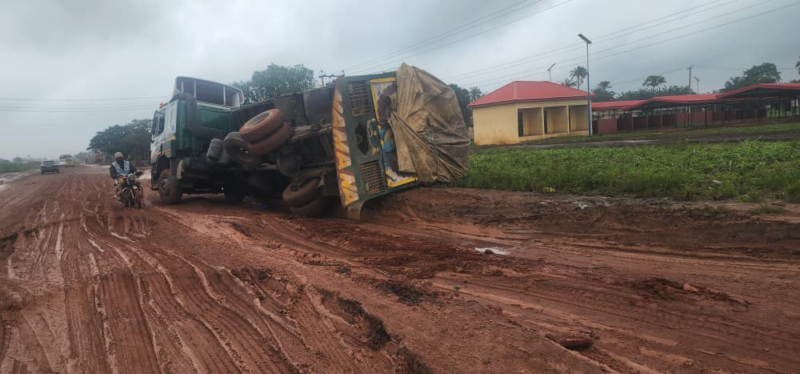
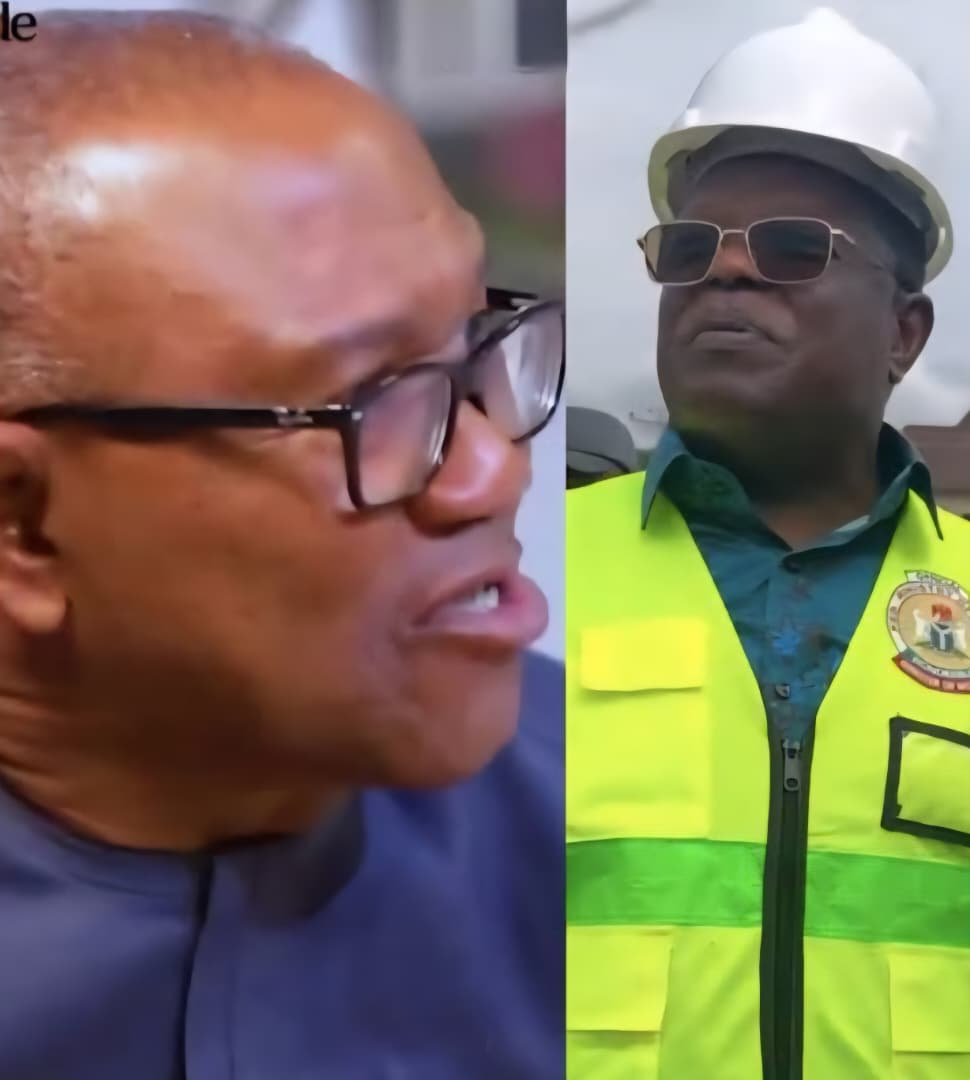
When Peter Obi commented on the horrible state of the road, he was excoriated and accused of playing politics with bad roads. Having experienced it myself, I can say this is not about opposition politics. People are suffering, and goods are damaged daily because of this deplorable road. But because many of our political leaders do not travel this route, they have little understanding of what ordinary Nigerians are talking about or the urgency of the situation. Whenever people cry out, David Umahi pontificates about the Coastal Highway as though, when it is eventually completed, which may still be a long way off, all our transportation problems will suddenly disappear.
Some analysts have put it succinctly: our leaders cannot give what they do not have. It is difficult to appreciate an experience you have never gone through. That is why, when people cry out, leaders assume they are exaggerating or acting on behalf of political opponents. Instead, they rely on reports from sycophantic field lieutenants whose contaminated feedbacks bear little resemblance to the realities on the ground. And because they lack the true picture of what is happening, they, like Emperor Nero, continue to fiddle while the country suffers.
It is impossible for the President to be everywhere, but he must have trusted aids whose duty is to tell him the brutal truth about the state of the nation, not hypocrites who will sweet-talk him to perdition.
The ordinary Nigerian is not asking for much. Provide a secure environment and basic infrastructure that allow people to go about their daily businesses without fear of molestation, kidnapping or being killed, and they will care little about what happens in the corridors of power.
Former Governor of Imo State, Chief Ikedi Ohakim, said something that struck a chord with me during an award presentation ceremony organised years ago by the Brand Journalists Association of Nigeria (BJAN). He summarised the purpose of government in one sentence: “The essence of government is to make the people happy.” If the majority of the people are not happy, then government has failed.
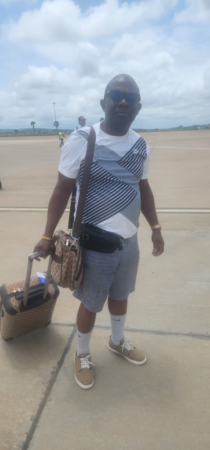
To cut a long story short, I had to return to Anambra by air to avoid the debilitating traffic gridlock. But even the air travel was threatened by aviation labour unions a couple of days ago. Very soon we will all resort to witchcraft so that we can fly by night unhindered to our different destinations.
May God help us.