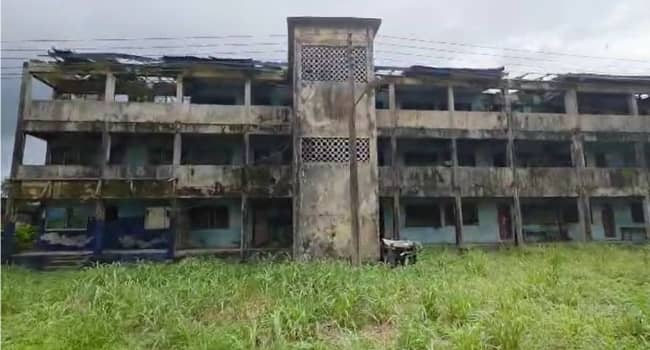

When the Presidential Committee on Security Training Institutions set out on its recent inspection tour following the presentation and approval by the National Economic Council (NEC) of a proposal from the Minister of Budget and National Planning, no one imagined the findings would be this damning. What the committee uncovered across several training schools of Nigeria’s key security agencies was not just physical rot, but a metaphor for the country’s moral and institutional decay.
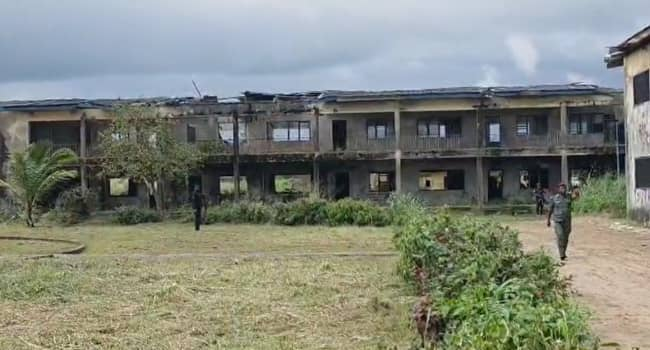
Cracked walls, leaking roofs, hostels without running water, and parade grounds carpeted by tall weeds. These are not scenes from an abandoned project, but the very facilities where the men and women tasked with protecting Nigeria are “trained.” In some instances, the committee found entire dormitories unfit for human habitation and firing ranges long collapsed or turned into farmlands by nearby communities.
The shocking state of these training facilities, insiders say, did not happen overnight. They are the tragic consequences of decades of criminal neglect by successive administrations, especially since the return to democratic rule in 1999. Governments came and went, each one chanting reform, while the foundations of our security institutions crumbled beneath the weight of corruption, indifference and misplaced priorities.
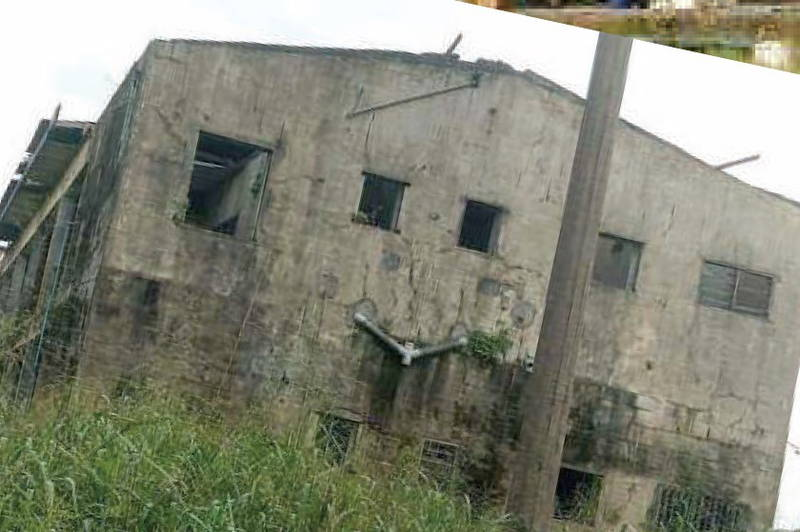
No wonder Nigeria keeps producing half-baked security operatives, ill-equipped, ill-motivated, and poorly trained to meet the complex challenges of modern security. As the committee’s findings show, how can discipline, strategy, or professionalism thrive when recruits live and learn in conditions worse than prisons?
An old proverb warns that, “What you sow is what you reap.” A nation that neglects the training of its protectors is, in effect, grooming its own insecurity.
From the police colleges in Lagos and Kaduna to paramilitary training centres in Abuja, Bauchi, and Owerri, the pattern was disturbingly consistent, collapsed classrooms, broken furniture, no teaching aids and parade grounds now overrun by grass. Officers who spoke to the committee lamented the lack of even basic necessities like uniforms, mattresses, and functional restrooms.
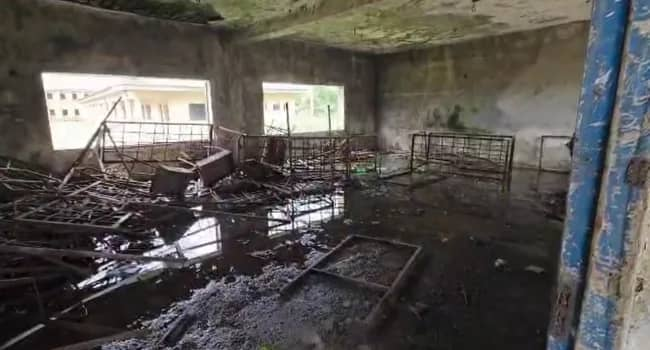
But beyond the crumbling infrastructure, the dismal welfare and poor remuneration of Nigeria’s security personnel remain another ticking time bomb. These men and women daily put their lives on the line, confronting terrorists, kidnappers and violent criminals, yet many earn wages that cannot sustain a modest family. Some still live in decrepit barracks or rent rooms in unsafe neighborhoods.
Improving the salaries and welfare packages of the country’s security agents is not an act of charity but of national prudence. A demoralized police officer is a danger not only to himself but to the very citizens he is sworn to protect.
The committee’s discovery has reignited a long-overdue conversation about the quality and dignity of Nigeria’s security manpower. Experts have long argued that every act of indiscipline, brutality, or operational failure seen on the streets traces its roots to the training fields and to the living conditions of the personnel.
Ironically, the rot in the training system and the neglect of welfare reflect the broader governance failure that has plagued the nation for decades, a failure to maintain what already exists while chasing after expensive new ventures. It is the same attitude that leaves public schools in ruins while new universities are licensed yearly; that allows roads to decay while new ones are flagged off for political gain.
Yet, in the midst of this grim picture, President Bola Ahmed Tinubu deserves commendation for at least ordering and approving the inspection. It may appear a small gesture, but in a country where committees are often formed to bury issues rather than unearth them, this investigation has ripped the veil off an ugly truth long whispered but never confronted.
Now that the evidence is clear, the question is: will action follow? Will the administration go beyond rhetoric to implement an emergency rehabilitation programme for these institutions and a living wage for those who serve in them? Will there be accountability for the billions allocated annually to training and welfare that never reached the intended beneficiaries?
For a country battling terrorism, banditry and violent crime on multiple fronts, the quality and motivation of its security personnel are no longer side issues, they are matters of national survival. Nigeria cannot hope to win modern wars with yesterday’s training or with recruits who learn under leaking roofs and earn starvation wages.
The rot exposed by the presidential committee should be treated as a national emergency. Anything less would mean that we have learned nothing and forgotten nothing.
Because in the end, as another saying goes, “The soldier’s strength is forged in the camp, not on the battlefield.” And when the camp itself has collapsed, and the soldier goes hungry, the battle is already lost.