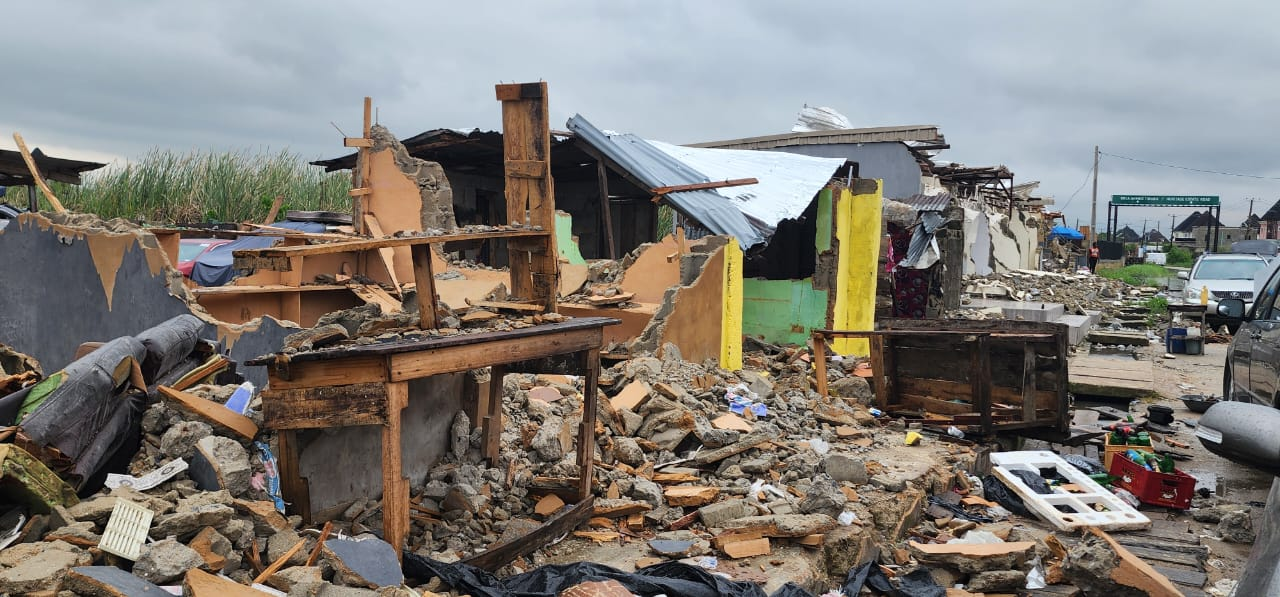

It began like a normal weekend morning. Traders opened their shops, customers trickled in, and the familiar hum of business filled the air. Then, without warning, the calm was shattered by the thunderous growl of bulldozers.
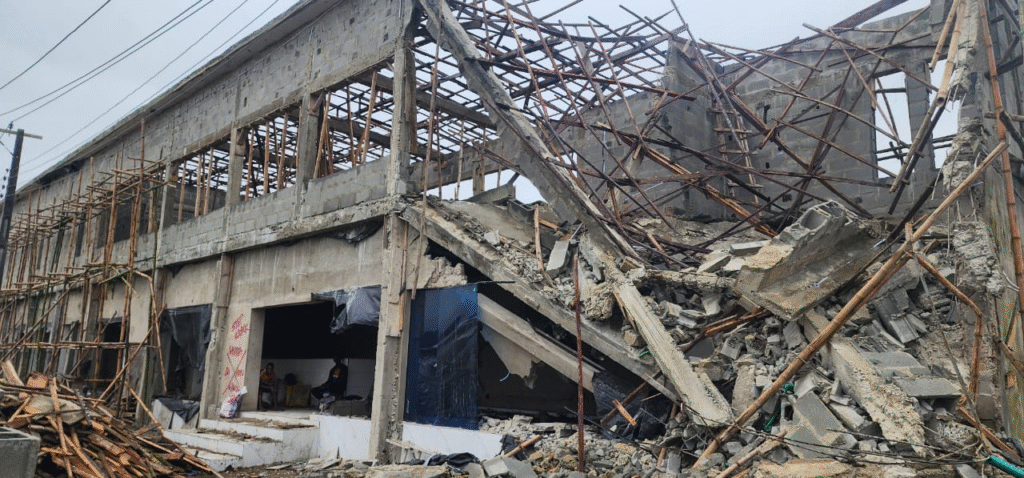
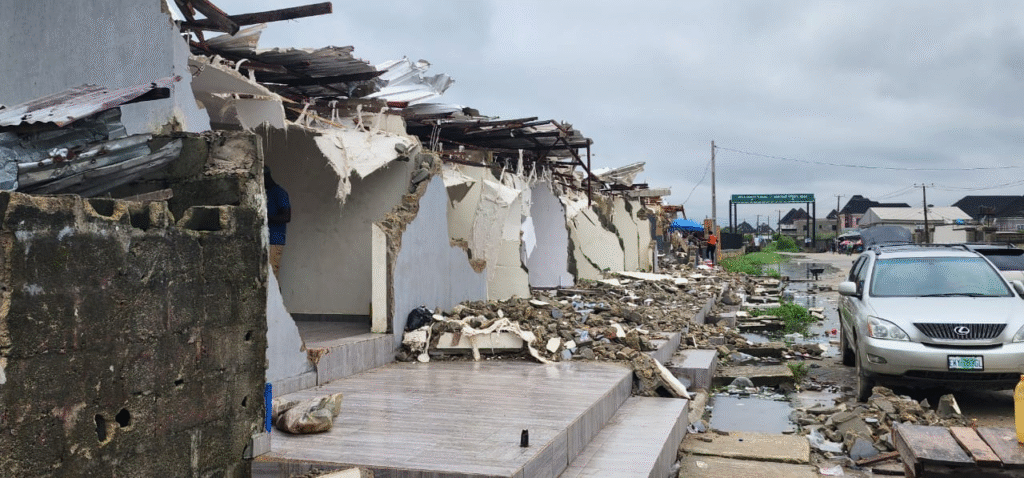
At the tail end of Road 6, the stretch that links Isheri Whitesand, a line of functional shopping malls—some brimming with goods, others still under construction—were either sliced in half or completely crushed by the jagged teeth of a heavy-duty payloader.
The destruction was supervised by officials from the Lagos State Ministry of Physical Planning, guarded by a platoon of fierce-looking, armed policemen. As the mechanical beasts roared through the street, shops packed full of wares were buried under the rubble—the sweat, savings, and dreams of ordinary Nigerians reduced to dust.
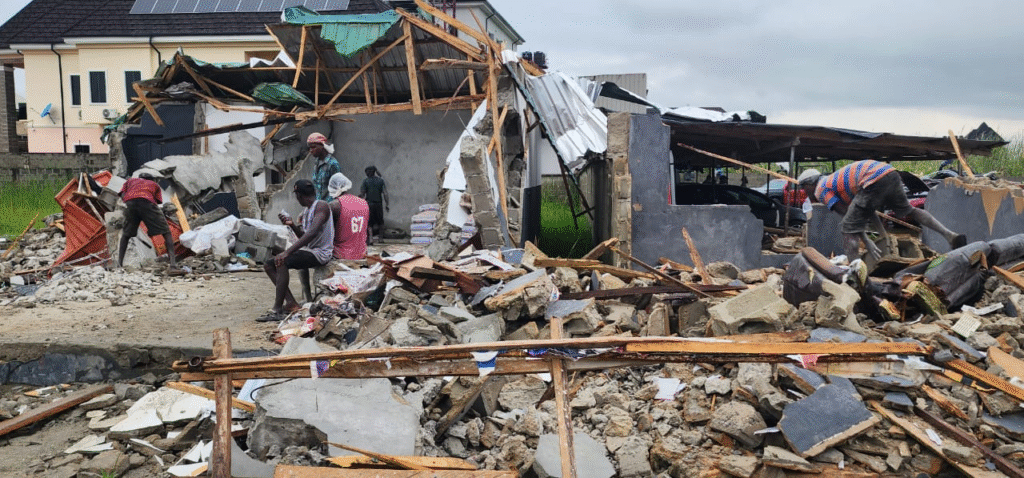
And the reason? The Ministry claimed the shops were too close to the road—two dual lanes of interlocking stones on either side. The irony, however, is painful: those same roads were built by the traders, developers, and residents themselves, funded through their contributions without a single naira of government subsidy.
Even more baffling, just a few meters from the demolished shops stand beautiful residential houses—their fences perfectly aligned with the same setback as the destroyed malls. So if those houses are not encroaching on the road, why were the shops marked for destruction?
Some shop owners whispered in confidence that they have it on good authority that the new local government chairman has an eye on the cleared spaces—intending to build his own shopping plazas there. To deepen their heartbreak, as they wept over their ruined properties, some operatives reportedly mocked them, saying they should “go and build in their own states” if they were so aggrieved.
Such arrogance is chilling. When the instruments of the state become weapons of intimidation, urban renewal turns into legalized cruelty. Governance loses its moral compass when it begins to prey on the powerless instead of protecting them.
The Lagos State Government must look into this matter urgently. Justice is not served when bulldozers become the first tool of urban management. There is still time for Governor Babajide Sanwo-Olu to prove that power can coexist with compassion, and that Lagos remains a state governed by law—not by the loudest engines or the strongest arms.