Valentine Obienyem
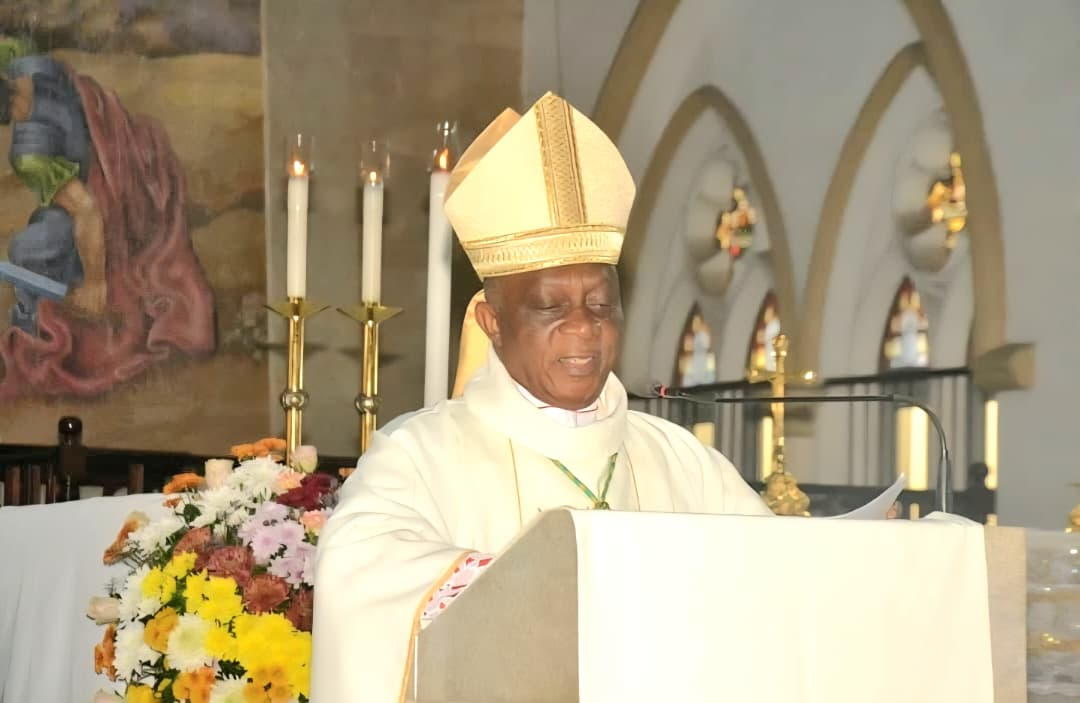
Whenever I listen to Bishop Godfrey Onah of Nsukka Diocese, I am reminded of St. Augustine of Hippo, not just for their roles as shepherds of the Church, but for the enduring values they embody and live out. Both men exemplify intellectual depth, moral courage, and a passionate commitment to guiding the faithful. They share a devotion to truth and doctrinal clarity, a relentless pursuit of spiritual formation, and a willingness to address difficult issues with wisdom and humility.
Speaking about Augustine’s steadfastness, Will Durant wrote of the time when the Vandals ravaged North Africa: “The old lion of the faith was still at his post when the Vandals came. To the end he remained in the theological arena, felling new heresies, countering critics, answering objections, resolving difficulties.” This illustrates the commitment both Augustine and Bishop Onah demonstrate in their ministries. Onah’s reflections, particularly on obedience, reverence for the Blessed Sacrament, discipline, and the dangers of acting “extra viam”, echo Augustine’s insistence on aligning human actions with divine law. Their shared values: faithfulness, integrity, prudence, and pastoral care remind us that a bishop can lead with both authority and conscience.
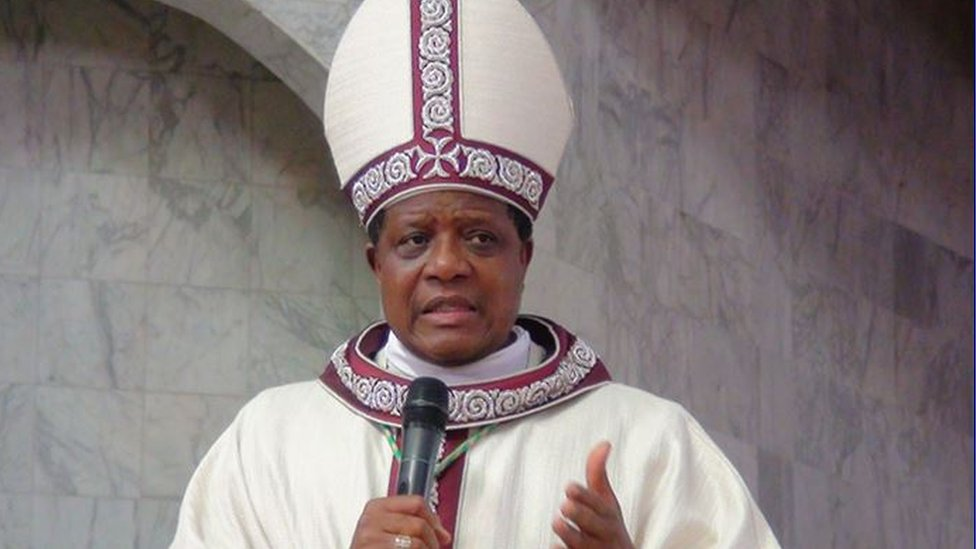
This morning, I came across Bishop Onah’s sermon on Facebook, where he used Archbishop Emmanuel Milingo as a case study. Milingo, famed for his charismatic healing ministry as Archbishop of Lusaka, alarmed Church authorities by promoting unconventional ideas, such as married priests. When the Vatican asked him to retire or step aside, he refused, asserting his autonomy. He was later transferred to Rome to serve in the Commission for Migrants, where he faced strict restrictions and could not freely celebrate Mass.
Bishop Onah emphasized that bishops, like priests, must operate within the Church’s structure. No bishop can celebrate Mass in another diocese without proper authorization, except for a metropolitan archbishop in his own province, who typically informs local bishops as a courtesy. In Rome, no bishop granted Milingo the faculties to celebrate in their dioceses; he only celebrated in a hotel. This illustrates the correctional measures of the Church for “extra viam” conduct – acting beyond canonical norms – and highlights how even those closest can sometimes mislead clergy into acting contrary to Church discipline.
Milingo further intensified his conflict with the Church when he married Maria Sung in the Unification Church in 2001, openly violating priestly celibacy. Bishop Onah recounted Milingo’s meeting with Pope St. John Paul II at Castel Gandolfo, where the Pope, representing the Church as “Mater et Magister” (Mother and Teacher), looked beyond his faults and said simply: “In the name of God, please come back to the Church.” The meeting made headlines at the time. Afterwards, Milingo was sent to a monastery for self-reflection -?a traditional Church practice meant to help priests realign with their duties. It is not a punishment, though some may perceive it as such. Yet even today, some priests challenge their bishops over similar issues, treating corrective guidance as coercion rather than a call to obedience and discipline.
But Milingo was being misled by those around him, and after expressing defiance toward the Church, he went further astray by leaving the Church again. In 2006, he illicitly consecrated four married men as bishops through his “Married Priests Now!” movement. These actions led to his excommunication, formally removing him from active ministry and severing his canonical ties to the Church. My rector in those days, Msgr. Luke Anameze, known for his impeccable spoken English, would have described it thus: “severing the umbilical cord connecting him to the Church.”Bishop Onah warned that Milingo’s journey illustrates the dangers of acting outside Church authority. In Nigeria, some priests similarly act “extra viam,” sometimes driven by charisma or personal conviction, contrary to Church teachings. Examples include improper use of sacramentals, monetizing ministry activities(simony), or defying episcopal guidance. Onah’s reflections show that such conduct, however well-intentioned, can undermine both personal and institutional integrity.
While speaking on this, I recalled Cardinal Thomas Wolsey, who rose to extraordinary power in England under Henry VIII. As Lord Chancellor and Papal Legate, Wolsey commanded immense wealth and influence, so much so that even princes served him at Mass. Yet, despite his lofty position, his respect for the Church waned – a fate that mirrors the path of many of our charismatic priests today.
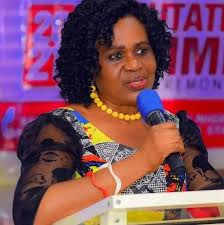
After listening to Bishop Onah, I reviewed other posts and came across one by Prof. Stella Chinyere Okunna. Let us summarise her: On 29 November 2025, the final Governing Board meeting of the IHM Healthcare System highlighted remarkable progress across its hospitals in delivering compassionate, quality healthcare. The meeting reviewed the year’s milestones, acknowledged challenges, and outlined bold plans for the year ahead. Guided by Chairman Professor Emmanuel Esenwah and CEO Rev. Sr. Dr. Nkiruka Okafor, the Board celebrated the dedication of healthcare teams, reflected on successes and lessons learned, and reaffirmed the System’s commitment to patient-centered care.
Prof. Okunna, though Anglican, serves on the boards of several Catholic institutions across the country, including Tansian University and IHM Healthcare System. Her passion, knowledge, and dedication transcend religion or ethnicity. For example, she consistently promotes the use of “Salve Regina” branded water, a product of the Congregation, encouraging others to support their work. As Deputy Vice Chancellor of Paul University, she is frequently invited by Catholic schools to strengthen their mass communication departments, often providing guidance pro bono. She often remarks, humorously, that adding value to society is more rewarding than striving to become another Croesus.
Prof. Okunna’s dedication demonstrates that merit, competence, and selfless service should be recognized and harnessed for the common good, regardless of religion, ethnicity, or personal gain. Society stands to benefit immensely when individuals of proven integrity are given responsibility and support, as her work in healthcare and education clearly shows. Her example, alongside Bishop Onah’s guidance on obedience and accountability, reminds us that true progress, whether in the Church or in broader society, depends on valuing expertise, ethical leadership, and commitment to collective well-being. By learning from such figures, communities can cultivate a culture that rewards merit, encourages responsible action, and promotes lasting positive impact.