By Paul Nwosu
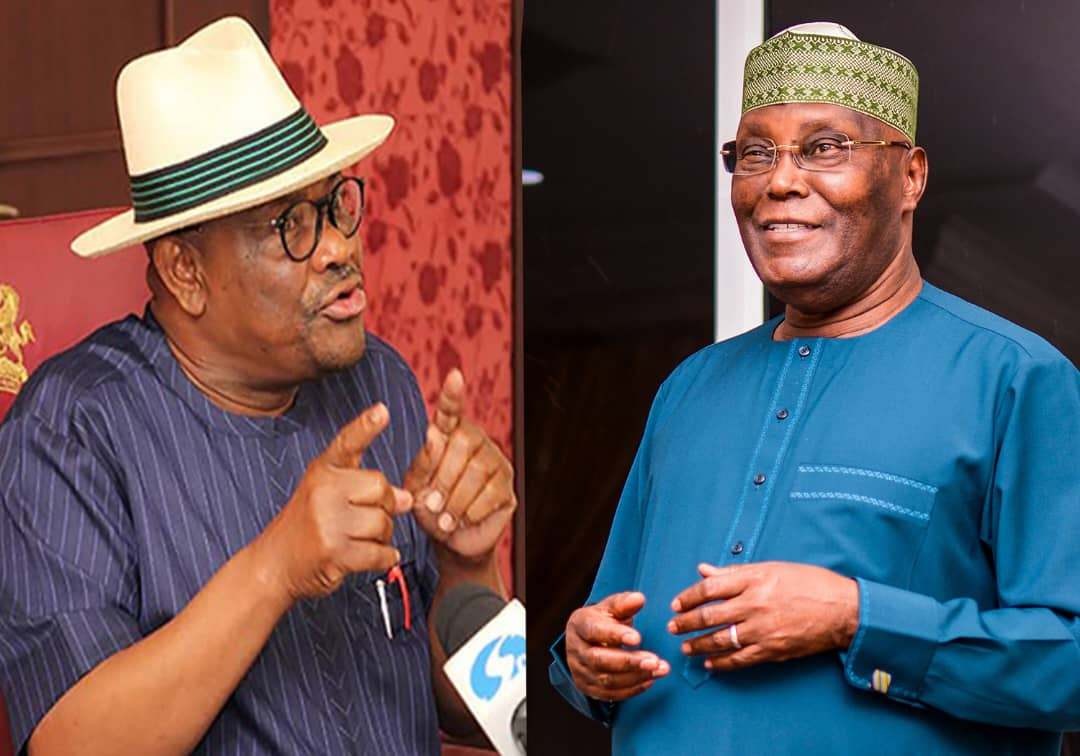
The dramatic expulsion of Nyesom Wike and several high-profile members from the Peoples Democratic Party (PDP) at its 2025 National Convention in Ibadan has been hailed as a bold step toward restoring discipline and repositioning the opposition ahead of the 2027 elections. But beneath the applause lies an uncomfortable truth. This action came years too late. The damage Wike inflicted on the PDP, and by extension on Nigeria’s democracy, has fone too deep. It unfolded in full public view while a timid party leadership watched in silence.
For anyone who has observed the PDP’s internal crises over the past decade, the question is not why Wike has finally been expelled, but why the party tolerated his conduct for so long. His political rebellion was neither subtle nor ambiguous. As a sitting PDP governor, Wike threw his weight behind the ruling All Progressives Congress (APC) and worked tirelessly to ensure that an APC candidate emerged president in 2023. He campaigned openly against his own party’s flag bearer, Atiku Abubakar. He deployed resources, granted interviews, mobilized his G-5 bloc, and used every lever of power available to him to undermine the PDP from within. Yet the party leadership said nothing.
If helping to elect the opposition is not anti-party activity, what is? The silence of the PDP in the face of such brazen defiance remains one of the most bewildering failures of internal party governance in modern Nigerian politics.
Wike’s rebellious streak did not stop at opposing the party’s presidential candidate. Over the years, he systematically factionalised the PDP in several states, deliberately sponsored parallel structures, and routinely dismissed the authority of the National Working Committee. He wielded his financial influence like a political weapon, intimidating, coercing and at times humiliating party officials who refused to bow to his agenda. When Rivers State descended into chaos through his protracted fight with his successor, culminating in the declaration of a state of emergency, the PDP once again chose silence.
This pattern reveals not just Wike’s ambition, but the party’s institutional weakness. No political organization that hopes to govern a complex country like Nigeria can afford to be so afraid of its own members that misconduct is left unchecked simply because the offender has money and influence. By failing to discipline Wike early, the PDP allowed a parallel power structure to flourish within its own house, one that has degenerated into the fratricidal brawl that has decimated the structure.
To be fair, Wike has long argued that his grievance stemmed from the party’s failure to honour its zoning arrangement when selecting its 2023 presidential candidate. He felt betrayed by Atiku Abubakar’s insistence on contesting, and many believe the party did violate its constitution. But even a legitimate grievance does not justify dismantling the house one helped build. Every political party has established mechanisms for resolving disputes. Wike could have pursued redress internally. Instead, he went on a rampage that weakened the PDP, deepened national political polarization, and handed the APC unchallenged dominance at a crucial moment.
The consequence of that destruction is now evident across Nigeria. With the PDP fractured and weakened, the country effectively lost its most formidable opposition platform. The result is a ruling party that governs with minimal scrutiny and little pressure to improve its policies. Nigerians today are paying the price for the collapse of an opposition that should have been holding the government accountable.
Yet if the PDP is finally serious about rebuilding itself, then the purge cannot end with Wike. The party must confront all the forces that brought it to its knees, including Atiku Abubakar. His decision to disregard the zoning principle set off the chain reaction that led to the crisis. If the PDP wants to restore credibility, it must apply the same standard across the board. Even if this means risking the absence of a presidential candidate in 2027, the party must place principle above personal ambition.
The Ibadan convention may signal a new beginning, but only if the PDP recognises that discipline is not an event, it is a culture. It requires consistency, fairness and courage. The party must rebuild its internal structures, empower its institutions, and resist the temptation to bow before political strongmen. If this moment is treated merely as a symbolic cleansing, the rot will simply resurface.
Nigeria desperately needs a vibrant, principled and coherent opposition. The ruling party must be checked. Democracy must be defended. If the PDP hopes to reclaim its place in national leadership, it must learn from its past failures and rebuild on a foundation of discipline, justice and integrity.
The party has taken its first step, but true renewal requires far more than expelling Wike and his collaborators. It demands the boldness to confront all its faults, the humility to correct them, and the resolve to start again on higher ground.