
By Paul Nwosu PhD || AlphaTimes
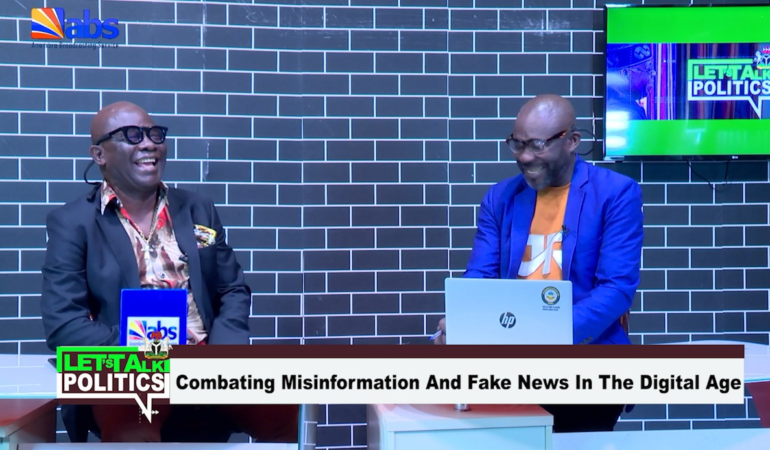
Just recently, I had the privilege of returning to the broadcast conversation space after some time away from electronic media talk shows, following an invitation by Roy Ekwunife to appear on ABS Television’s programme, Let’s Talk Politics. The subject for discussion was both timely and urgent: “Misinformation and Fake News in the Digital Age.” Given that this topic aligns closely with my present professional engagement and an issue I have become deeply passionate about, it offered a valuable opportunity to contribute meaningfully to a conversation that increasingly shapes public opinion, governance, social relations and democratic participation.
To lay a foundation for the discussion and carry the audience along, I began by unpacking the key concepts embedded in the topic.
The first task was to distinguish between terms that are often used interchangeably but differ significantly in meaning: misinformation, disinformation and fake news.
Misinformation refers to false or inaccurate information shared without an intention to deceive. In many cases, people circulate misinformation believing it to be true.
Disinformation, however, is the deliberate creation and dissemination of false information with the intention of misleading a target audience. It is calculated deception.
Both are false information, but motive distinguishes one from the other.
Fake news, on the other hand, is false or misleading information presented in the form of legitimate journalism or factual reporting. Its objective is usually to manipulate public perception, influence opinion or achieve specific political, social or economic outcomes.
Closely related is fabricated news – situations where individuals or groups entirely invent stories from imagination and present fiction as reality.
Another concept worth understanding is propaganda. Propaganda is a deliberate and systematic form of communication designed to shape perceptions, influence attitudes and manipulate public opinion. Governments, political parties, corporations and organised interests often deploy propaganda to achieve strategic objectives.
Importantly, propaganda does not always depend entirely on falsehood. It may involve:
- Half-truths
- Selective presentation of facts
- Deliberate omission of context
- Exaggeration of reality
At its core, propaganda targets emotions more than reason.
The second key expression in our discussion was Digital Age.
The Digital Age refers to this era in human history in which digital technologies have become deeply integrated into everyday life. Smartphones, computers, high-speed internet and telecommunications infrastructure now move information almost instantaneously across borders.
This age is characterised by:
- Internet connectivity and global interaction
- Social media ecosystems
- Artificial Intelligence and automated communication technologies
Digital technology has transformed access to information by making it immediate, real-time and widely available. And its advantages are undeniable:
- Expanded access to education and learning
- Faster banking and commercial transactions
- Remote work and virtual collaboration
- Rapid news dissemination beyond traditional limitations
Yet, the same infrastructure that enables access to quality information also provides fertile ground for misinformation and disinformation.
Combating Misinformation
The first line of defence against false information is the individual consumer.
Citizens must cultivate vigilance and resist the temptation to accept everything encountered online as truth.
Practical steps include:
- Verify information through credible and independent sources.
- Be cautious of screenshots without traceable origins.
- Investigate the reputation and credibility of publishers.
- Confirm whether content originates from authentic reporting.
Digital literacy has become a civic necessity.
Citizens should learn to identify:
- Manipulated images and videos
- Clickbait headlines
- Emotionally loaded framing
- Selective use of statistics
- False attribution and context distortion
Understanding how algorithms work is equally important. Social media platforms are designed primarily to maximise engagement, not necessarily accuracy. As a result, sensational and emotionally provocative content often spreads faster than verified information.
Fact-checking organisations remain important tools in this fight, including:
- Africa Check
- Reuters Fact Check
- Google Fact Check Tools and others
Responsibility on the Side of the Sender
Content creators, media organisations, platform operators and digital actors also carry enormous responsibility.
Nigeria’s Cybercrimes Act (2015), as amended in 2024, provides legal frameworks aimed at addressing online fraud, harmful digital conduct and certain forms of deceptive online activity.
Platforms must continue strengthening:
- Detection mechanisms for coordinated manipulation campaigns
- Enforcement systems against harmful content
- Monitoring of automated bot activities and AI-generated deception
Beyond enforcement, proactive education remains essential. Digital communities should be equipped with knowledge that enables citizens to identify falsehood and avoid becoming victims or unwitting amplifiers of deception.
Globally, responses differ. Some countries have imposed varying levels of restriction on access to social media, often citing national security concerns.
Others have introduced age-related controls and restrictions for minors, arguing that such measures protect mental wellbeing, reduce cyberbullying and limit exposure to harmful or inappropriate content.
The challenge of misinformation in the Digital Age cannot be solved by governments alone, nor can technology companies carry the burden in isolation.
Truth now competes with speed. Our collective defence lies in responsible communication, informed citizenship, digital literacy and a culture of verification before amplification.
In an age where everyone has become a publisher, the discipline to question, verify and think critically may well become one of the most important civic virtues of our time.