By Paul Nwosu PhD
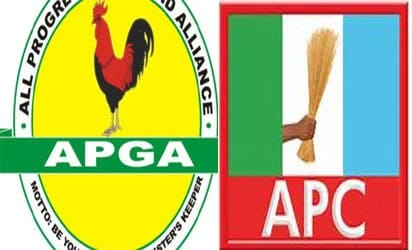
The slogan that “Progressives are working together” may have served APGA well in the 2025 Anambra governorship election, but its usefulness, and political logic, will face a much sterner test in 2027.
The catchphrase, with its obvious reference to the All Progressives Grand Alliance (APGA) and the All Progressives Congress (APC), appeared designed to reassure Abuja that Anambra was not necessarily a battlefield for the much-feared deployment of “federal might.” To a considerable extent, it worked. APC’s campaign did not produce the kind of federal political onslaught many had feared, and APGA’s Chukwuma Soludo went on to win all 21 local government areas, polling 422,664 votes against APC’s 99,445.
But slogan does not necessarily suggest that both Parties share similar brand of prograssivism, and Ndi Anambra are discerning enough to appreciate this.
APGA Women Leader, Mrs Chinwe Umerie’s clarification that APGA’s understanding of the alliance is limited to supporting President Bola Tinubu at the presidential level, while APGA candidates receive the party’s full backing for the Senate, House of Representatives, State Assembly and local government contests, therefore raises a crucial question: can an electorate be persuaded to vote APC at one level and APGA at another on the same ballot day?
INEC has fixed January 16, 2027 for the presidential and National Assembly elections, meaning the two sets of choices will be made simultaneously. That creates a practical problem for APGA. The party will have to persuade its supporters, particularly elderly and less sophisticated voters, to distinguish between a presidential candidate from APC and APGA candidates seeking legislative seats. It is a form of electoral split-ticket voting that requires unusually intensive voter education, organisation and polling-unit-level coordination.
And there is a potentially bigger psychological problem. APGA’s supporters have historically demonstrated that presidential politics can overwhelm party loyalty. In 2023, Peter Obi won an extraordinary 584,621 votes in Anambra, 95.24 per cent of the state’s presidential vote, while Tinubu managed only 5,111, about 0.83 per cent. That history cannot simply be wished away.
Yes, APGA can legitimately point to its remarkable victories in 2025. Soludo’s landslide was followed by APGA’s emphatic victory in the Anambra South senatorial bye-election, where Emmanuel Nwachukwu scored 90,408 votes against APC’s 19,847. APGA also won the Onitsha North I State Constituency bye-election. These results demonstrate that APGA remains a formidable grassroots machine.
But claiming that APGA “defeated Peter Obi and his party three times” in 2025 needs some qualification. The November governorship election was primarily a contest between Soludo of APGA and other parties. Peter Obi was not a candidate and it makes sense to argue that was the reason Labour Party performed poorly, securing just 10,576 votes statewide, while APGA swept all 21 LGAs.
But the more instructive warning may actually be coming from the just concluded Osun State governorship election.
President Tinubu’s political establishment could not deliver the governorship of his own state to APC in the August 15, 2026 election. Ademola Adeleke, running on the Accord platform, defeated APC’s Bola Oyebamiji by 511,067 to 444,815 votes, a margin of 66,252. If the enormous advantages of incumbency and federal power could not dislodge an incumbent in Osun, it would be presumptuous to assume that APC can simply walk into Anambra and take a state where APGA has demonstrated deep electoral roots.
This is precisely why the “progressives are working together” arrangement should be treated as a political understanding, not an electoral guarantee.
APGA may support Tinubu. Tinubu may reciprocate by respecting Anambra’s political space. But voters remain sovereign. They cannot be instructed to compartmentalise their political loyalties merely because two parties have found temporary strategic accommodation.
The real test of the arrangement will come on January 16, 2027. If APGA wants Tinubu’s presidential votes while retaining its legislative dominance, it must explain the arrangement clearly, consistently and convincingly to the electorate. Otherwise, the slogan that once helped keep federal might at bay could become the very source of electoral confusion, giving APC the leeway to exploit and mine the unintended essence of calling on Ndi Anambra to vote for APC presidential candidate.
APGA should be careful.