By Charles Nwoke || AlphaTimes
The Ebonyi State House of Assembly Committee on Agriculture and Natural Resources has commended the International Fund for Agricultural Development (IFAD)-assisted Value Chain Development Programme (VCDP) for improving agricultural productivity and the livelihoods of rural farmers across the state.
The committee made the commendation during an oversight visit to the IFAD-VCDP State Office in Abakaliki, where lawmakers reviewed the programme’s performance, achievements and challenges over the past year.
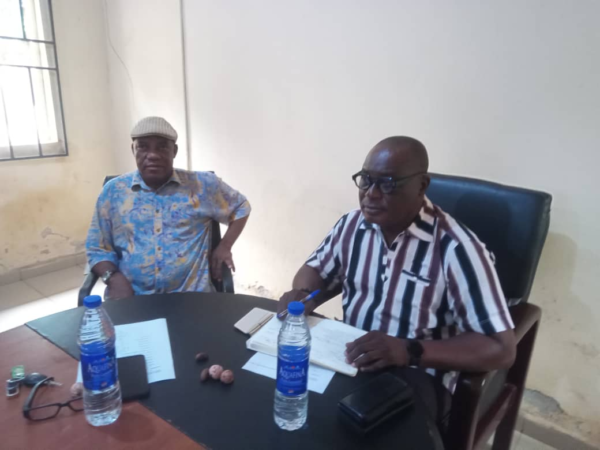
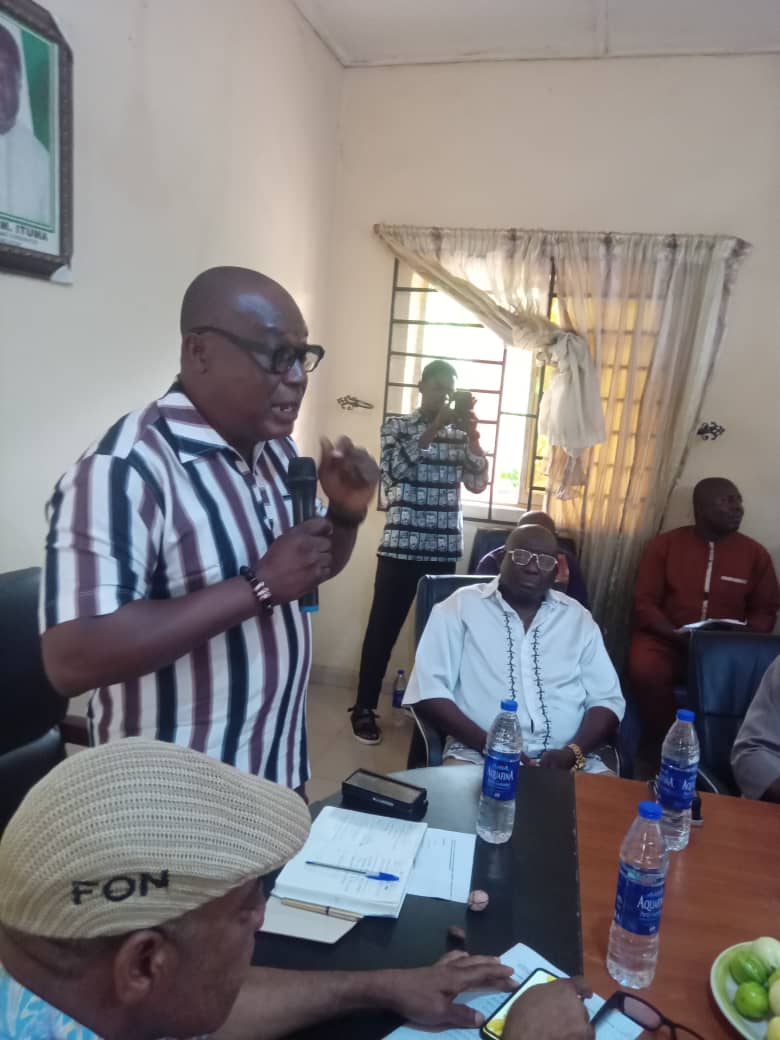
The committee chairman, Hon. Chief Onyebuchi Ogbadu, said the oversight visit was aimed at assessing the impact of the programme and identifying measures required to sustain its achievements.
Ogbadu praised the State Programme Coordinator, Dr Sunday Michael Ituma, for his commitment to strengthening agricultural value chains in Ebonyi. He said the programme had improved farmers’ access to productive resources and markets while contributing to agricultural development across the state.
He said the House of Assembly remained committed to supporting policies and legislation that would consolidate agricultural growth and rural development in Ebonyi State.
Presenting the programme’s progress report, Ituma said the main objective of IFAD-VCDP was to increase sustainable incomes and improve food security for poor rural households involved in the production, processing and marketing of rice and cassava.
He disclosed that the programme currently operates in eight local government areas across Ebonyi’s three senatorial zones. According to him, 23,163 farmers have been profiled, while 18,083 beneficiaries had received support as of December 31, 2025.
Ituma said the programme had delivered all components contained in its implementation manual and budget in Ebonyi State.
The interventions include the construction of market infrastructure, mini-bridges, culverts and rural roads. The programme has also provided solar-powered boreholes, irrigation facilities and sanitary facilities to support farming communities.
Other interventions include the establishment of processing centres and a seed laboratory, Farmers’ Field and Business Schools, land development and clearing, and the provision of farm inputs such as fertilisers, agrochemicals and improved seedlings.
The State Programme Coordinator said the interventions were designed to strengthen the rice and cassava value chains while improving productivity, processing capacity and market access for smallholder farmers.
IFAD describes VCDP as a programme designed to address constraints across the rice and cassava value chains by improving smallholder productivity, strengthening market access and supporting value addition. The programme also focuses on building the capacity of producers, processors and other actors within the agricultural value chain.
Ituma appealed to the Ebonyi State House of Assembly to enact legislation that would transform IFAD-VCDP into a state government agency after the programme closes.
He said institutionalising the programme would help preserve the infrastructure, farmer-support systems and agricultural value chains established through the intervention.
The call comes as the Federal Government and IFAD continue efforts to consolidate the programme’s gains across participating states. IFAD’s official project information shows that VCDP has focused on improving rural incomes and food security through support for rice and cassava production, processing and marketing.
Members of the committee, including Hon. Abiri Godwin Abiri, Hon. Steve Orji Igwe, Hon. Chinyere Nwogbaga, Hon. Victor Nwoke and Hon. Arinze Lucas Chukwu, also commended IFAD for its intervention in Ebonyi.
The lawmakers said the programme had contributed to food security and the transformation of the state’s agricultural sector. They urged the programme management to expand its operations to the remaining local government areas so that more farmers could benefit from its interventions.
The committee’s position reflects the broader importance of sustaining agricultural programmes after external development financing ends. IFAD has reported that VCDP has helped strengthen rice and cassava value chains in Nigeria, reduce post-harvest losses and improve food security among rural communities.
The Federal Ministry of Information and National Orientation also reported in November 2025 that Ebonyi’s IFAD-VCDP programme had projected a N5.17 billion budget for its 2026 activities. The funding was targeted at improving agricultural productivity, youth empowerment and value addition in rice and cassava production across eight participating local government areas.
The request for legislation in Ebonyi therefore places sustainability at the centre of the state’s agricultural development agenda. A state-backed institution could provide a framework for maintaining the programme’s infrastructure, supporting farmer organisations and expanding access to agricultural inputs, processing facilities and markets after IFAD’s direct intervention ends.
In a vote of thanks, the Agricultural Production Officer of IFAD, Mr Ongele Darlington, described the committee’s visit as timely and necessary. He thanked the lawmakers for their interest in the programme and its impact on rural farmers.
The committee’s call for legislation is expected to strengthen the prospects of sustaining the gains recorded under IFAD-VCDP and expanding agricultural opportunities for farmers across Ebonyi State.