By Charles Nwoke
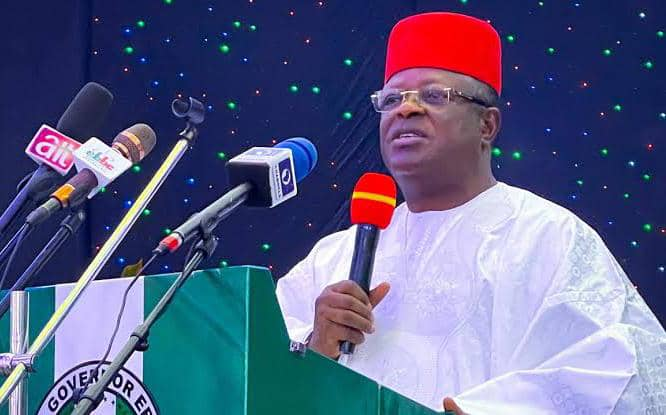
Prominent leaders and civil society groups from the Southeast have strongly rejected recent comments by the Minister of Works, Senator David Umahi, that President Bola Tinubu’s administration has addressed the marginalisation of Ndigbo.
Umahi’s remarks came during an inspection of federal road projects in the Southeast. He argued that infrastructure investments have eased longstanding concerns over marginalisation. Critics swiftly disputed his claims and accused him of speaking for the entire Igbo community without authority.
United States-based Igbo advocacy groups described Umahi’s statement as “insulting, misleading and self-serving.” They said he “does not have the mandate to speak for Ndigbo” and should not present his views as the collective position of the Igbo people. The joint statement was signed by Dr. Sylvester Onyia, President of the American Veterans of Igbo Descent; Ben Nwankwo, representing Ambassadors for Self-Determination; and Maxwell Dede of The Rising Sun.
The groups criticised Umahi for implying that long-standing grievances had been resolved. They said his comments ignore ongoing challenges and the lack of tangible gains for the region under the current administration.
In Enugu, Comrade Adolphus Ude, a leading figure in the African Democratic Congress, called Umahi’s remarks misleading and unreflective of shared sentiment in the Southeast. Ude said marginalisation persists and challenged Umahi to point to specific grievances that have been addressed. He described Umahi’s position as disconnected from reality and urged the minister to recognise enduring concerns.
Another critic, the Igbo Women Assembly (IWA), previously challenged Umahi over suggestions that the presidency was unattainable for the Southeast in 2027. The group labelled such assertions as narrow-minded and urged evidence of fairness and inclusion for Igbo people before broad claims are made.
These reactions reflect deep dissatisfaction with Umahi’s comments and a broader demand for more inclusive engagement on issues of political representation and regional equity. The dissent underscores continued debate over the status of Igbo participation in national governance and perceived marginalisation within Nigeria’s federal system.