Opinion
By Polycarp Onwubiko
There is no gainsaying the fact that Nigeria’s leadership has consistently shown a lack of political will to reinvent the true fiscal federalism that defined the First Republic. During that era, regional governments effectively harnessed their abundant natural and mineral resources to create employment, stimulate wealth generation, and attract foreign direct investment (FDI).
In contrast, today’s federal governance structure, with its politicized and diluted approach to regional development, has failed to deliver meaningful results. Even the once-purposeful Development Commissions, initially intended to address specific regional challenges, have been replicated across all geopolitical zones, diluting their effectiveness. Worse still, federal budgetary provisions to these commissions often remain theoretical, with no assurance of timely and sustainable funding to execute developmental projects.
In light of this reality, the Southeast geopolitical zone must chart its own course by formulating a coordinated socio-economic strategy. By synergizing across state lines, Southeast governments can create a network of industrial and manufacturing hubs that leverage the region’s abundant natural resources and highly skilled human capital.
Such a bold initiative requires not just planning, but also the active support of the media to galvanize public interest and spur leadership commitment. In recognition of this, the former Anambra State Commissioner for Information, Sir Paul Nwosu, PhD, hosted a landmark roundtable on June 19, 2025. At that event, he rebranded Anambra Times as Alpha Times, a platform with a broader mandate to cover and promote socio-economic initiatives across the entire Southeast region. The goal is to inform citizens at home and in the diaspora, and to attract critical foreign direct investment.
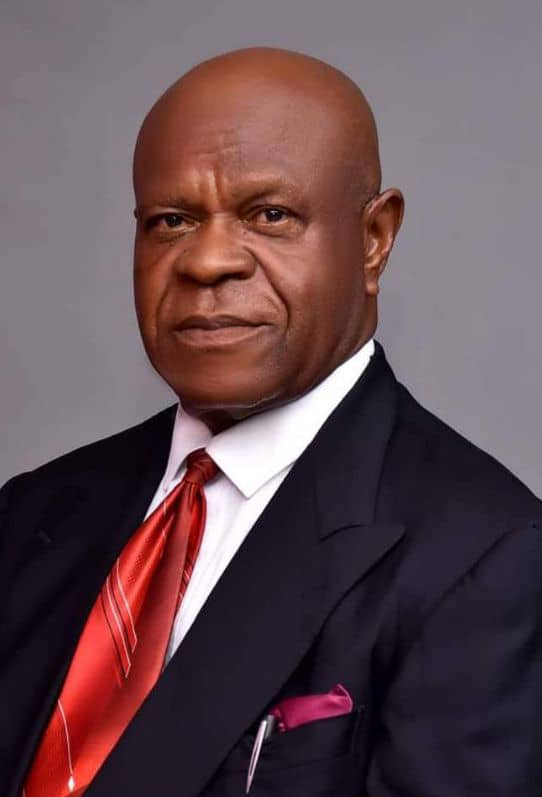
The keynote address at the event, titled “Harnessing the Power of Interstate Connections for Southeast Investments” was delivered by Prof. Godwin Onu of the Department of Political Science, Nnamdi Azikiwe University, Awka. Prof. Onu urged Southeast governors to pool resources and collaborate strategically for the benefit of the region. He warned that depending on the proposed South East Development Commission to tackle critical infrastructure deficits would be futile, likening it to “squeezing water from stone.” According to him, isolated state-level interventions amount to mere drops in the ocean. A united regional approach, however, could transform the Southeast into a vast hub for industry and manufacturing, generating employment, creating wealth, and reducing the region’s multidimensional poverty.
He called for a paradigm shift in interstate collaboration to unlock the region’s vast economic potential and catalyze sustainable development.
Since the return to First Republic-style federalism appears remote, Southeast leaders must now revisit and revive the industrialization blueprint of the late Dr. M.I. Okpara, Premier of the former Eastern Region. Dr. Okpara had visionary plans for industrial corridors, mechanized agriculture, and ranching plans tragically interrupted by the Nigeria cicil war. His initiatives, including the Obudu Cattle Ranch (now in Cross River State), were designed to provide food security and boost export earnings through value chains in agriculture, meat, milk, leather and more.
Industrialization and manufacturing remain cornerstones of meaningful economic development globally. During the First Republic, the Eastern and Western Regions recognized this fact. Premier Obafemi Awolowo’s Western Region, for instance, became the first in Africa to establish a television station. The Eastern Region, under visionary leadership, leveraged its natural resources to develop one of Africa’s fastest-growing economies at the time, with a formidable GDP.
For the Southeast to replicate that success today, its state governments must think deeply and act collectively to provide basic infrastructure and social amenities. A major impediment to progress, however, remains the pervasive insecurity across the country. Within the bounds of the Nigerian Constitution, the Southeast can still develop an effective, integrated security framework by pooling manpower and resources, and deploying a well-motivated security apparatus through a multi-pronged approach.
Ultimately, reinventing the region’s industrial legacy depends on rethinking the country’s political structure. A restructured federation would allow for regional autonomy, enabling geopolitical zones to address infrastructure gaps more effectively. Nigeria’s current lopsided arrangement stifles growth, discourages FDI, and hampers diversification.
It is sobering to recall how the Eastern Region was once celebrated as a cornerstone of Africa’s industrial future. But that future can still be realized if Southeast states act in synergy while awaiting a true restructuring of the Nigerian federation.
Meaningful diversification of the economy must be tied to a realistic federalist structure. The current trial-and-error approach has little chance of transforming the country. Real diversification would boost productivity, create jobs for millions of unemployed youth, reduce crime, and address the socio-economic challenges threatening national stability.