
By Nnedinma Okeke :
The Executive Secretary, Anambra State Primary Healthcare Development Agency (ASPHCDA), Dr. Chioma Ezenyimulu has cautioned Healthcare workers across the Local Government Areas (LGAs) against collecting money from caregivers/mothers for Immunization.
“All vaccines are given free of charge as they have been provided by Partners such as UNICEF and WHO. So all vaccines in our health facilities are given for free and nobody should pay money to get vaccinated.”
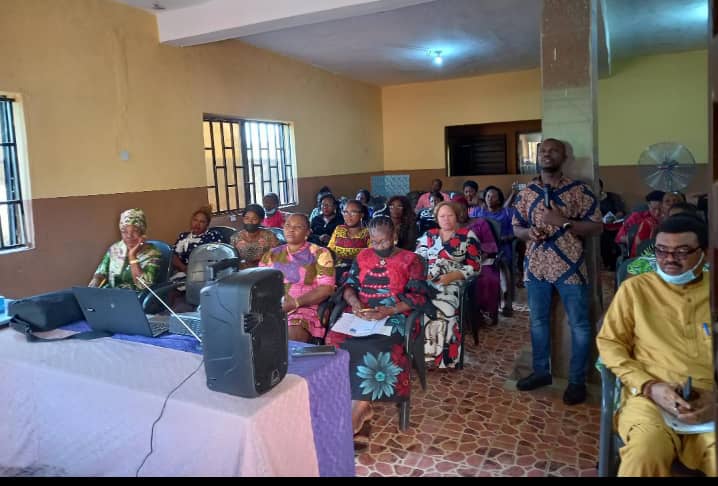
Dr. Ezenyimulu said this during a one-day Stakeholders Engagement meeting for Rotavirus vaccine introduction organised by ASPHCDA in collaboration with State Ministry of Health and Partners at Anambra State Universal Basic Education Board
(ASUBEB) Hall, Awka.
The Objective of the meeting was to sensitize key stakeholders about Rotavirus diarrhoea disease and to agree on the specific areas of stakeholder’s support for Rota vaccine introduction.
It was also to identify the roles and responsibilities of the stakeholders thereby securing their commitment and support for the Rota vaccine introduction.
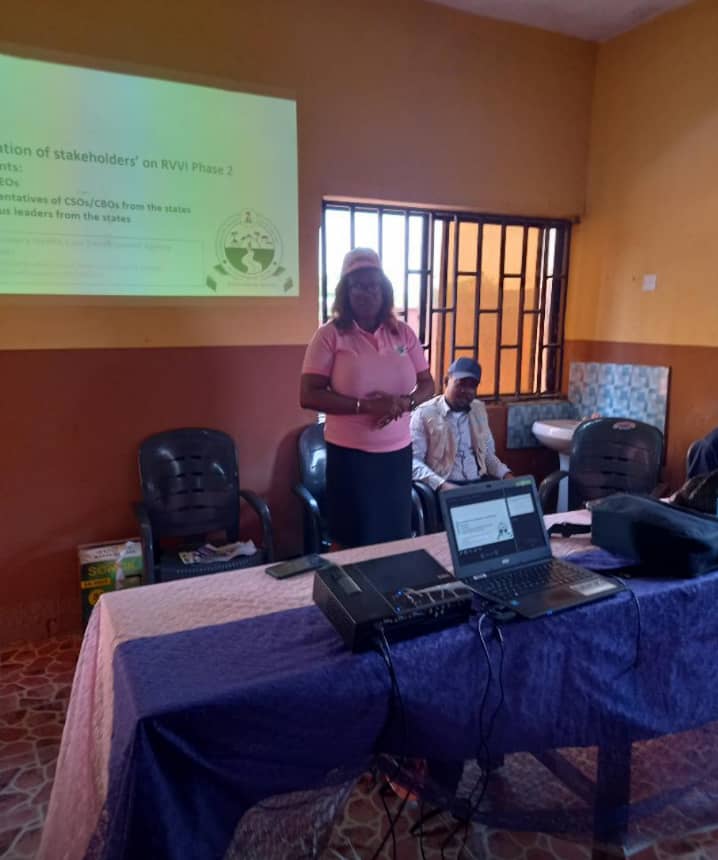
The Executive Secretary noted that the Rotavirus vaccine was being introduced for the first time into the National Programme of Immunization (NPI) which was the reason for the meeting with the Stakeholders.
The Stakeholders include; the Media, Religious and Traditional leaders, Civil Society Organisations (CSOs) and Social Mobilization Officer (SMOs) from the 21 LGAs.
“There is need for them to spread the word that the Rotavirus vaccine which protects children against the Rotavirus that causes severe diarrhoea in children is being introduced.
“With this vaccine, the incidence of severe dehydration leading to death in children as a result of diarrhoea will be drastically reduced,” Dr Ezenyimulu said.
She explained that the vaccine had been in use in the developed countries which has helped to reduce the incidents of diarrhoea diseases out there.
“In Nigeria, it is now been introduced in the public health facilities where it will be given free of charge as the vaccination had been on in private facilities and some teaching hospitals where it was given for about eight thousand naira and more.
“We want mothers, caregivers and parents to know that this vaccine is available in our health facilities and it would be given free of charge same way we give all our other vaccines,” she emphasized.
The Executive Secretary, then, thanked all the Stakeholders while urging them to give the programme the media coverage and sensitisation it needs in their various platforms to enable the state achieve its desired result.
The Director, Disease Control and Immunization, ASPHCDA, Dr. Nnamdi Placid Uliagbafusi said regarding the vaccine introduction, training had been held for healthcare workers both at the state and LGA levels.
“The essence is for them to understand fully well what Rotavirus is, the disease it causes and the vaccine schedule which is the doses and drops to be given.”
The Director noted that one of the essences of the Stakeholders meeting was to give the SMOs of the 21 LGAs a more detailed training as regards to demand creation and acceptance of the vaccine.
“Everybody in all works of life needs to be properly sensitized, this message needs to get to them in a language they will understand as we are doing everything we can to make sure that the Rotavirus vaccine introduction is successful in the state.”
The United Nations Children’s Fund (UNICEF) Communication for Development Consultant, Mr. Mac-Kenneth Fisi noted that UNICEF as an organisation has continued to ensure that vaccine preventable diseases are eliminated from the state and the nation at large.
“We are passionate with the state and gateway organisation which is the Primary Healthcare Agency to ensure that we support them in areas needed especially as it has to do with vaccine logistics, movement of vaccines across the State/LGAs and its storage.
“ For this introduction campaign, we are targeting children below two years of age. The start of the vaccine is actually six weeks and it is in three doses with four weeks interval. Its first entry is supposed to be at six weeks, then at 10 weeks and 14 weeks respectively.
“In a situation where a child is visiting the health facility for Rotavirus vaccine for the first time at 12 months, the child will be given the first, second and third doses at four weeks intervals for each dose,” he explained.
WHO Representative, Mr. Valentine Obiajulu while emphasizing that the administration of rotavirus vaccine prevents severe episodes of rotavirus infection and diarrhoea noted that the Rotavirus vaccine does not prevent other causes of diarrhea.
“Promotion of early and exclusive breastfeeding for six months, vitamin A supplementation, safe drinking water, good hygiene, especially handwashing with soap, and sanitation are adopted strategies to reduce diarrheal diseases in general.
“However, unlike bacterial pathogens, improvements in hygiene and sanitation alone are insufficient to prevent rotavirus disease,” he explained.
A Representative of Civil Society Organisation, Mr. Chris Azor while noting that the activity was a booster for people in the state commended the government and partners for all their efforts in the process.
“Our role now is to sensitise and mobilise our people to be part of the progress. All hand needs to be on deck as we need synergies with all groups to ensure the message and vaccine gets to the end users and rural populace.”