Valentine Obienyem
In today’s sermon, there was nothing extraordinary. The readings were not the kind that would elicit complex theological questions. However, almost every Sunday, there is one activity or another that makes one marvel at the apostolicity of the Catholic Church. Today, what brought it to mind was the special collection known as “Peter’s Pence.”
Peter’s Pence is the annual worldwide collection taken in the Catholic Church to support the Pope’s charitable works and the mission of the Holy See. It is a tangible expression of the faithful’s unity with the Successor of St. Peter and their participation in the universal mission of the Church.
The apostolicity of the Church refers to the unbroken succession of the leaders of the Catholic Church, which can be traced back to the Apostles.
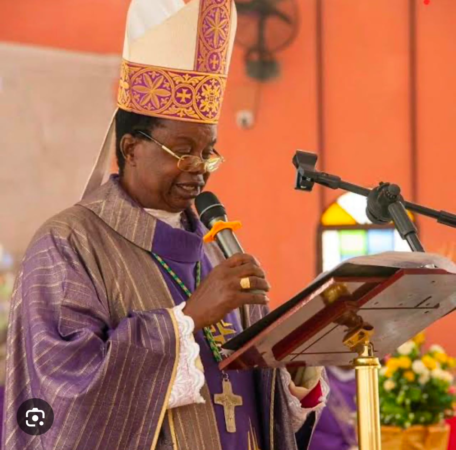
Today, the records are much clearer. For example, if you search for the episcopacy of Bishop Paulinus Chukwuemeka Ezeokafor of the Diocese of Awka, it reads as follows:
Priest: 42+ years | Bishop: 19+ years
Ordained Priest by: Bishop Albert Kanene Obiefuna † (Bishop of Awka)
Principal Consecrator: Archbishop Renzo Fratini (Titular Archbishop of Botriana)
Principal Co-Consecrators: Archbishop Valerian Maduka Okeke (Archbishop of Onitsha) and Bishop Solomon Amanchukwu Amatu (Bishop of Okigwe).
Episcopal Lineage / Apostolic Succession
This lineage illustrates the Bishop’s apostolic succession—the unbroken line of episcopal ordinations stretching back through the centuries, signifying continuity with the ministry entrusted by Christ to the Apostles and preserved in the Catholic Church: Bishop Paulinus Chukwuemeka Ezeokafor (Consecrated 2007), Archbishop Renzo Fratini (Consecrated 1993), Titular Archbishop of Botriana; Angelo Cardinal Sodano † (Consecrated 1978), Cardinal-Priest of Santa Maria Nuova; Antonio Cardinal Samorè † (Consecrated 1950), Cardinal-Bishop of Sabina e Poggio Mirteto; Clemente Cardinal Micara † (Consecrated 1920), Cardinal-Bishop of Velletri; Pietro Cardinal Gasparri † (Consecrated 1898), Cardinal-Priest of San Lorenzo in Lucina; François-Marie-Benjamin Cardinal Richard de la Vergne † (Consecrated 1872), Archbishop of Paris; Archbishop Joseph Hippolyte Guibert, O.M.I. † (Consecrated 1842), Archbishop of Paris; Bishop St. Eugène-Charles-Joseph de Mazenod, O.M.I. † (Consecrated 1832), Bishop of Marseille; Carlo Cardinal Odescalchi, S.J. † (Consecrated 1823), Cardinal-Priest of Santi XII Apostoli; Giulio Maria Cardinal della Somaglia † (Consecrated 1788), Cardinal-Bishop of Ostia and Velletri; Hyacinthe-Sigismond (Jean-François) Cardinal Gerdil, B. † (Consecrated 1777), Cardinal-Priest of Santa Cecilia; Marcantonio Cardinal Colonna (Jr.) † (Consecrated 1762), Cardinal-Priest of Santa Maria della Pace; Pope Clement XIII (Carlo della Torre Rezzonico †) (Consecrated 1743); Pope Benedict XIV (Prospero Lorenzo Lambertini †) (Consecrated 1724); Pope Benedict XIII (Pietro Francesco Orsini de Gravina, O.P. †) (Consecrated 1675); Paluzzo Cardinal Paluzzi Altieri Degli Albertoni † (Consecrated 1666), Camerlengo of the Apostolic Chamber; Ulderico Cardinal Carpegna † (Consecrated 1630), Cardinal-Priest of Santa Maria in Trastevere; Luigi Cardinal Caetani † (Consecrated 1622), Cardinal-Priest of Santa Pudenziana; Ludovico Cardinal Ludovisi † (Consecrated 1621), Archbishop of Bologna; Archbishop Galeazzo Sanvitale † (Consecrated 1604), Archbishop Emeritus of Bari-Canosa; Girolamo Cardinal Bernerio, O.P. † (Consecrated 1586), Cardinal-Bishop of Albano; Giulio Antonio Cardinal Santorio † (Consecrated 1566), Cardinal-Priest of San Bartolomeo all’Isola; and Scipione Cardinal Rebiba † (Consecrated 1541), Titular Patriarch of Constantinople.
This regression continues until we reach the episcopacy of Saint Peter the Apostle, the first Bishop of Rome. Peter is one of the three early Popes whose names appear in the Bible. Peter was appointed directly by Jesus Christ: “And I tell you, you are Peter, and on this rock I will build my Church, and the gates of Hades shall not prevail against it.” (Matthew 16:18). The other two are Linus, Peter’s immediate successor, and Clement I, traditionally regarded as the fourth Bishop of Rome (and the third successor of Peter).
Reflections on Apostolicity
Apostolicity is one of the true beauties of the Catholic Church: “Ife Catolic jiri dị ebube” (“What makes the Catholic Church glorious”).
This dignity is highlighted in today’s collection, gathered throughout the world, known as Peter’s Pence. Whatever its historical origin, it serves as a global expression of solidarity, reminding us of our shared authority, responsibility and spiritual communion with Peter the Apostle.
This continuity is also evident in the naming of other key structures of the Church, which – though it may not sit well with some – stands as a witness to the Church’s historical identity.
Papal Offices and Residences
Apostolic See (Holy See): The official episcopal seat of the Bishop of Rome, representing the central governing authority of the universal Church.
Apostolic Palace: The official residence of the Pope in Vatican City, housing the papal apartments, offices of the Roman Curia and the Sistine Chapel.
Apostolic Nuncio: The Pope’s diplomatic representative to a nation and its local Catholic hierarchy.
Apostolic Nunciature: The official embassy of the Holy See in a foreign country.
Official Papal Documents and Teachings
Apostolic Constitution: The highest form of papal decree.
Apostolic Exhortation: A papal document encouraging the faithful in Christian life and pastoral practice.
Apostolic Letter: A formal document issued by the Pope on specific matters.
Apostolic Brief: A less formal papal document used for administrative matters and appointments.
Governance and Jurisdiction
Apostolic Administrator: A bishop or priest appointed by the Pope to govern a diocese temporarily.
Apostolic Vicariate / Apostolic Prefecture: Mission territories not yet established as dioceses.
Apostolic Delegation: A diplomatic representation of the Holy See where full diplomatic relations do not yet exist.
Spiritual Life and the Sacraments
Apostolic Blessing / Apostolic Pardon: A special blessing, often imparted near the hour of death, carrying a plenary indulgence under the usual conditions.
Apostolic Faith (Deposit of Faith): The body of doctrine handed down from the Apostles through Scripture and Tradition.
Apostolic Life: A form of consecrated life dedicated to ministry and service, modelled after the lives of the Apostles.
Whether viewed through the worldwide reach of Peter’s Pence, the legal authority of an Apostolic Letter, or the unbroken chain of episcopal consecrations linking Bishop Paulinus Ezeokafor back to Saint Peter, the Catholic Church maintains a tangible and living link to the Upper Room—a chain forged over two millennia that continues to define its mission today.