By Paul Nwosu
The intermittent boom of the Palace “Ikoro” echoed across the plains of Omor days before the 23rd of August 2025. For the people of this ancient Anambra community, the sound was more than a rhythm, it was an ancestral announcement that the time had come again for one of their grandest cultural celebrations: the “Iwa Ji” Omor, the new yam festival.
When the appointed day dawned, Omor Kingdom was transformed into a living theatre of tradition. The streets teemed with visitors, the air thick with anticipation, and the palace grounds of His Royal Highness, Igwe Oranu Chris Chidume (MON), Eze Anaukwu, Eze Igulube Omor, radiated with colours, pageantry and ancestral pride.
The festival began with an appearance that only few are permitted to witness. From the veil of early morning drizzle emerged the Nmanwu Isato, the eight sacred masquerades of Omor.
Clad in pale white regalia, each crowned with three distinctive horns and wielding two mystic sticks, they performed their whirl-and-twirl dance. Their chants, delivered in a language decipherable only by initiates, reverberated with spiritual energy. Women were forbidden to gaze upon this hallowed rite, as the masquerades stamped their feet into the earth, invoking ancestral presence before retreating.
Their withdrawal cleared the way for younger masquerade troupes who animated the palace square with energetic displays, each group eager to pay homage to the revered monarch.
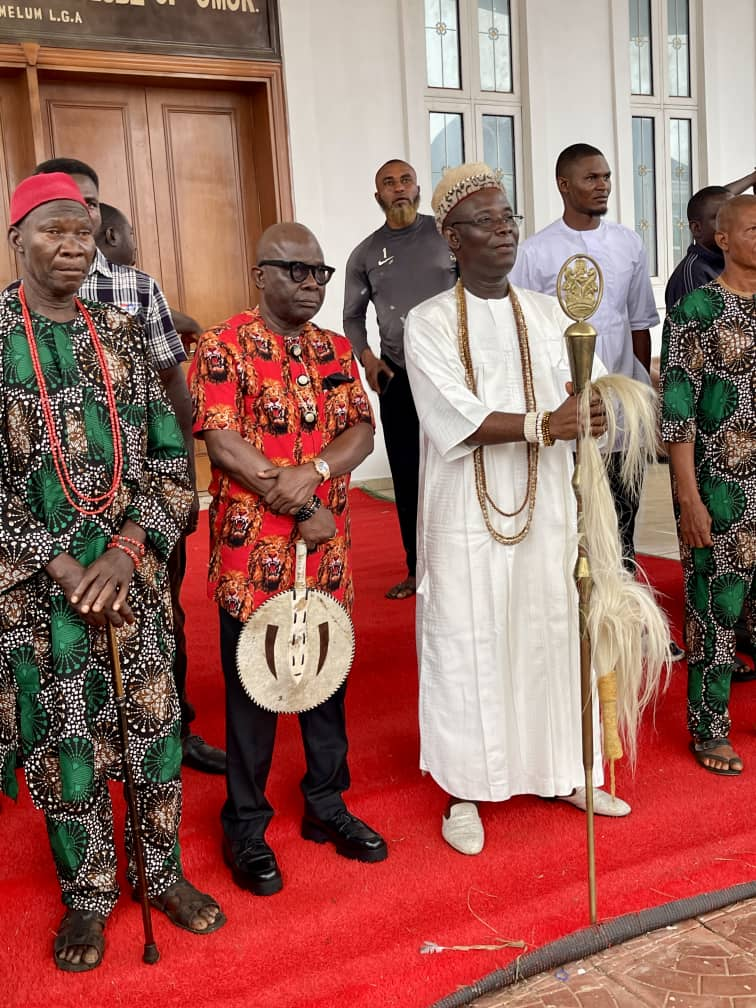
As Igwe Chidume prepared for his grand appearance, dignitaries streamed into the palace grounds – Ndi Ichie, Ndi Nze, Cabinet Chiefs, the Supreme Elders’ Council, women groups, and guests from across Nigeria and abroad.
One thing that stood out at the event was the hierarchical stratification of Omor’s traditional administrative system preside over by the Igwe. Beyond his cabinet and council of elders, there are other echelons of leaders such as: “Ndi Ichie Ukwu”, “Ndi Ichie Etiti”, and “Ndi Ichie Nta”, each age-grade vested with authority to deliberate on matters concerning their peers and other traditionally delineate spheres of authorities. This unique governance model is believed to have, for generations, fostered peace and communal harmony in Omor.
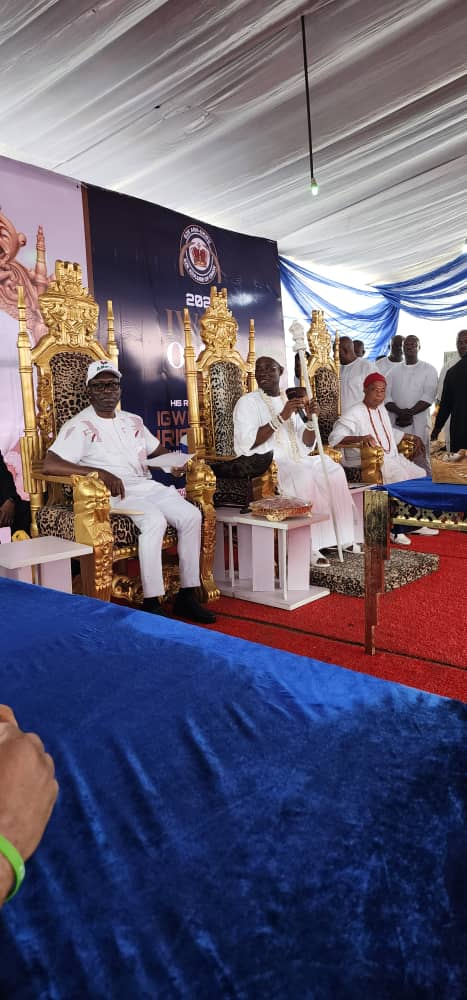
The President General of Omor, Hon. Cyril Okezie, praised the monarch for transforming the “Iwa Ji” festival into a cultural carnival that not only cements Omor’s identity but also draws visitors from across Nigeria and even overseas.
Similarly, Chief Dominic Machi Nwakibeya Aniukwu of the Supreme Elders’ Council extolled Igwe Chidume as “God’s gift to Omor.” He recalled the monarch’s tangible legacies such as the provision of potable water which has been a major challenge; construction of tarred roads within the community, financial support for farmers and other developmental strides that have improved the quality of life in the kingdom.
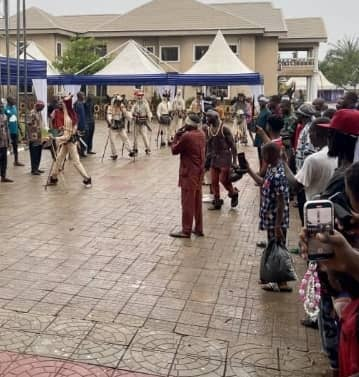
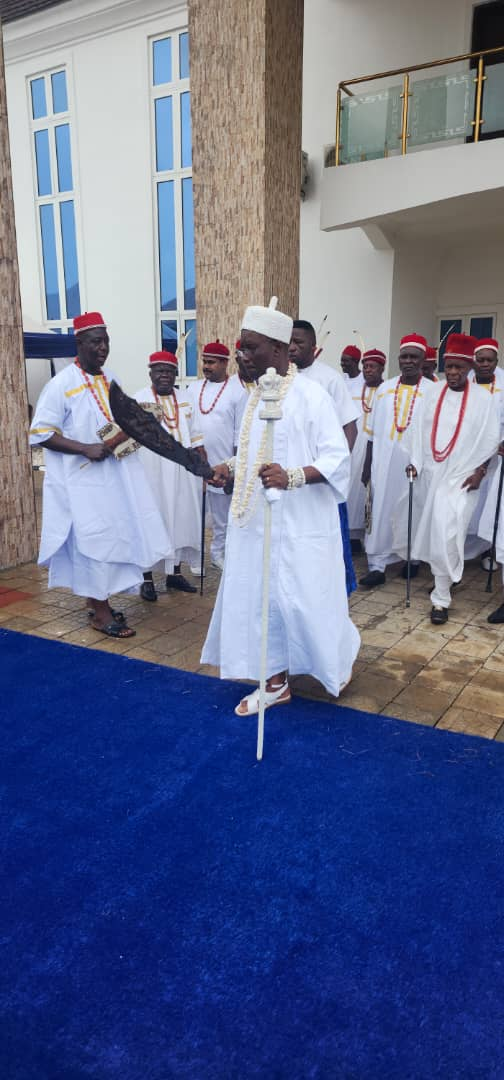
When Igwe Chidume eventually reappeared, he did so with characteristic majesty. Clad in his royal attire, he led his cabinet in a slow but deliberate procession, pausing at the palm-frond tent of the “Ikoro” drummers. There, he performed the royal dance, his dignified steps, choreographed from old.
The arrival of Governor Charles Chukwuma Soludo, CFR, elevated the atmosphere further. Igwe Chidume received him warmly, offering solemn prayers over kola nuts.
In his welcome, the Igwe praised Soludo’s leadership but reminded him, with good-humoured metaphor, that promises of government must also translate to tangible results. “Just as one perceives the aroma of moi-moi while still grinding the beans,” the monarch quipped, so too should Ndi Omor begin to perceive the aroma of government’s promises.
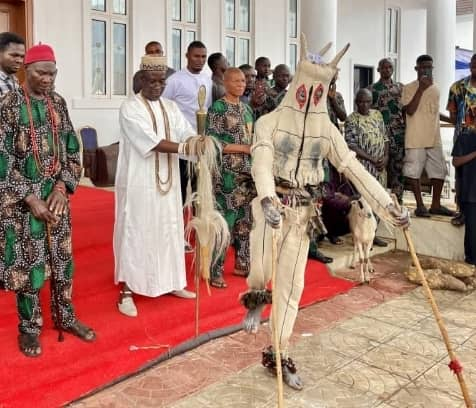
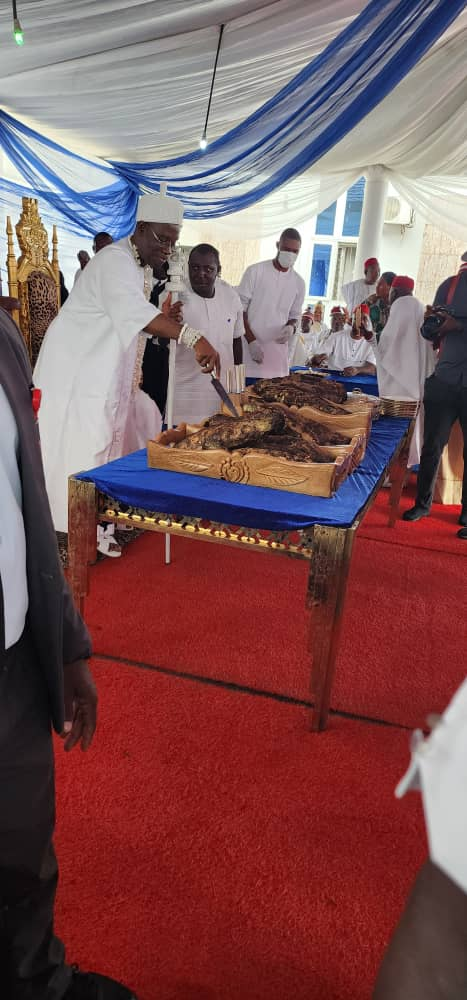
He then symbolically sliced the roasted tubers yams, which was the climax of the celebration and took the first bite with the Governor, cementing the bond of respect between community and state.
Responding, Governor Soludo pledged that Omor would not be left behind in his development blueprint. He promised to prioritize the construction of a 30-kilometre road linking Omor and directed the Commissioner for Agriculture to revisit the power supply challenge at the Omor Irrigation Plant.
He commended Omor for their strong electoral support in the last election, assuring them that their loyalty would be rewarded. He praised Omor fo having capable people and urged them to come forward to join hands with his administration to transform Anambra State.
After the formalities, the Governor departed, leaving the monarch to continue receiving homages from guests in the palace auditorium. Gifts poured in, songs of praise filled the air, and the rhythmic pulse of the Ikoro drum carried the festival deep into the evening.
The 2025 Iwa Ji Omor was more than a feast of yam. It was a fusion of heritage and modern leadership. A reminder that culture is not a relic of the past but a living, breathing force, shaping the identity and aspirations of a people.
In the chants of the “Nmanwu Isato”, in the stratified deliberations of the elders, and in the voices of the people hailing their Igwe, one truth shone through: Omor’s traditions endure not as memory, but as legacy, guiding the present and inspiring the future.
*Sir Paul Nwosu PhD is the Editor-in-Chief of Alpha Times