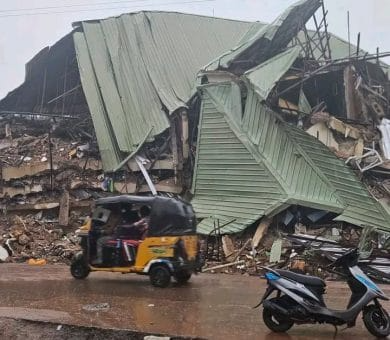
By Paul Nwosu PhD || AlphaTimes
The collapse of the three-storey Elite Five Star Lodge near the Federal Polytechnic, Oko, which has so far claimed two lives and left several others injured, is more than another tragic headline. It is an indictment of a building culture where profit too often takes precedence over human life.
The Anambra State Government deserves commendation for swiftly constituting a high-powered panel of inquiry comprising engineers, architects, builders, town planners and other professionals to investigate the immediate and remote causes of the disaster. The panel’s findings will undoubtedly be useful, particularly if they lead to criminal prosecution where culpability is established.
Yet, beyond the inevitable recommendations of another investigative committee lies an uncomfortable truth that Nigerians already know. Buildings do not simply collapse without warning. They fail because someone cuts corners, compromises standards, ignores professional advice or looks the other way.

Even more disturbing are preliminary revelations by the Commissioner for Physical Planning and Urban Development, Chijioke Ojukwu, that the hostel management allegedly knew of structural defects before the building came crashing down but continued to collect rent instead of evacuating residents. If established, such conduct would represent not mere negligence but a shocking disregard for human life.
A troubling pattern is emerging in Anambra. In February 2024, a three-storey building under construction collapsed at Ochanja Market, Onitsha, killing six people. In Awka, another building under construction partially collapsed following structural failures. Now Oko has joined the growing list of avoidable tragedies.
One striking feature connects many of these incidents. They are largely commercial developments – student hostels, shopping complexes and rental buildings. Rarely do privately occupied family homes collapse in similar circumstances. The explanation is difficult to ignore. In the desperate pursuit of maximum returns, some developers sacrifice quality materials, ignore engineering specifications, engage unqualified artisans and rush projects to market before they are structurally sound.
But developers alone cannot bear the blame. Building failures are also symptoms of institutional failure. Regulatory agencies exist to ensure that approved drawings are followed, construction stages are inspected and defective structures are identified before lives are endangered. When these responsibilities are compromised, whether through negligence, incompetence or corruption, the consequences are measured not in paperwork but in human lives buried beneath concrete.
This is why the government’s promise to prosecute anyone found culpable and to revoke land allocations where buildings collapse deserves serious consideration. Sanctions must be severe enough to send an unmistakable message that reckless construction will no longer be tolerated.
However, punishment after tragedy is not enough. Prevention must become the priority.
The Ministry of Physical Planning and Urban Development should strengthen site inspections from foundation to completion, ensuring that approvals are not treated as mere administrative formalities. Every stage of construction, particularly for multi-storey commercial buildings, should undergo mandatory structural certification before occupation.
Equally important is the optimal use of the Anambra State Materials Testing Laboratory in Nnewi. Reinforcement rods, cement, concrete, blocks and other critical building materials should undergo rigorous testing before they are deployed in major construction projects. Scientific verification of material quality should become standard practice rather than an afterthought.
Officials entrusted with safeguarding building standards must also recognise the enormous moral burden they carry. A compromised inspection, an overlooked defect or a bribe accepted today may become tomorrow’s death sentence for innocent occupants. Public office in the regulatory sector is not merely about issuing approvals; it is about protecting lives.
The Oko disaster should therefore become a defining moment for Anambra. If the state is truly the Light of the Nation, it must illuminate a new standard of professionalism, accountability and uncompromising enforcement in the construction industry.
The victims of Oko deserve justice. But even more importantly, they deserve to be the last people to die because someone valued rent above responsibility and profit above human life.