
By Polycarp Onwubiko || AlphaTimes
The Chairman of the Board of Keystone Bank Limited and Chairman of the Manufacturers Association of Nigeria (MAN), South East Zone, Lady (Dr.) Adaora Ogochukwu Chukwudozie, NPOM, has called for a deliberate national strategy to build globally competitive Nigerian brands, describing enterprise development as the foundation of sustainable economic growth.
Delivering the keynote address at the BusinessDay Anambra Industrial Summit & Awards 2026 in Awka, Lady Chukwudozie said Nigeria’s future prosperity would depend not on the abundance of its natural resources but on its ability to create products and services that earn global confidence.
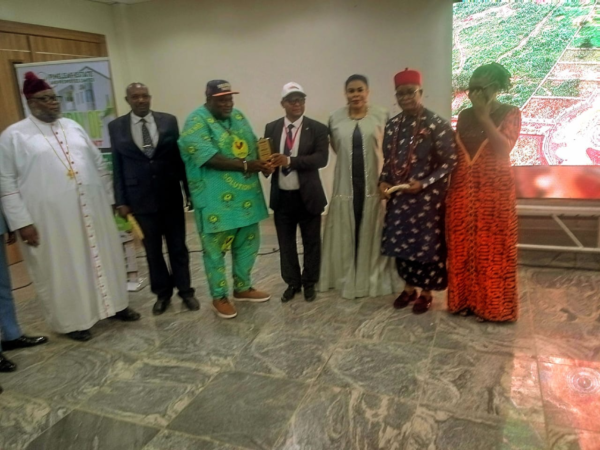
Speaking on the theme, “Building Nigerian Brands the World Can Trust: Globalising Local Brands for Economic Sustainability,” she challenged government, industry, financial institutions, academia and development partners to work together to create an enabling ecosystem that allows Nigerian businesses to compete successfully on the global stage.
According to her, building globally respected brands requires far more than expanding exports.

“Globalising does not simply mean selling products beyond our borders. It means raising our standards so consistently that products proudly made in Nigeria can compete confidently anywhere in the world. Trust is the currency of global commerce, and quality is the price we pay to earn it.”
She noted that history had shown that countries such as Germany, Japan and South Korea achieved lasting prosperity by investing in productive industries, innovation and globally respected brands, stressing that Nigeria possesses the entrepreneurial talent and industrial capacity to achieve similar success.
Lady Chukwudozie observed that while Nigerian entrepreneurs have consistently demonstrated resilience and ingenuity, the country must now focus on building the systems that enable businesses to scale.
“We have never lacked ingenuity. What we have lacked, too often, is the bridge—capital, standards, systems and confidence—to take what works locally and scale it globally,” she said.
Highlighting the importance of competitiveness, she identified manufacturing as the engine of industrialisation but stressed that competitiveness extends beyond the factory floor to include reliable energy, patient capital, innovation, infrastructure and policy consistency.
She described affordable and reliable energy as a strategic economic advantage, noting that high energy costs continue to undermine industrial productivity and global competitiveness. She urged greater adoption of innovative financing models, embedded generation, renewable energy solutions and stronger public-private partnerships to accelerate industrial growth.
Drawing from her experience in both manufacturing and banking, Lady Chukwudozie called for a closer partnership between industry and the financial sector.
She urged financial institutions to view manufacturers and entrepreneurs as long-term partners in national development, adding that productive enterprise should be supported with patient capital capable of driving industrial expansion and innovation.
The keynote speaker also underscored the importance of research, technology, quality assurance and adherence to international standards, maintaining that innovation must move beyond research institutions into factories and commercial enterprises where it can create value and improve lives.
Using Anambra State as an example, she commended indigenous companies including Innoson Vehicle Manufacturing, Cutix Plc JUHEL Pharmaceuticals and Tiger Foods for demonstrating that Nigerian businesses can compete successfully when entrepreneurship is supported by resilience, innovation and disciplined execution.
She noted that the achievements of these companies illustrate the immense potential of Nigerian enterprise and reinforce the country’s ability to build globally respected brands.
Addressing young entrepreneurs, Lady Chukwudozie encouraged them to remain resilient despite prevailing economic challenges.
She observed that every globally admired company began as a bold idea pursued with discipline, perseverance and integrity, expressing confidence that the next globally recognised Nigerian brand could emerge from any community across the country.
She concluded by emphasising that building Nigerian brands is a shared national responsibility requiring collaboration among government, industry, financial institutions, universities, development partners and entrepreneurs.
Calling for a renewed national commitment to industrial competitiveness, she urged stakeholders to invest in reliable energy, innovation, quality and strong institutions while fostering an environment that rewards enterprise and long-term investment.
“History will not remember us for the challenges we inherited. It will remember us for the future we chose to build,” she said.
She concluded with a call for Nigeria to create businesses that compete with confidence, industries that inspire innovation and brands that command trust across the world, expressing optimism that the current generation has both the opportunity and the responsibility to transform Nigerian enterprise into a global symbol of quality, integrity and excellence.