By Ikpechukwu Ojobor
A renewed push to strengthen primary healthcare delivery in Enugu State has placed fresh spotlight on critical gaps troubling rural health facilities — from chronic staff shortages and empty drug shelves to deteriorating buildings that endanger both patients and health workers.
This was highlighted during the Enugu State Media Meeting on the Global Fund–supported Malaria Community Engagement and Strategic Initiative (CE-SI) project, implemented by the New-Life Community Care Initiative (NELCCI) with support from the Civil Society in Malaria Control, Immunisation and Nutrition (ACOMIN).
Executive Director of NELCCI and Enugu State Coordinator of ACOMIN, Florence Ifeanyi Aneke, told journalists that despite reforms in the health sector, many communities still face life-threatening service delivery gaps.
According to her, the impact of poor healthcare is real and immediate.
“Across Nigerian communities, our primary healthcare facilities are under strain. From overworked staff, empty drug shelves to leaking roofs — these challenges threaten essential HIV, TB and malaria services. Mothers walk long distances only to find no nurse on duty. Patients are turned away due to stock-outs. Communities are losing confidence in their local health systems,” she said.
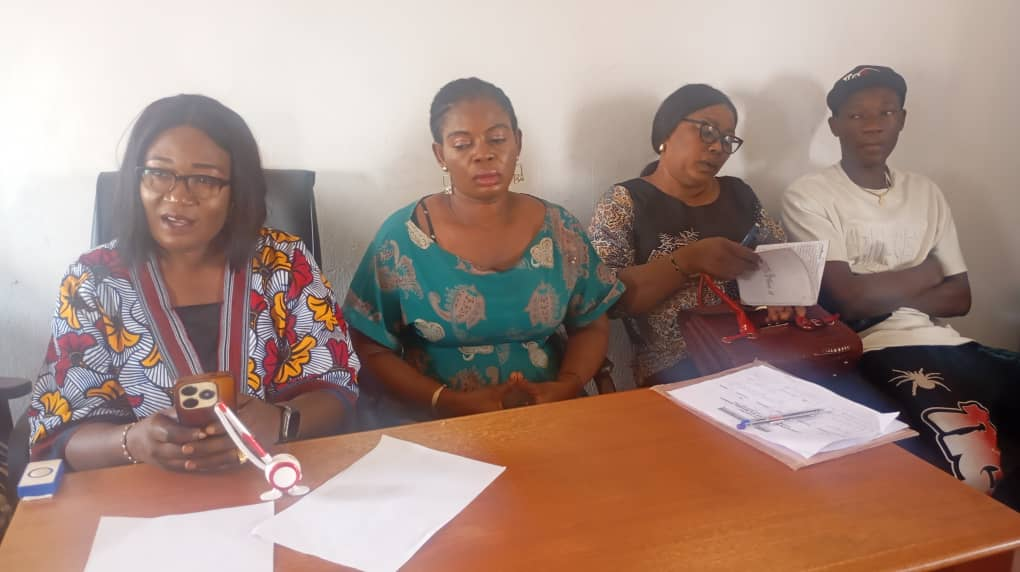
Aneke explained that the CE-SI project helps communities identify these challenges and engage government officials to seek solutions. She said this approach has already yielded results in Enugu State, noting that focused group discussions and advocacy in Mkpologwu led to government action that produced a new health facility for the community. Sensitisation campaigns have also improved awareness and the use of HIV, TB and malaria services.
She urged government agencies, private organisations, philanthropists, media professionals, traditional leaders and community groups to work collectively to improve staffing, ensure steady drug supply and fix decaying infrastructure. She said only sustained advocacy and investment can transform Nigeria’s struggling health facilities into dependable centres of care.
Assistant State Health Educator at the Enugu State Primary Healthcare Development Agency, Uche Igbo, who represented the Executive Secretary, admitted that many facilities still require closer supervision and urgent intervention.
“I am going to relay what is happening in the facilities visited. There are loopholes that need to be addressed, irrespective of the fact that the Governor, Barr. Peter Mbah, is already renovating and equipping new facilities.
“We must also look into the dilapidated ones where staff are not working as they ought to. We need to know what is happening and why they do not go to work. We have started partnering with this NGO and the partnership will continue,” she said.
Health experts at the meeting also raised concerns about malaria prevention. Representing the Enugu State Malaria Elimination Programme, Anthonia Onyishi, standing in for Programme Manager Dr. Ifeoma Otiji, warned that malaria elimination requires long-term commitment to preventive measures.
“Malaria can be cured permanently, but the only way to prevent it is through Integrated Vector Management — indoor residual spraying, larviciding or larval source management. Because it is capital-intensive, we are only managing it for now. If you roll malaria back, it will return. Keeping our environment clean is the cheapest and most effective measure,” she said.
She added that regular facility monitoring is essential to ensure proper use of malaria commodities and adherence to testing procedures before treatment.
For residents of Mkporogwu, the intervention has already brought relief. A community woman, Gloria Okafor, said the maternity centre built through NELCCI’s efforts has given them hope.
“We have come to tell the world the good thing they are doing for us. They built a maternity centre for us free of charge. Before now, we delivered with traditional birth attendants, and some of our women died. That was why we asked them to come and help us,” she said.