Ifeanyi E Ihegwuruike
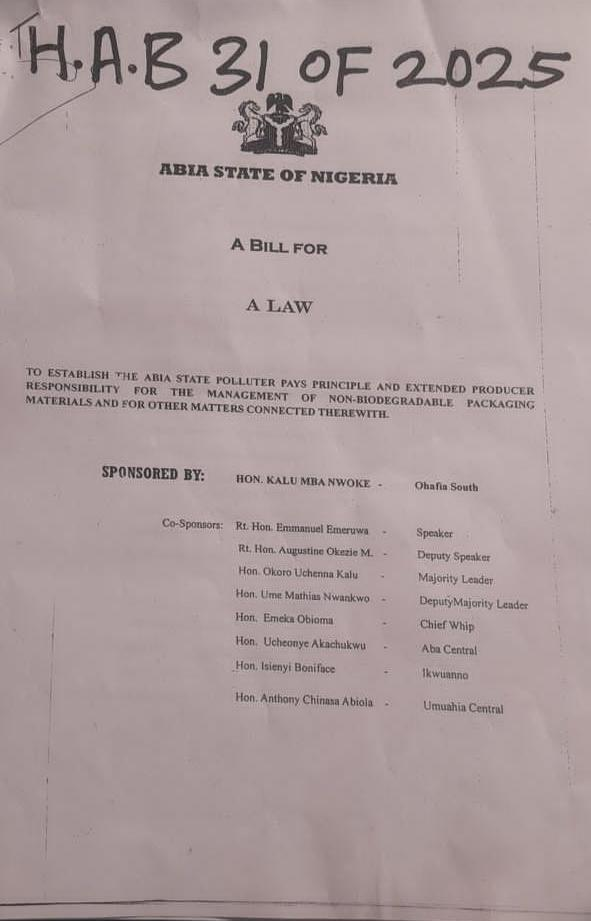
The Youth and Students Advocate for Development (YSAD) has knocked against the proposed Abia State Polluter Pays and Producer Extended Responsibility Bill 2025 (H.A.B 31 of 2025).
The bill sponsored by Hon. Kalu Mba Nwoke from the Ohafia South Constituency in the Abia State House of Assembly seeks to introduce Extended Producer Responsibility (EPR) to the makers of products packaged with non-biodegradable materials.
YSAD said that while it remains committed to promoting sustainable environmental practices, there is an urgent need for a comprehensive, inclusive, and action-orientated approach to tackling the escalating problem of plastic pollution in the state.
The proposed bills, if passed, risk placing undue burden on producers and polluters without providing sufficient incentives or support for innovative waste management and pollution prevention strategies.
Obinna Nwagbara, Executive Director of YSAD, said that if the proposed bill is passed, it risks placing undue burden on producers and polluters without providing sufficient incentives or support for innovative waste management and pollution prevention strategies.
YSAD said it is deeply concerned that the proposed legislation appears to have been draughted without sufficient consultation or involvement of key stakeholders such as local communities, civil society organisations, and residents of Abia State.
The group said that true policy development that aims to tackle complex environmental issues like plastic pollution should incorporate diverse perspectives and insights from those directly impacted.
YSAD warns that ignoring this participatory process risks producing legislation that is disconnected from the realities on the ground and less effective in delivering the desired environmental outcomes.
The group advised that rather than focusing solely on financial or punitive measures like the polluter pays principle, it will simply advocate for a comprehensive strategy that emphasises proactive measures designed to prevent plastic pollution at the source.
YSAD said that such measures should include establishing and expanding accessible recycling and waste recovery programs across urban and rural communities, ensuring no area is left behind.
Other suggestions include “Investing in modern waste collection, disposal, and processing infrastructure to effectively manage plastic waste;
“Launching statewide awareness campaigns to educate citizens on responsible plastic use, reduction, and recycling practices;
“Encouraging community-led initiatives that promote sustainability and responsible waste disposal habits;
“Supporting innovation in biodegradable and environmentally friendly alternatives to traditional plastics.”
Nwagbara further said that it is obvious that “plastic pollution poses a significant threat to our health, ecosystems, and the well-being of future generations. Rather than focusing only on penalising polluters after the damage is done, the Abia State government should adopt a proactive approach—fostering innovation, promoting collaboration, and prioritising education to prevent plastic waste from being created in the first place.”
YSAD further stated that it is imperative that policymaking on environmental issues in Abia State becomes more inclusive, transparent, and participatory for a better outcome.
The group said that civil society organisations, community members, and other stakeholders should be given a platform to contribute ideas and express their concerns.
“Effective environmental legislation should be a product of dialogue and collaboration, ensuring that solutions are contextually appropriate and widely supported,” YSAD said.
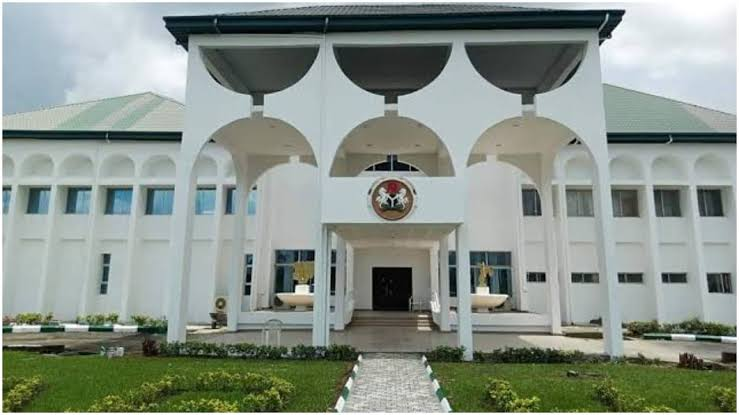
The group called on the Abia State House of Assembly to urgently reconsider the proposed Polluters Pay Principle and Producer Responsibility Bill.
It instead recommends the development of a comprehensive environmental strategy anchored in community engagement, transparency, and sustainable practices.
“Only through proactive, inclusive, and well-informed actions can Abia State effectively address the challenges of plastic pollution, protect its environment, and promote sustainable development for all its residents,” YSAD said.