By Paul Nwosu || AlphaTimes
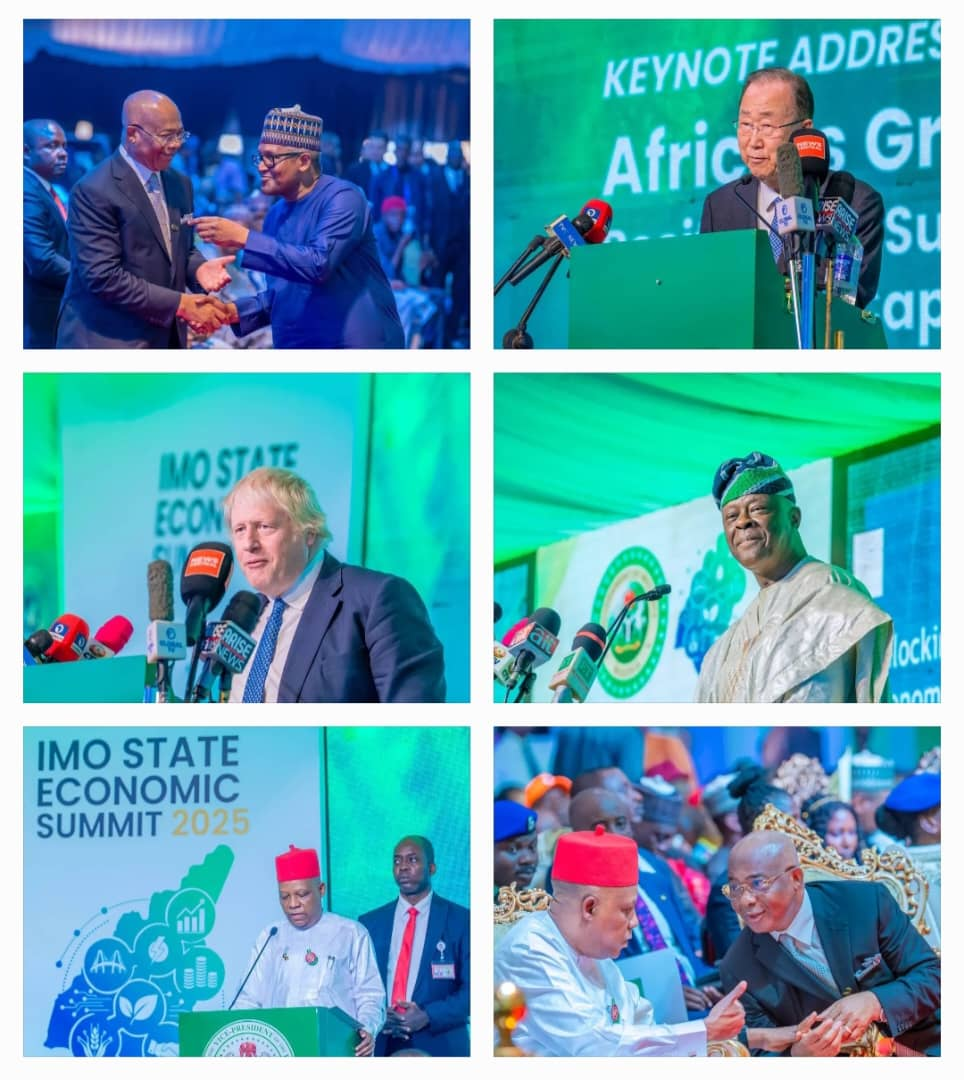
In an era when many subnational governments struggle to convert rhetoric into real economic engagement, Governor Hope Uzodimma has, with the maiden Imo Economic and Investment Summit, demonstrated what it means to convene a local event with genuinely global resonance. Owerri became, for two days, an unlikely but impressive convergence point for presidents, former heads of government, global CEOs, multilateral institutions and Nigeria’s most influential industrialists, a feat unprecedented in the state’s history.
What distinguished the Imo summit was not merely the star studded guest list, but the seriousness and quality of the conversations that took place. Vice-President Kashim Shettima, representing President Bola Tinubu, framed the summit as an important step in making subnational economies competitive, a necessary condition for Nigeria’s trillion-dollar economic ambition. Presidents Joseph Boakai of Liberia, Amina Akim of Mauritius and the Prime Minister of São Tomé and Principe, Americo Ramos, offered a continental perspective, situating Imo within Africa’s emerging arc of economic possibilities.
Even more telling was the presence of former British Prime Minister Boris Johnson and former UN Secretary-General Ban Ki-moon, individuals whose global profiles underscore the international gravitas the summit commanded. Business titans such as Aliko Dangote and former Afreximbank President Benedict Oramah did not just attend; they made concrete commitments that could shape Imo’s economic trajectory in the near future. These are not personalities who travel across continents for symbolic appearances; they showed up because they saw something worth engaging.
The summit’s technical sessions generated several actionable commitments. Dangote signalled readiness to partner with the state on strategic investments. Prof. Oramah pledged Afreximbank’s continued support for the Orashi River dredging and for a petrochemical testing facility near Sam Mbakwe International Cargo Airport, projects with transformative potential. Finance Minister Wale Edun identified Imo’s planned independent power project as the “real game changer,” while other global voices stressed sustainability, innovation and partnerships.
Uzodimma’s presentation of the state’s assets, from the claim of the largest proven gas reserves in West Africa to a burgeoning digital economy, extensive road infrastructure, improved security, agricultural wealth, and the OKOBI initiative (One Kindred, One Business), provided the kind of structured pitch many states fail to articulate.
Cynics will insist that summits do not translate automatically into investment flows, and they would be right to a point. But that criticism misses a crucial reality. These global figures chose to come to Imo, a state often painted, sometimes unfairly, as insecure. Their physical presence was itself an investment of confidence. In international business culture, that leap of faith is the first and indispensable step toward future capital commitments. Investors rarely commit to territories they cannot even visit.
The mere fact that leaders of this calibre, from presidents to global financiers, came to Owerri signals a fundamental shift in how Imo is perceived. It also confirms Uzodimma’s capacity to command global attention, a capability many of his peers lack. While some governors limit themselves to loud declarations or parochial politicking, Uzodimma has shown he can translate ambition into serious global engagement.
The success of the summit has undoubtedly redefined perceptions of Uzodimma’s leadership. He demonstrated not just logistical competence but strategic clarity and the ability to articulate a development vision, attract the right partners, and set the stage for measurable outcomes in the short and medium term. Imo has not merely hosted an event; it has positioned itself on the global investment radar.
The true test, of course, will be implementation. Deals must be followed through, reforms sustained, and the enabling environment continuously strengthened. But one undeniable thing is that Uzodimma has elevated the standard of what a state-level investment summit can look like. He has shown that a subnational leader with vision can literally convene the world.
In a political climate where many state executives are content with populist theatrics, Hope Uzodimma has chosen a different path – one defined by competence, seriousness, and global engagement. If Imo converts even a fraction of the commitments made during the summit, the event will not only be historic, it will be transformative.
For now, the governor deserves full credit for teaching the rest of the country an important lesson. That a “local” summit, when driven by vision and professionalism, can become truly international in both character and consequence.