Valentine Obienyem
Today, I attended Mass at Archbishop Obiefuna Retreat Centre in Okpuno. I will devote a separate write-up to today’s service, which commemorated the Holy Family.
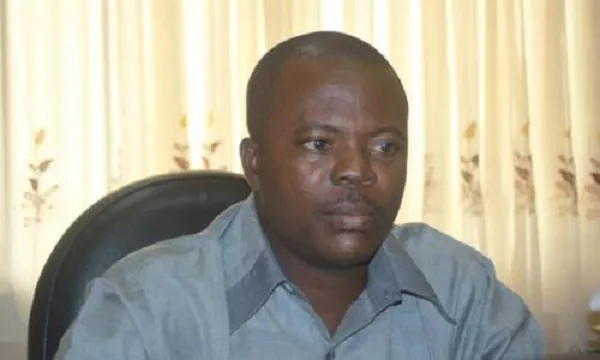
Towards the end of the Mass, during the announcements, the Chaplain, Fr. Polycarp Okoye, mentioned that many people had been asking him whether the man who claimed to have resigned from the priesthood and gave an interview with Mr. Mathias Ezeaku was really a Rev. Fr. Fr. Okoye even revealed that he was his classmate and that he had sometime visited him personally. Because I had listened to the interview, my interest was piqued, and I resolved to meet Fr. Ogbonna after Mass.
During our conversation, Fr. Ogbonna was reluctant to share many details. This is understandable, given that he and his peers belong to the same set and may view him differently when they read this, especially if it naturally finds its way into their class WhatsApp group. He may have been careful in what he revealed, out of both caution and respect for his former classmates.
However, I inquired more and learned from another person that knows him very well that the renegade priest had been called “Sympathy” during his seminary days. I did not ask him how the name came about, as my focus was not on probing his character. Yet a name like “Sympathy” invites curiosity. Why was he given that name? Was it a reflection of his nature, a comment on his demeanour, or perhaps an ironic label? Could it hint at experiences of hardship or vulnerability in his youth, or mark him as someone who instinctively reached out to others in times of crisis? What struggles might have shaped him into the person he is today? The very existence of such a nickname opens a window into a past full of untold stories, challenges, and moments that left a lasting imprint on his life.
From further investigations, I learned that Fr. Ogbonna had a troubled priesthood and suffered from what is commonly known as a persecution complex – one of the most frequent psychological afflictions of renegade priests. Such individuals often recount, from Jerusalem to Jericho, how they were mistreated by bishops and fellow priests as if they became priests because of them. Fr. Ogbonna exhibited similar traits. He complained bitterly that he was not given a parish while his contemporaries were. When he took the matter to the appropriate quarters, he was told it was an oversight that would be corrected.
But one must ask: is it an absolute requirement that every priest be assigned a parish simultaneously with his peers? Could it be that his superiors observed behaviours that made him psychologically unfit for certain responsibilities? Or perhaps there were other considerations unknown to him, hidden dynamics within the diocese that shaped their decisions? Did he interpret ordinary administrative choices as personal slights, or was there a deeper, unresolved tension at play? Might his perception of persecution have amplified minor setbacks into crises, and could these experiences have influenced the way he related to authority and obedience? This is often the mindset of those whose intent and purpose are at odds with institutional discipline.
Investigations also revealed that he was posted to a school but refused to report, instead engaging in various informal businesses in Abuja, including “using the vehicle given him for pastoral activities to engage in “ Kabukabu” business. Such actions reveal the patterns of someone disinterested in genuine priestly work, more concerned with finding an easy route to financial gain. One could reasonably infer, conjecturally, that he may have resorted to these ventures, such as driving kabukabu, to fund travel abroad and may have even fallen victim to visa racketeers. His actions seem to reflect the frustrations of a soul struggling to reconcile expectations with reality.
Fr. Ogbonna is not the only one from their set to leave the priesthood. We need not be surprised that more such cases will be witnessed. Among Gen Z, nothing seems sacred. They are embracing extremes of freedom that may ultimately prove their undoing. Consider marriage among this generation: despite all the teachings offered during marriage preparation courses, such guidance often carries little weight for them, as reflected in the alarming rate of divorce. This recklessness is evident across all spheres of life, including the priesthood. One cannot help but wonder how these attitudes might influence the upbringing of their children. Such patterns inevitably lead to sustained questioning of even the most venerable institutions, including the priesthood itself.
The Catholic priesthood stands as one of history’s most disciplined, educated, and influential institutions. It is characterised by rigorous intellectual formation, moral seriousness, and a tradition of self-sacrifice. It has historically preserved learning, maintained social stability, and cared for the vulnerable in times of upheaval. Practices such as celibacy, though debated, have often contributed to institutional continuity and focused devotion, sustaining the priesthood’s profound civilisational impact.
At the same time, renegade priests highlight the tension between lofty ideals and human frailty. Those who deviate through moral failure, dissent, or personal ambition are exceptions, yet they often attract disproportionate attention, especially when figures like Mathias Ezeaku stand ready to give them grand receptions. Historically, the Church has responded to such failures through correction, reform, and discipline. When Archbishop Milingo faltered, St. John Paul II urged him in their meeting: “In the name of God, come back to the Church.” This, indeed, is the message that bishops should convey to their renegade priests. These realities underscore both the greatness of the priestly ideal and the constant struggle required to live faithfully up to its demanding moral and spiritual standards.
In Fr. Okoye, I could see a heart wounded by the turn of events regarding his classmate. Could this be the reason he told me that what Fr. Vitalis Ogbonna needs most is our prayers, for, according to him, he is suffering a crisis of belief? I, however, would describe it more aptly as a crisis of unbelief. I suspect he may not have truly believed in God even before his ordination. Otherwise, why would he seek the open embrace of Mathias Ezeaku? Listening to the interview, one could liken it to a reverse echo of Mathias’s thunder blasts.
I do not know whether Fr. Ogbonna has been laicised. Yes, priests sometimes undergo laicisation so that they can be returned to the lay state and, if they wish, be allowed to marry. The Church undertakes this process with care and love, recognising the human circumstances that may lead a priest to take such a step. Yet, whether laicised or not, the sacramental imprint of ordination remains with a priest forever.
What is particularly worrisome is when priests or religious sisters, having once pledged their lives to the Church, turn against it. From his interviews, one could interpret Fr. Ogbonna’s words as an inaugural speech signalling the trajectory he intends to follow – a path reminiscent of Sr. Kinse Anastasia Shako. Would they marry each other as Fr. Martin Luther married a nun and become joint content creators using the Church? Meanwhile, Ezeaku is publicly raising funds for him and may even go as far as conferring upon him a “priestly” role in his Omenana Church. Such developments raise serious questions about vocation, fidelity, and the responsibilities inherent in sacred office, highlighting the tension between personal ambition and the enduring obligations of the priesthood.