… Sanwo-Olu, Uzoka-Anite, top Igbo entrepreneurs unveil Lagos–Igbo Consultative Council, GPS Dialogue Platform
By Neta Nwosu
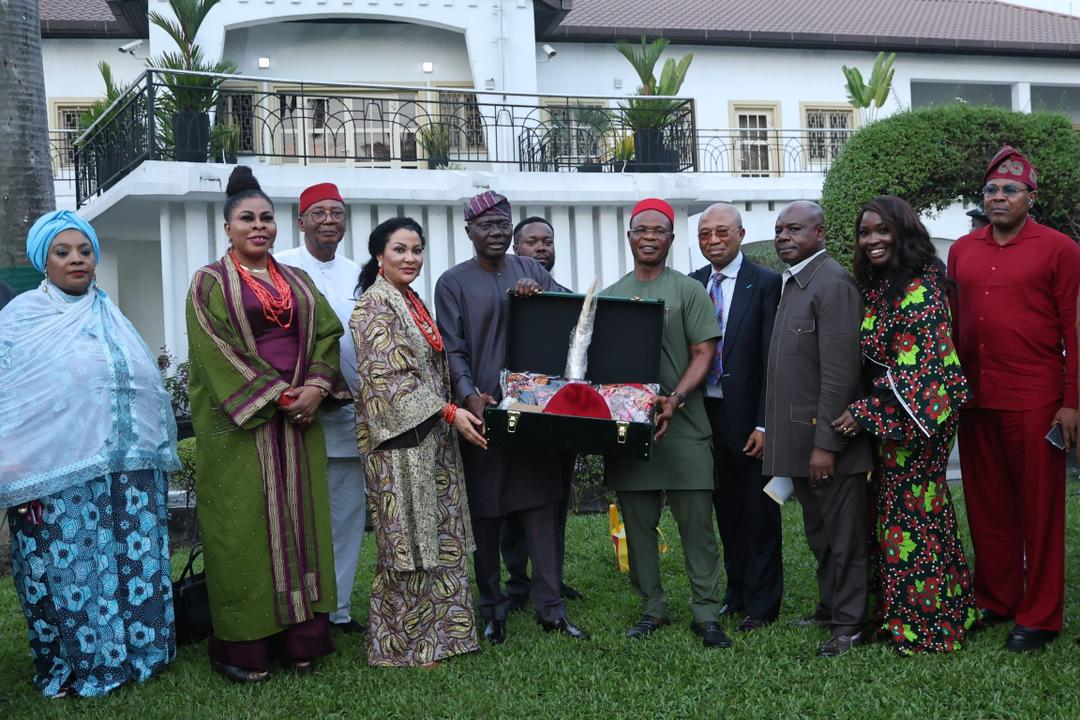
In what many stakeholders are describing as one of the most symbolic gestures of economic diplomacy since the 2023 elections, Lagos State Governor Babajide Sanwo-Olu and the Minister of State for Finance, Dr. Doris Uzoka-Anite, on Friday forged a fresh alliance with prominent South-East business leaders to deepen investment partnerships and rebuild trust between the nation’s largest commercial hub and one of its most entrepreneurial communities.
The high-level meeting, held at Lagos House, Marina, was more than a routine courtesy visit. It marked a decisive step in the Federal Government’s effort to re-anchor its economic reform agenda on collaboration, inclusiveness, and renewed confidence between policy-makers and private investors — a central plank of President Bola Ahmed Tinubu’s Renewed Hope Agenda.
Leading the delegation, Uzoka-Anite announced the launch of the Government and Private Sector (GPS) Dialogue Series, a platform designed to institutionalise regular engagement between federal and state officials and the business community. The initiative, she said, would begin in Lagos, “the city that never sleeps, and the heartbeat of West African commerce.”
“The GPS Dialogue is a bridge connecting policy with practice and ambition with action,” the minister explained. “It is about sitting government and entrepreneurs at the same table, to turn shared ideas into practical economic reforms.”
She commended Governor Sanwo-Olu’s administration for its “forward-thinking reforms, pragmatic governance, and cooperation with the Federal Government,” particularly on major projects such as the Lagos Green Line Metro Rail.
Uzoka-Anite, who conveyed greetings from the Coordinating Minister of the Economy, Mr. Wale Edun, reaffirmed the Federal Government’s commitment to empowering small and medium-sized enterprises (SMEs), broadening access to finance, and strengthening collaboration with states to drive inclusive growth.
The visit carried a symbolic weight beyond economics. It came against the backdrop of strained ethnic relations following the 2023 general elections, during which reports of targeted attacks and intimidation of Igbo-owned businesses in Lagos drew widespread condemnation.
Friday’s engagement therefore signaled a deliberate recalibration, an attempt to replace tension with trust, and suspicion with strategic partnership.
Among the key proposals tabled was the creation of a Lagos–Igbo Consultative Council, envisioned as a formal platform for continuous dialogue and cooperation on commerce, investment, and social development between the Lagos State Government and the South-East business community.
Responding, Governor Sanwo-Olu praised the Federal Government’s renewed emphasis on private sector engagement, pledging Lagos’ continued support for policies that drive investment and social equity.
“Lagos is built on diversity and resilience,” Sanwo-Olu said. “We will continue to work with all stakeholders, irrespective of background, to promote fairness, opportunity, and shared prosperity. The success of Lagos is the success of Nigeria.”
He also welcomed the choice of Lagos as host of the maiden GPS Dialogue, promising his administration’s full cooperation to ensure its success. “Partnerships like these,” he added, “are not just about economics. They are about rebuilding bridges of trust, expanding opportunities, and creating a Lagos where every Nigerian can thrive.”
The minister’s delegation comprised several high-profile South-East entrepreneurs based in Lagos, many of whom have built multibillion-naira enterprises that power the city’s retail, manufacturing, and logistics sectors.
“They are shining examples of Nigerian entrepreneurship,” Uzoka-Anite said. “People who have made Lagos their home and are contributing daily to its growth. Each of them represents a generation that believes deeply in Nigeria’s potential and in the power of partnership over division.”
Their participation underscored a broader reality that Lagos’s economy, contributing over 30% of Nigeria’s GDP, is deeply intertwined with the energy and innovation of business communities from across the federation.
Analysts say the meeting represents a quiet but strategic shift in Nigeria’s development politics, one that moves away from zero-sum ethnic narratives toward pragmatic economic integration.
By hosting the Federal Government and a delegation of South-East business leaders, Lagos has positioned itself as the laboratory for the kind of cross-regional collaboration that could anchor Nigeria’s post-reform recovery.
“This is not just Lagos reaching out,” said a policy analyst at the event. “It’s a signal that national unity can be rebuilt around shared economic interest — jobs, innovation, and investment, rather than ethnic competition.”
The forthcoming GPS Dialogue Series, according to officials, will feature quarterly sessions rotating across major cities, creating structured conversations on taxation, access to finance, industrial policy, and regional competitiveness.
A fresh chapter in the Lagos–Southeast Story
and the South-East business community have represented twin pillars of Nigerian commerce — sometimes in tension, often in synergy. Friday’s meeting appears to mark the beginning of a new chapter, one where both forces align to shape a more inclusive economic future.
As Uzoka-Anite puts it, “Together, we can build a Nigeria where enterprise is encouraged, innovation is rewarded, and prosperity is within reach of every hardworking citizen.”
And as Sanwo-Olu affirmed, “Lagos will always remain a place where every Nigerian, regardless of origin, can dream, build, and succeed.”