- 400km network to link five states, serve 150 industries
- Project to deliver first gas in 2028
- Governors pledge support as Mbah promises faster approvals
By Ikpechukwu Ojobor || AlphaTimes
The Federal Government has taken a major step towards industrialising the South-East with the commencement of a $100 million gas distribution pipeline project designed to connect industries across the five states in the region.
The 400-kilometre network will link gas resources to industrial and commercial centres in Enugu, Anambra, Imo, Abia and Ebonyi states, with about 150 prospective customers identified and a projected demand of 254 million standard cubic feet of gas per day.
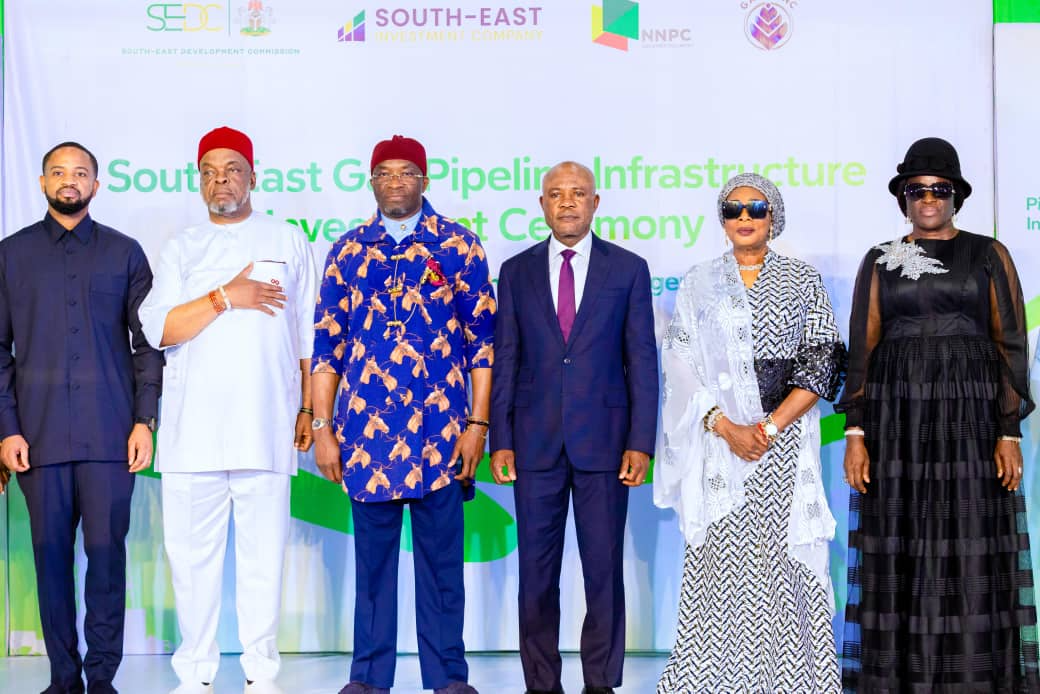
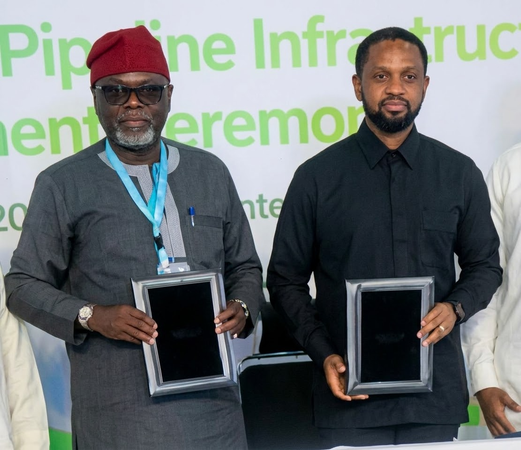
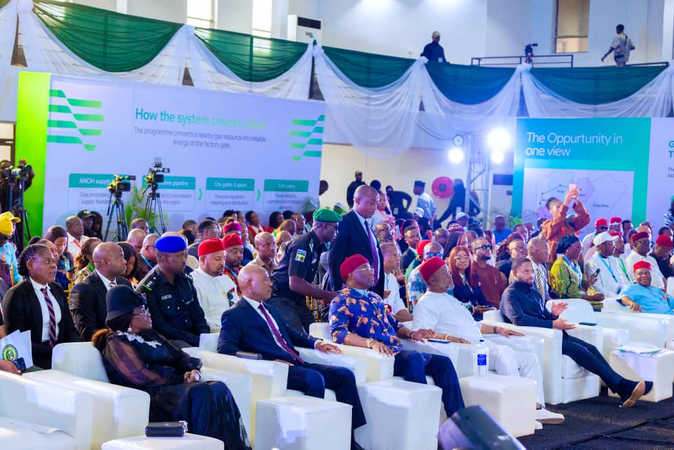
The investment agreement for the project was signed yesterday at the South-East Gas Infrastructure Investment and Project Development Ceremony held at Hotel Presidential, Enugu, with the project promoter targeting the first quarter of 2027 for the commencement of construction and the second quarter of 2028 for first gas delivery.
President Bola Tinubu, represented by Deputy Speaker of the House of Representatives, Benjamin Kalu, described the project as a strategic investment that would strengthen manufacturing, attract private capital, create jobs and unlock economic opportunities across the region.
“The South-East’s entrepreneurial spirit is one of Nigeria’s greatest economic assets. I have always believed that the prosperity of the South-East is inseparable from the prosperity of Nigeria,” Tinubu said.
He said the project reflected his administration’s commitment to building an integrated regional economy, stressing that gas infrastructure should support industries and markets across state boundaries.
“Gas infrastructure must therefore serve industries and markets, not stop at political boundaries. That is the economic logic of regional integration,” he said.
According to the President, the pipeline would strengthen manufacturing in Aba, support industrial clusters in Nnewi and Onitsha, attract productive enterprises to Enugu, expand agro-processing in Ebonyi and connect Imo’s gas resources to the wider regional economy.
He said the objective extended beyond supplying existing factories to creating opportunities for new industries, industrial parks and investments that had been delayed by unreliable energy supply.
“Our ambition is not simply to deliver gas to existing factories. It is to make possible factories that do not yet exist, industrial parks yet to be developed, and investments that have remained on the drawing board because reliable energy was unavailable,” he said.
Tinubu described the South-East Development Commission (SEDC) as an institution established to deliver measurable development outcomes, urging it to assess its performance by the investments it attracted, infrastructure it enabled, opportunities it created and lives it improved.
He also cited the South-East Vision 2050 development framework, supported by Vice-President Kashim Shettima and the region’s governors, as a foundation for coordinated economic growth.
The President said his approval of the South-East Investment Company was part of efforts to attract private capital into strategic development projects, noting that government budgets alone could not finance every development ambition.
He commended the SEDC for committing $3 million to the gas project and establishing a framework to mobilise additional funding from state governments, institutions and private investors.
Tinubu said the project’s initial phase required about $100 million, stressing that collaboration between public institutions and private investors was essential to delivering sustainable infrastructure.
“We are not investing in pipelines for their own sake. We are investing in the industries, businesses and jobs those pipelines will make possible,” he said.
He urged the commission and its partners to uphold transparency, commercial discipline, environmental responsibility, community engagement and high safety standards throughout implementation.
The President also called for clear timelines, measurable milestones and regular progress reports, saying the project’s success would be determined by its capacity to attract investments, revive industries, create jobs and improve living standards across the region.
Enugu State Governor, Dr Peter Mbah, commended Tinubu for establishing the SEDC, describing the commission as the institutional vehicle needed to realise the South-East’s longstanding industrialisation aspirations.
“Tinubu loves the Igbo. The SEDC is a commission whose time has come. It was an idea conceived many decades ago, but it took President Tinubu to establish this long-awaited dream of industrialisation of the South-East,” Mbah said.
He described the signing of the investment agreement as the beginning of the investment process, expressing excitement that the project was advancing less than 13 months after he publicly advocated the initiative.
“What we have just signed here today is an investment agreement, meaning that investment has commenced,” he said.
The governor praised the commission for adopting a financing model that brings governments and private investors together, saying the project would create opportunities for young people to build their futures in the region rather than migrate elsewhere in search of jobs.
“Before now, it was our young people running out of the region in search of greener pastures. But with what we have now, our young people can sit back and find their future here in the region. This is all thanks to President Tinubu,” he said.
Mbah assured the SEDC and its partners of the South-East governors’ commitment to the project, promising to expedite right-of-way arrangements and environmental impact assessment approvals.
“We, the South-East governors, are committed to this. We will ensure that the right of way and EIA are given accelerated approval,” he said.
Imo State Deputy Governor, Lady Chinyere Ekomaru, who represented Governor Hope Uzodimma, commended Tinubu and the SEDC for initiating the project, noting that Imo’s substantial gas resources placed the state in a strategic position to benefit.
She said the project was timely, particularly as companies were seeking to become offtakers of gas from the Assa North-Ohaji South development.
Ekomaru urged residents to consider the Federal Government’s infrastructure investments in the region when making their political choices ahead of the 2027 general elections.
“A vote for APC is a direct vote for the continuation of this project. A bird in hand is worth more than 10 in the bush. Let’s reason wisely,” she said.
Anambra State Deputy Governor, Dr Onyekachukwu Ibezim, who represented Governor Chukwuma Soludo, commended the commission but stressed that its success would ultimately depend on its impact on the people.
“We will clap for you when we begin to feel the impact of what you are doing,” he said.
Ibezim noted that the region’s gas resources could support industrial growth if properly developed and urged communities along the pipeline route to cooperate with the project promoters.
“I want to urge the communities through which the pipelines will pass to have a buy-in. We are strongly behind the commission,” he said.
Ebonyi State Deputy Governor, Patricia Obila, who represented Governor Francis Nwifuru, described energy as fundamental to industrial development, lamenting that inadequate power supply had contributed to the decline of several enterprises in the region.
“Energy is power. Its importance cannot be overemphasised. With it, factories will produce, the economy will blossom and employment will be great,” she said.
Obila pledged the state’s support for the project, expressing optimism that improved gas supply would help moribund companies resume operations.
“We will give you all the support needed to operate in Ebonyi to ensure that our moribund companies return back to operations,” she said.
SEDC Managing Director and Chief Executive Officer, Mark Okoye, said the commission had conducted technical, financial and legal due diligence before committing funds to the project, which was subsequently approved by its governing board.
He said the commission was targeting aggregate regional investment participation of up to $30 million, including its initial $3 million commitment, as part of efforts to mobilise the private capital required to advance the project.
Okoye said the initiative aligned with the commission’s industrialisation programme and its commitment to developing infrastructure that would benefit the entire region.