From Ikpechukwu Ojobor
The Enugu State Government has announced plans to bar tricycles (keke), yellow buses, and minibuses from operating on five major highways in the state capital, as part of preparations for the rollout of its Bus Rapid Transit (BRT) system.
The Commissioner for Transport, Dr Obi Ozor, disclosed this during a consultative meeting with transport unions and stakeholders at the ministry’s headquarters on Monday.
He listed the affected corridors as Okpara Avenue–Abakaliki Road–New Haven Junction–Naira Triangle–Emene Airport; Ogui Road–Chime Avenue–Naira Triangle; New Haven Junction–Bisala Road–Rangers Avenue–WAEC–Nkpokiti–Zik’s Avenue; Ogui Road–Presidential Road–WAEC–Nkpokiti; and the entire Agbani Road stretch.
According to him, the routes will become dedicated BRT lanes in line with Governor Peter Mbah’s agenda to transform Enugu into a modern, multimodal and globally competitive city. Taxis, however, will be permitted to operate along the BRT corridors.
Dr Ozor explained that tricycles were not built for high-speed highways and often compromise safety and traffic flow.
“We must be open to change. This reform is not about taking anyone’s job. It is about reorganising the system so that BRT buses operate on primary roads, yellow buses serve secondary routes, and tricycles provide last-mile connectivity. Everyone has a place in the value chain,” he said.
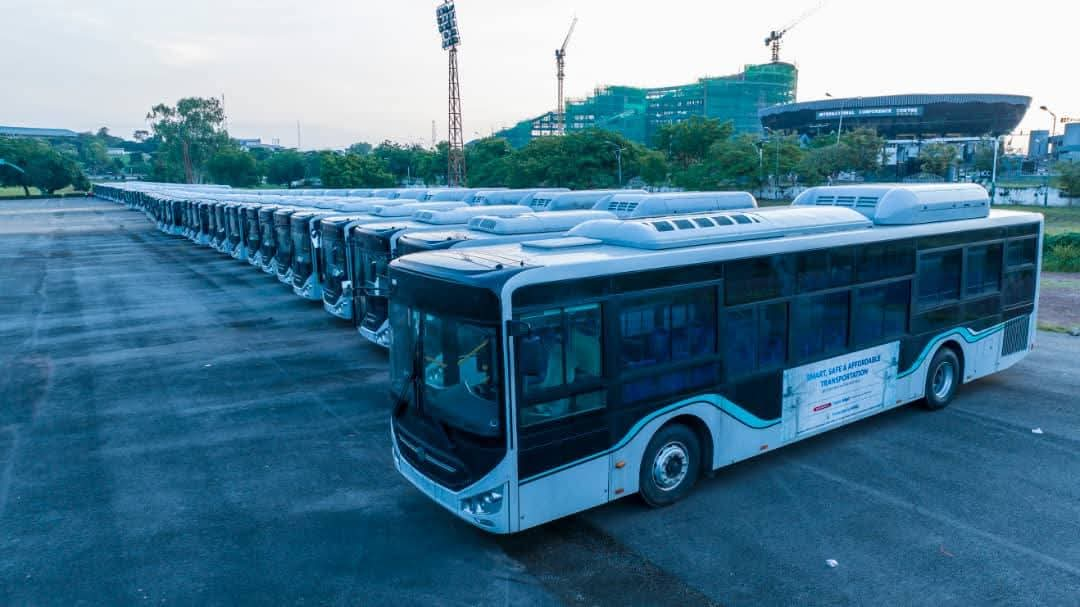
He revealed that the state has procured 200 CNG-powered BRT buses and 4,000 electric taxis to be assembled locally at ANAMMCO, with the first batch of 1,000 taxis expected within three months. The administration has also constructed 84 new bus shelters citywide to support the emerging transport architecture.
With an estimated two million daily commuters, Dr Ozor said Enugu requires at least 8,000 buses. The incoming BRT fleet, he added, features padded seats, functional air-conditioning, WiFi and advanced safety tracking monitored from a central control centre. Fares will attract a 47 per cent discount to cushion costs for residents.
He announced that transport unions interested in participating in BRT bus or terminal operations must submit proposals with financial models for government assessment.
On the state’s electronic fare system, the Ije Card, he said distribution would be decentralised to reach five million residents within 90 days. He acknowledged delays in allocating loading bays at new transport terminals but assured that proposals were being finalised.
He urged transport unions to explore available financing to procure buses or participate directly in BRT operations, adding: “There are enormous investment opportunities as Enugu expands its connectivity to other cities.”
Stakeholders across transport unions expressed support for the planned reforms. The Enugu State Chairman of the Road Transport Employers Association of Nigeria (RTEAN), Comrade Chidiebere Aniagu, said the union was aligned with the government’s vision but appealed for members’ concerns to be addressed.
The NURTW Chairman in the state, Engr Augustine Agu, praised Governor Mbah’s achievements, saying: “The governor has done in two years what others could not do in eight. We fully support him.” He, however, urged the government to consider the union’s interest in operating BRT buses and terminals.
Comrade Kingsley Edeh, representing the Amalgamated Tricycle Riders Association, noted that 18,000 keke riders operate in the state. He appealed for taxis to be made available for riders willing to transition and welcomed assurances that no one would be displaced.
The Commissioner inaugurated a joint review committee comprising ministry officials and union representatives to firm up operational details ahead of the BRT launch, with the rollout date to be announced soon.