By Charles Nwoke
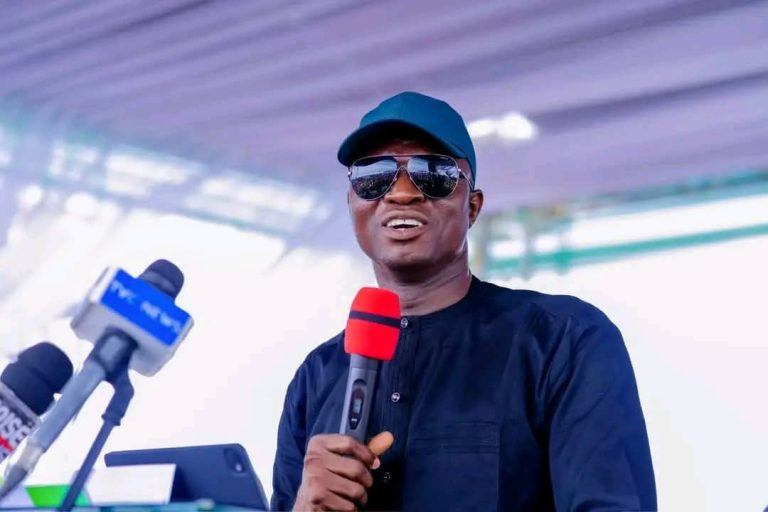
Governor Francis Nwifuru has presented a ₦884,868,327,429.94 budget for the 2026 fiscal year to the Ebonyi State House of Assembly. He described the proposal as the largest in the state’s history and said it reflects a firm commitment to aggressive development.
He delivered the proposal, titled ‘Budget of Actualisation and Hope,’ at the House chamber on Nkaliki Road, Abakaliki. He announced that 84.7 percent of the total figure is allocated to capital projects. He said the spending plan aims to fast-track economic expansion, open rural and urban corridors, modernise infrastructure, and position Ebonyi as a leading investment hub in the Southeast.
“Our commitment is to lift Ebonyi higher and ensure that every citizen feels the impact of the government,” he said.
The state expects ₦48.77 billion from tax revenue and ₦17.14 billion from domestic grants covering education funds, healthcare programmes, and federal palliatives. Capital Development Fund receipts are projected to provide ₦332 billion, including support from World Bank–assisted programmes such as SPIN, RAAMP, LPRES, NG-CARES, SABER, IFAD, and NEWMAP.
The governor outlined an ambitious economic plan anchored on the People’s Charter of Needs. The 2026 capital allocation prioritises major projects such as the VANCO Tunnel and Flyover, the Nwofe and Nwezenyi Flyovers, and extensive township and rural road networks.
He said the government will push its industrialisation agenda by advancing work on the Ebonyi Industrial City, a proposed state-owned cement factory, and the reactivated Waste-to-Wealth Plant. He added that the project aims to stimulate manufacturing and expand job creation.
The agricultural sector will receive support through mechanised farming initiatives, distribution of modern equipment, revival of the Nkaliki Hatchery, and establishment of a large-scale feed mill to strengthen value chains.
He also highlighted planned improvements in water and public utilities. The government will reactivate the Oferekpe, Ezillo, and Iboko water schemes to increase access to potable water and support industrial growth.
On human capital development, the governor reaffirmed ongoing investments in new universities, expanded scholarship programmes, free maternal healthcare, and empowerment initiatives that have benefited more than 5,000 residents.
Nwifuru said the budget will convert government promises into measurable outcomes. “With discipline, determination, and your continued legislative support, this budget will guarantee industrialisation, economic growth, and a better standard of living,” he said. He urged the Assembly to give the Appropriation Bill prompt consideration to maintain development momentum.
The Appropriation Bill has passed its first and second readings.
Speaker of the House, Rt. Hon. Moses Ije Odunwa, commended the governor for progress in infrastructure, education, healthcare, and rural development. He welcomed the 2026 budget proposal and highlighted the Assembly’s legislative gains over the past year. He said the House will conduct a thorough and responsible review to ensure it aligns with public needs. He also congratulated the governor on his recent national appointment and encouraged continued public involvement in shaping state policies.
Commissioner for Information and State Orientation, Barr. Ikeuwa Omebe, described the budget as a significant improvement and praised the governor for transparent governance. He said the administration remains focused on consolidation and continuity in delivering the People’s Charter of Needs. He urged residents to continue supporting the government to sustain ongoing development gains.