By Charles Nwoke || AlphaTimes
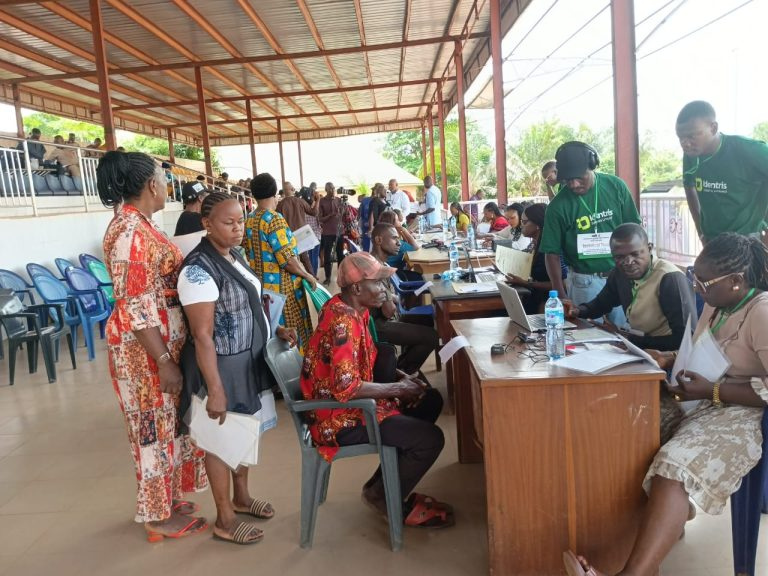
The Ebonyi State Local Government Service Commission, in collaboration with Identris System Limited, has commenced the 2026 compulsory bio-data verification and onboarding of staff across the 13 local government areas and 64 development centres in the state.
The exercise, which started in Abakaliki Local Government Area, aims to identify genuine workers, eliminate ghost employees and create room for fresh employment in the local government system.
Chairman of the Local Government Service Commission, Romanus Nwasumu, said the verification exercise became necessary because authorities could no longer determine the exact number of workers in the system.
“We are in charge of recruitment and monitoring of local government staff, but unfortunately, we do not know the exact number of staff in the system,” Nwasumu said.
“It is embarrassing for a local government chairman not to know how many workers he pays salaries to. That is why this exercise is necessary.”
Nwasumu explained that the exercise would involve digital onboarding of workers into a centralized portal. He warned that any worker not captured in the system would no longer be recognized as a staff member.
“At the end of this exercise, if your name is not in the portal of the Local Government Service Commission, you are no longer a staff,” he said.
He commended Francis Ogbonna Nwifuru for approving the exercise and assured that the commission would conduct the process without compromise.
Flagging off the exercise, Commissioner for Local Government and Chieftaincy Matters, Stephen Uchenna Igwe, said the state government became concerned because the wage bill continued to rise despite mass retirements in the local government system.
“More than 70 percent of workers in the local government system have retired, yet the salary wage bill keeps increasing,” Igwe said.
“We discovered that some workers are no longer in the state, while some are even abroad receiving salaries. This exercise will help us identify those genuinely working and those who are not.”
He urged workers and their relatives outside the state to return for the verification, stressing that the government would not grant exemptions to absentee workers.
Commissioner One and Chairman of the Technical Team, Augustine Nwechera, said previous verification exercises failed because they relied on paper documentation that was vulnerable to manipulation.
According to him, the current exercise involves electronic capturing of workers’ data, making it difficult for records to be altered.
“Every verified worker is being digitally captured into the commission’s website with valid identification documents,” he said.
“Once your data is onboarded, it becomes difficult for anybody to tamper with it.”
Nwechera added that the commission would continue periodic monitoring after the exercise to track absentee workers who might return temporarily for verification.
Secretary of the Commission, Chidozie Igwe, said the exercise would help the government reduce the bloated wage bill and create opportunities for qualified youths seeking employment.
“There are vacancies in the local government system, but government cannot employ because the wage bill remains high,” he said.
“If this exercise is properly implemented, it will create room for employment.”
Commissioner Two of the Commission, Monday Nwigbo, also said the exercise would help authorities identify genuine workers and stop salary payments to absentee employees.
Chairman of Abakaliki Local Government Area, Stephen Ebere Nwogba, described the verification exercise as a major step toward eliminating payroll fraud in the state.
“Some people are overseas collecting salaries while others come to work every day,” Nwogba said.
“As far as I am concerned, that is criminal.”
He called for similar verification exercises in other government establishments to eliminate payroll leakages across the state.