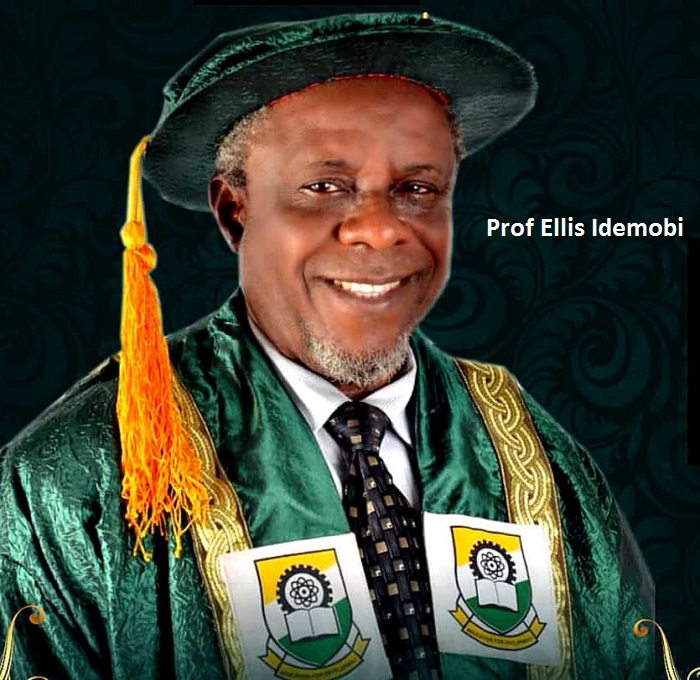
A University Don, Prof Ellis Idemobi of the Chukwuemeka Odumegwu Ojukwu University Anambra State has urged the governments and people of the South East States to foster an environment conducive for independent economic growth of the region. Prof Idemobi who was the Guest Speaker at a public lecture and award ceremony organized by the Association of Anambra State Town Unions Lagos at Colonades Hotel Lagos on 2nd November 2024. Speaking on the topic Akuluo-Uno (Think-Home) Philosophy and the Predicament of Ndigbo in Contemporary Nigeria, Prof Idemobi opined that if the state governments can co-operate to make South-East the right place to do business, we would not need to preach about thinking home.
He stated that the clamor for Akuluo-Uno is somewhat a survival strategy. Driven by a robust entrepreneurial spirit Igbos have surmounted challenges such as political marginalization and infrastructural deficits to make giant strides in economic development. Over the last ten years or more, arguments have ranged over the possibility of every Igbo person relocating some of their wealth and investment to Igbo land. Several commentators including the Akuluo-Uno ~ Think Home Forum have imagined how South East would become such an industrial power house of Nigeria and even West African if up to 75% of Igbo businesses located outside Igbo land were to be relocated to the South-East. And that would surely bring greater prosperity to Igbo land and steamed the tide of youth restiveness and crime, currently ravaging the area.
Prof Idemobi posited that for this to happen daunting challenges such as excruciating insecurity in the region, infrastructure deficits and lack of co-cooperation among governments of South East states must be tackled head-on. He sees no need to even preach about thinking home because investing at home by Ndigbo will follow naturally if the environment becomes conducive for business and entrepreneurship. According to him South East has the potential to become the new regional economic powerhouse of Nigeria.
He lamented that the South East had been badly affected by years of wrong choices for its development. The choices we have made over the years have stunted the zone’s economic growth objectives. We do know that material success has very little or nothing to do with God or miracles but has everything to do about choices we make. If it were about miracles Igbos should even be among the richest people on earth because they are known to be highly religious. Anyone who had travelled to Israel for instance would see that the phenomenal achievements of the Jews in all areas of human endeavour did not arise because they were the anointed people of God. Contrary to what many believe, there is no milk and honey flowing anywhere in their land. Israel is a desert with acute shortage of rainfall and water. For their agriculture the Jews depend on massive irrigation. What made the difference is that the Jews are extremely hardworking, resourceful and innovative.
Following the Israeli example and indeed looking at other regions and countries that are doing well around the world, one will see that prosperity whether local, regional or national has nothing to do with religious beliefs or special favours from God but putting in place right public policies that encourage hard work, ingenuity, resourcefulness and innovation. Japan was one of the earliest countries in the world to achieve the feat of turning its name into a brand image such that once you see made in Japan on any product you are assured of its excellent quality. Japanese people are neither Christians nor Muslims but they achieved success because they are hardworking, resourceful, innovative and honest. Similarly Singapore’s success is venerated across Africa as the City-State used the crisis arising from its separation from the Malaysian Federation in 1965 to focus relentlessly on national growth and development. The Chinese are fast becoming our new masters in Africa. China’s own economic miracle began in the late 1970s, becoming the fastest growing economy in the world. Gross Domestic Product (GDP) in China has grown at an average rate of 10 percent annually for the past twenty–five (25) years with personal income and living standards improving significantly. Again the China miracle is the result of China choosing the right development strategy and pursuing the economy’s unique comparative advantage. The story is the same with several other regions and nations including the United Arab Emirate (UAE) with Dubai and Abu Dhabi as the most visited tourist cities in the world. This was inconceivable just 20 years ago. UAE is almost 100% Muslims. Today their cities are more modern than Paris, New York and London. Similarly the economy of the State of California is the largest in the United States, with a $4.080 trillion gross state product (GSP) as of 2024. It is the largest sub-national economy in the world. If California were a nation it would rank in terms of nominal GDP as the world’s fifth largest economy, behind Japan and ahead of India. Additionally, California’s Silicon Valley is home to some of the world’s most valuable technology companies, including Apple, Alphabet, and Nvidia. Catalonia is one of Spain’s richest and most industrialized regions. Catalonia is a historic region and an autonomous community of Spain, located in the northeastern corner of the Iberian Peninsula. It is known for its diverse landscape, culture, and language. It contributes about 20% of Spain’s GDP. The main economic sectors are industry, services, and tourism. The unemployment rate in Catalonia is slightly higher than the Spanish national average. Independent ways of development empower sub-national entities to tailor their strategies, aligning them with their unique strengths, resources, and aspirations.
Doing the right things to boast economic growth and prosperity has been the major problem of Nigeria and this fact was underscored by James Robinson one of the 2024 Nobel price winner in Economics in their masterpiece study on ‘why nations do better than others in economic development’. Robinson painfully cited Nigeria as a country that knows what to do to prosper, but cannot do it. The South East region can break out from this vicious circle of wrong choices in economic growth and development of the area.
States in the South East region can therefore foster an environment conducive to independent growth by embracing innovation, promoting entrepreneurship, and encouraging local stakeholder engagement to become a regional economic power in Nigeria. This approach would allow the region to capitalize on its major comparative advantages, such as natural resources, exceptional entrepreneurial zeal and industry specialization in promoting sustainable and inclusive development. Ndigbo are always known to be determined to rise above the challenges in their environment by saying ‘never again should our environment be hostile to business and entrepreneurship’.
It is therefore time for the governments in the South East and other actors to shun parochial mindsets and political or sectional dogma and begin to enact policies that prioritize the collective interests of the Igbo nation towards building a regional economic power in Nigeria. Experiences of some regional economic powers around the world must inform our choices and replicated as lessons for Igbo land to learn going forward in economic development.
The South East region needs to urgently implement institutional and policy reforms to deal with the largely unfavorable business environment that have long militated against the growth of private enterprises in the region. While the state governments in the South East have made progress over the years in driving investment inflow and improving competitiveness in the region, investments in areas such as security assurance, power and other infrastructure seem to have been low and ineffective and heightened by multiple taxation and other barriers to doing business have constrained the Akuluo-Uno drive. Possibilities abound for South East to step up its economic performance by improving its business fundamentals and opening doors for the private sector in ways that benefit the economic emancipation of the region and promote policies that support infrastructure development and encouraging environment for private enterprises to flourish.
Ellis Idemobi is a Professor of Business and Entrepreneurship and former Deputy Vice Chancellor at the Chukwuemeka Odumegwu Ojukwu University, Igbariam Anambra State