Ifeanyi E. Ihegwuruike
The Cemetery Market (Eziukwu International Market) is the biggest centre for the buying and selling of foodstuffs, beverages, toiletries, and kinds of consumables in the entire South-Eastern Nigeria.
Built in the middle of the 1980s, precisely between 1985 and 1986, the market served as a makeshift point for the fire-ravaged Ekeoha Shopping and stubborn street traders who refused to relocate from the city centre to Ariaria International Market after the 1976 fire disaster.
Historically, before and after the 1967-1970 bloody war in Nigeria, Aba, the Enyimba City, had only one major market, an ancient Aba-Ngwa clan market situated at the heart of Eziukwu-Aba, just within the crown land, the Ekeoha Market.
The Ariaria International Market can be described as a child of circumstance because before Saturday night, May 29th, 1976, when Aba’s foremost market, Ekeoha Market (Shopping Centre), was destroyed by fire, there was no Ariaria.
The 1976 Ekeoha Fire Disaster, which occurred during the regime of Rear Admiral Ndubuisi Kanu, the first Governor of Old Imo State, was a great setback to the Igbo Nation that was barely recovering from the economic hardship it suffered for three years during the Biafra vs Nigeria bloody war that ended in 1970.
At the end of the war, Igbos began to scatter to different places in search of means of survival. Those who decided to stay within Alaigbo (Igbo-Land) divided themselves between two commercial cities, Aba (Enyimba) and Onitsha.
Nobody should get it twisted to mistakenly think that Aba and Onitsha started existing after the war. However, after the war, so many Igbos who felt they needed to stay closer to home joined their brethren who had already occupied most parts of Aba and Onitsha as the two cities pursued massive urbanisation.
Aba as a city gained prominence in pre-colonial days and became famous during the colonial era. Her precolonial commercial prowess was enhanced by the movement of canoes between the city, Azumini, Opobo and Ikot-Abasi.
The Eastern Rail Line (Maiduguri-Enugu-Port Harcourt rail line) that the British colonial government constructed around 1916 was a huge advantage for the rapid growth of Aba into a melting pot of the defunct Eastern Region, as traders from different parts of the new country, Nigeria, visited the then Ekeoha Market.
Some returnee Igbo businessmen who left Kumba City in the Republic of Cameroun, Libreville and Port Gentil in Gabon, and Bioko (Fernando Po) and Malabo (Santa Isabel), both in Equatorial Guinea, settled in Aba and started their trading and other businesses there.
Aba was the melting pot of Old Eastern Nigeria before the war broke out in 1967. Little wonder Chief Dr Oliver Sunday Akanite (Oliver De Coque), one of Africa’s foremost and famous guitarists and a highlife music legend, in his Expo 76 Ogene Sound Super of Africa painted a picture of the Ekeoha Fire Disaster, a great loss to the Igbo Nation, not just Aba businessmen.
Crying in the Igbo Language De Coque lamented, “Enyimba lee! Lee! Ooh! life mere n’Aba. Fire, fire, ọkụ gbara Ekeoha. Aka Akparala Enyimba. Ife ojoo emeela anyi. Chineke, ọzọ emekwala,” (Enyimba, a terrible thing happened in Aba. Fire everywhere; fire burnt Ekeoha Market. Enyimba has been captured. A terrible thing has happened to us. God, let such a thing never happen again.
The Ekeoha Fire Disaster brought a whole lot of environmental and economic problems to Aba, as it gave birth to street trading. Traders whose shops were burnt in the usual Igbo spirit decided to occupy nearby streets around Ekeoha, like Market Road, Tenant Road, Cameroun Road and Ehi Road, to sell their goods.
The situation led the then military government of Imo State to look for an empty land that can easily be accessible by visitors. The current location of Ariaria came to mind notwithstanding its swampy and a little bit distant location on the outskirts of Aba. They started construction in 1977.
However, the market grew to the consternation of everyone who doubted the possibility of that swampy location hosting such a large market. Ariaria International Market grew in leaps and bounds and became a centre of creativity with the presence of shoemakers and has currently expanded into three Local Government Areas of Osisioma, Aba North and a slight part of Aba South through the Old Express.
After the reconstruction of Ekeoha in 1979, most traders could not recover their shops and maintained their flourishing street trading. Some of them, due to the distance between Ariaria International Market and the Aba city centre where most of the traders reside, found it extremely difficult for them to accept Ariaria as their trading centre.
This situation led to a serious search for land within the city in 1980 for a makeshift market to accommodate displaced traders. This led to some of the traders discussing with the local government chairman of the then Aba Local Government and Imo State government, led by Sam Mbakwe, taking over an abandoned colonial cemetery situated along Eziukwu-Aba Road to build a market.
That became the birth of Cemetery Market, also known as Eziukwu Market, which today, by all ramifications, has grown and developed and become the second largest market in the entire Abia State, with so many zones, lines and areas where all kinds of goods are sold.
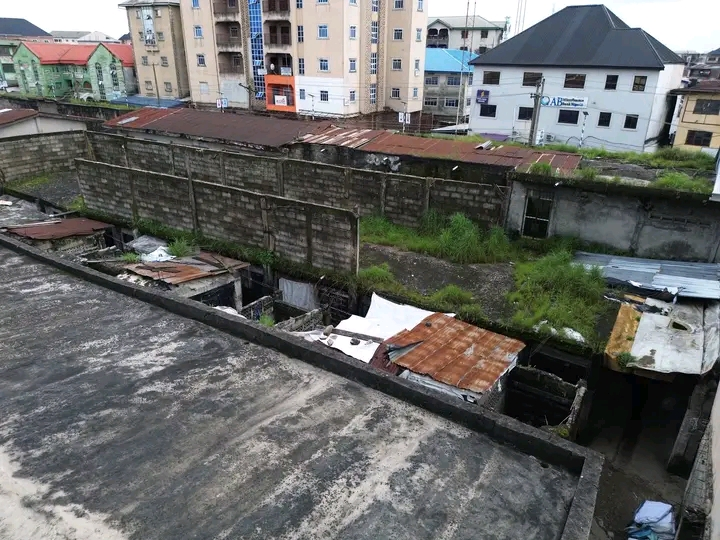
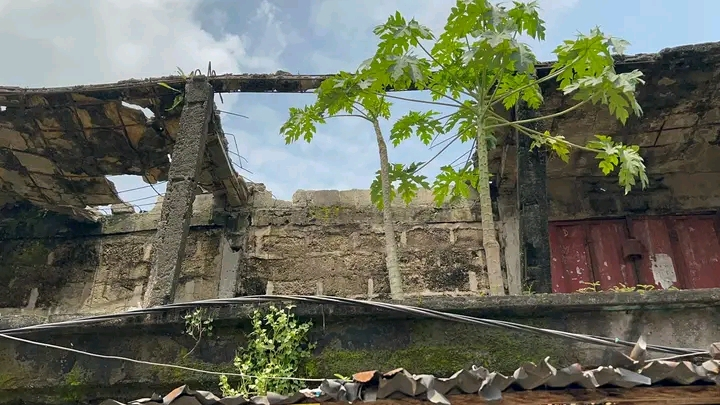
In the midst of these developments and expansions lie long years of neglect and human recklessness in erecting shops in locations that ought to be pathways and channels of entrance into the market, thereby making some parts of the market look like a war-ravaged zone seen on screens of television.
Just last week, an appeal for intervention was sent to Governor Alex Otti by traders at the market, pleading with him to urgently come to their rescue by halting alleged plans by the market leadership to dispossess them of their shops.
The traders alleged that the market leadership is hiding under the guise of remodelling and reconstruction efforts within the market to perfect their plot.
When AlphaTimes contacted the market leadership, it insisted that the reconstruction plan was duly approved by the owners of the market, the Aba-South Local Area.
The aggrieved traders, in their numbers, had also staged a peaceful protest march to the Aba South Local Government Secretariat to register their grievances and fears.
The traders accused the market chairman, Mr Oba Moses Ibe, and his executive of plots to demolish their shops with a view to reallocating the same to cronies.
Chizoba Osuala, leader of the protesting traders, mainly drawn from Zone-21 of the Market, alleged that the reconstruction effort is just a smokescreen by the Chairman of the Market, Oba Moses, to further appropriate traders shops, as was done during a similar exercise in the past.
Osuala said that the present chairman is trying to repeat what the former chairman of the market, Dr Mike Okoro (Vote for Jesus), did in 2021, which led to many traders losing their shops to date, and no reconstruction took place.
The traders therefore appealed to Governor Otti and all other relevant authorities to wade in so as to prevent a breakdownof law and order at the market.
They vowed that, unless the government intervenes, they are prepared to lay down their lives to protect their means of livelihood from being appropriated by greedy market officials.
Speaking further, Osuala debunked claims by the market authorities that the reconstruction plan was necessitated by the dilapidated nature of the structures.
“We are here today to inform the state government and Aba South Local Council authorities that our shops, which were constructed in 1986, are solid and safe. In other words, there is nothing wrong with the structural integrity of the building housing our shops in Zone-21.
“The truth of the matter is that the place having issues is a small portion of the zone where we used to hold our meetings. The problem was as a result of the same greed of the same people that did it in 2021 when they illegally erected some substandard structures there.
“Now the illegal structures at a point began to fail integrity tests, but rather than concentrating on that part for reconstruction, they have decided to include our part, accommodating hundreds of shops.
“Information at our disposal has it that the Chairman, Oba Moses Ibe, whose personal shops are also within the axis, is the one orchestrating the demolition and reconstruction plan, with the intent to appropriate more shops for himself and those pushing him.
“This was exactly what Dr Mike Okoro did in 2021 as chairman of the market, when, under the guise of reconstruction, many people lost their shops under unclear circumstances.
“Now, they are asking us to pay N20,000 registration fees, and there are alleged plans for us to pay as much as N10 million each for us to have our shops back at the end of the so-called reconstruction.
“Our position is that, even if there are needs for the existing shops to be reconstructed, we should be allowed to do it ourselves.”
He added that owing to past bitter experiences with the issue of market stall reconstruction, they no longer trust the leadership, because almost the same people behind the past traumatic exercises are the same people that have found themselves back in the leadership position of the market.
“In fact, ever since this present chairman came into office a few months ago, we have never had peace of mind in the market. It is either one levy/tax or rent on a daily basis, and these collections will be done by stern-looking thugs.
“A very little issue that needs to be settled amicably; they will order your shop to be locked. We are tired, and we are saying that enough is enough.”
Sir Obialor Anyanwu, Mayor of Aba South Local Government, thanked the protesting traders for their peaceful conduct and urged them to remain calm, assuring them that the matter will be amicably resolved.
Represented by his deputy, Mr Nwankwo, who is also a trader at the Eziukwu Market, Mayor Obialor urged them not to take laws into their hands.
Reacting to the traders’ allegations, the chairman of the market, Oba Moses Ibe, while denying any personal interests, said that the reconstruction plan was drawn and approved by the authorities of the Aba South Local Government, who are the legal owners of the market.
“For the record, the Eziukwu Market and Ngwa Road Market (Ahiaohuru) belong to the Aba South Local Government. The reconstruction plan was conceived and approved by the local government because it believes that the structures are dilapidated.
“We want to assure the affected traders that none will lose his shop. After the reconstruction, the original shop owners will get their shops back. That is why they have been asked to pay an N 20,000 registration fee each so that there will be a proper record of original shop owners.
“It will equally serve to know those who will be interested to retain their shops at the end of the exercise.”
Oba said that he knows nothing about the allegation that there are plans to ask the traders to pay N10 million for the shops.
AlpaTimes can report that most lines in the market are completely dilapidated, while others within the Eziukwu Road area and the School Road axis of the market are very modern and standard enough.