Decoding the Anambra Coat of Arms
By Paul Nwosu PhD
Aside from the anthem, which every Onye Anambra is encouraged to sing along to, there is also the Anambra Coat of Arms, a powerful tapestry of identity, enterprise and excellence.
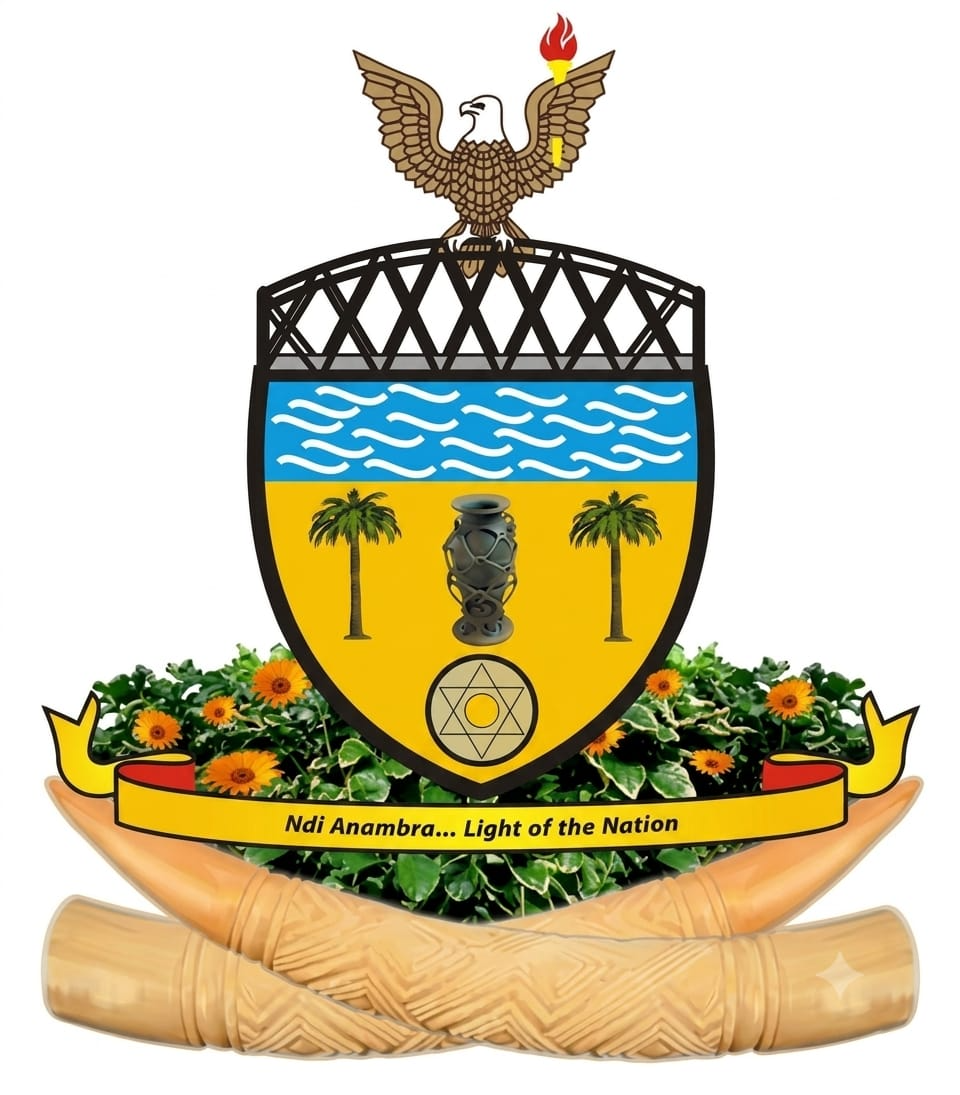
At first glance, the Coat of Arms of Anambra State may appear to be a collection of familiar symbols – an eagle, palm fruits, a bridge, flowing currents, a traditional pot, a coin and leaves. But beyond the artistic arrangement lies a carefully woven narrative of a people, their history, their values and their aspirations.
The Coat of Arms brings together the spirit, values, history and aspirations of Anambra. Each element tells a story; together, they constitute a visual expression of the character of the State and its people.
At the top is “Ugo di ebube”, the royal eagle. In Igbo cosmology, Ugo di ebube represents royalty, pride and excellence. Its commanding presence is therefore more than ornamental. It captures the aspiration, confidence and distinguished character associated with the Anambra person. The eagle, majestic and far-sighted, becomes a fitting metaphor for a people who have historically distinguished themselves in enterprise, education, public service, professional excellence and leadership.
Beneath the eagle are the two palm fruits, represented by Nkwu. In Igbo cosmology, Nkwu signifies abundance and plenty. Their pairing carries an equally profound message: the abundance of human talent resident in Anambra, represented by both its male and female citizens. The symbol speaks to a society whose greatest wealth is not merely buried beneath its soil or found in its physical assets, but resides in the ingenuity, intellect, creativity and enterprise of its people.
Then comes the Niger Bridge, one of the most recognisable landmarks in the State’s history and geography. More than an engineering feat, the bridge is a powerful symbol of connection and access. It represents the gateway into the heartland of the Igbo nation and reflects Anambra’s historic position as a meeting point between peoples, markets, cultures and ideas. The bridge also evokes the restless mobility of the Anambra spirit, the instinct to connect, trade, build relationships and create opportunities wherever they are found.
Running through the Coat of Arms are the 21 active currents of Igwebuike, representing the 21 Local Government Areas of Anambra State. Igwebuike, the strength that comes from unity, captures the collective energy of the people. The currents suggest movement, dynamism and continuity of the 21 component parts flowing with a common purpose. Together, they symbolise the developmental energy of a people who understand that their greatest strength lies in collective action.
At the base is Okike, a symbol deeply rooted in Igbo philosophical thought. It represents dignity, honour and nobility. Its position at the foundation of the Coat of Arms is significant. It suggests that whatever heights Anambra aspires to attain must rest upon a firm moral foundation.
That foundation is the time-honoured Igbo ethic of truth, honesty and hard work. In this sense, Okike is not merely a decorative symbol; it is a statement of values. It reminds the people that achievement without character is hollow, and that the enduring greatness of a society ultimately depends on the values upon which it is built.
The tapestry adorning each of the tusks adds another layer to the narrative. It symbolises the industry, dexterity and creative ingenuity that have propelled the people of Anambra to remarkable heights of achievement. The intricate pattern evokes the hands of a people who make, invent, trade, create and transform ideas into tangible results. It is a celebration of craftsmanship and enterprise, the ability to turn limited resources into extraordinary outcomes.
At the centre of this story is the penny, the round coin associated with the old days. It is an unmistakable reference to “Aku na Uba”, wealth and prosperity. The penny recalls the enterprising tradition of the Anambra people, particularly their historic journeys across Nigeria, Africa and the wider world in pursuit of commerce and opportunity.
The penny therefore represents much more than money. It embodies a culture of enterprise – the courage to travel, the willingness to take risks, the discipline to build businesses and the determination to create wealth. It speaks to generations of Anambra men and women who have carried the spirit of “Aku na Uba” across borders and continents, building businesses, practising crafts and establishing themselves wherever opportunity beckoned.
Yet, at the very centre of the penny is a circle, and its symbolism is profound. The circle has neither beginning nor end. It represents God Almighty, placed at the centre of all human endeavour. The message is unmistakable: enterprise, ambition and material success must ultimately recognise a higher order. For all the commercial instinct and worldly accomplishments of the Anambra person, God remains at the centre of the journey.
The Roped Pot reinforces another dimension of this identity. It symbolises the ancient art of metalworking among the people and represents both its history and its success. The pot is a reminder of the ingenuity of earlier generations and the enduring capacity of the Anambra people to master crafts, develop skills and create value with their hands.
Surrounding these symbols are the Ugu leaves and the blooming petals of the sunflower, which introduce the themes of agriculture, prosperity and the human spirit. The Ugu leaf evokes the richness of the land and the importance of agriculture, while the sunflower, with its bright and open bloom, reflects a people characterised by warmth, optimism and cheerfulness.
Taken together, these symbols transform the Coat of Arms from a mere official emblem into a visual narrative of Anambra, a people defined by enterprise, creativity, unity, character, faith and an enduring determination to excel.