_Opinion_
By Polycarp Onwubiko
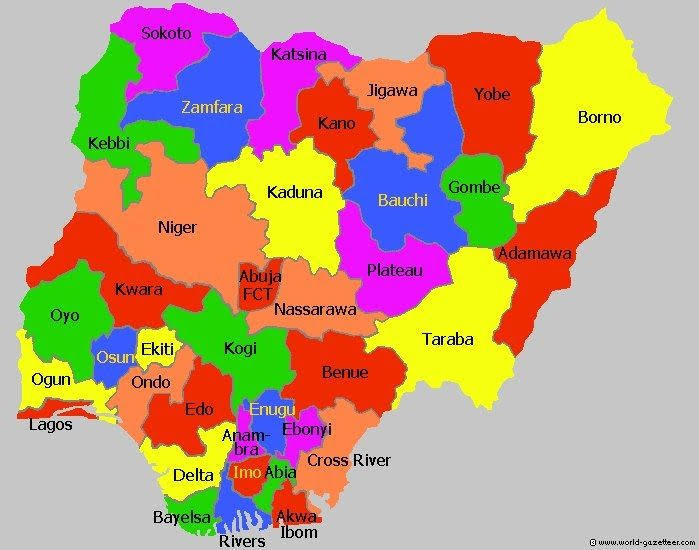
Even when the six geopolitical zones have long become the acceptable template and norm for political and administration and resource allocation in Nigeria, a handful of power brokers still cloak themselves in the amorphous label, “Northern leaders.” Behind that veil, a Fulani-dominated oligarchy has long manipulated boundaries, revenue formulas and security architecture to keep the Middle Belt tethered and the South out-voted. It is time to dismantle the myth of one monolithic North and insist that every bloc speak and bargain openly as North-West, North-East, or North-Central. Anything less perpetuates the very marginalisation that has haunted us since the colonial map-makers first drew a swollen “Northern Protectorate.”
In 1914 the British fused two unequal entities, a vast, sparsely populated Northern Protectorate and a more compact, commercially vibrant south. By independence in 1960 that imbalance had hardened into the behemoth called the Northern Region, dwarfing Igbo and Yoruba heartlands in landmass and, crucially, parliamentary seats. It birthed the vocabulary of marginalisation and sowed a grievance that endures till date.
The drive to replace British rule with local hegemony soon sparked resistance. Inside the so-called North, the Middle Belt, plural in culture and faith, bristled at Fulani domination. Their push for regional autonomy was drowned in the political crises that spiralled into the civil war. Yet the resentment never disappeared; it only went underground.
Fast-forward to the Fourth Republic. Southern governors naturally formed South-East, South-South, and South-West Governors’ Forums. Their northern counterparts? They re-christened themselves the Northern Governors’ Forum, collapsing three distinct zones into one bloc and, by sleight of hand, drafting the Middle Belt into their corner.
A similar trick birthed the Arewa Consultative Forum, an umbrella body loudly claiming to speak for everyone above the Niger, even though there is scant cultural affinity between Borno’s Kanuri, Plateau’s Birom, and Sokoto’s Fulani aristocracy.
But the real master-stroke lay in numbers. Under successive military regimes, hundreds of new local governments were carved almost exclusively in the North. Because LGAs receive both statutory allocations and one House of Representatives seat apiece, the arithmetic guarantees a perennial northern majority in the National Assembly, perfect for blocking reforms such as state police or genuine fiscal federalism.
Nowhere is the cost of this construct clearer than in Benue, Plateau, and Southern Kaduna. Here, communities are routinely sacked by well-armed marauders branded “herders.” Abuja’s official script calls the carnage “farmer-herder clashes.” Victims call it slow, silent conquest or ethnic cleansing. Yet when proposals for state police reached the Senate floor, Middle Belt Senators, bound by the “northern” whip, helped vote them down. The cycle continues.
President Tinubu’s new Forest Guards programme, echoing Buhari-era schemes, merely adds another layer of bureaucracy. What Nigeria needs is proper decentralised policing, not more uniforms answering to Abuja.
If leaders from Sokoto, Borno or Nasarawa genuinely seek the common good, let them do so under the banners North-West, North-East, or North-Central, just as their southern colleagues proudly fly theirs. Let the Middle Belt articulate its own interests, free from oligarchic ventriloquism. Only then can debates on revenue sharing, security, and restructuring proceed on honest terms.
The constitution already provides the framework; all that is lacking is the political courage to follow it. Continuing to hide behind “Arewa” or “Northern elders” is not statesmanship, it is subterfuge.
Nigeria’s diversity is not the problem; the refusal to acknowledge it is. Disband the fiction of one North, embrace the six zones, and negotiate in the open. Federalism flourishes when every part sits at the table in its own name, not as overlord or as hostage. Until that happens, the promise of a just and secure Nigeria will remain exactly where the colonial cartographers left it – on paper.