By Paul Nwosu || AlphaTimes
Owerri is preparing for a cultural and intellectual homecoming as the Ahiajoku Festival, Igboland’s most prestigious scholarly convocation, returns on November 27–28, 2025. After years of silence imposed by the COVID-19 pandemic, insecurity and the turbulence of non-state actors, the Imo State Government under Governor Hope Uzodimma (CON) is reviving a tradition that has, since 1979, served as the leading platform for interrogating the Igbo past, present and future.
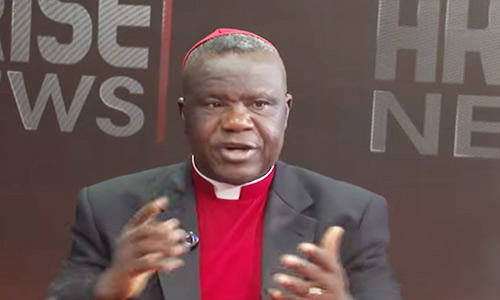
This year’s edition, the 30th in the revered series, marks not just a return but a renaissance. With the selection of Most Rev. Prof. Godfrey Igwebuike Onah, Catholic Bishop of Nsukka, as Guest Lecturer, the festival signals a renewed commitment to deep reflection at a time of economic uncertainty and rising insecurity in the South East.
Although the inaugural Ahiajoku Lecture was delivered in 1979 under Governor Sam Mbakwe, the idea was conceived earlier. After the euphoria of FESTAC ’77, Imo State officials sought a platform that would elevate Igbo culture beyond performance and celebration. A policy memo initiated by G.M.K. Anoka and approved under the military administrations of Commodore Adekunle Lawal and later Colonel Sunday Adenihun proposed an annual pan-Igbo intellectual fiesta.
It took Mbakwe’s cultural conviction and a cabinet of eminent scholars including Prof. Adiele Afigbo, Dr. Ray Ofoegbu and Prof. Enoch Anyanwu to bring the dream to fruition. In November 1979, Professor M.J.C. Echeruo delivered the historic maiden lecture, “Ahamefula: A Matter of Identity,” setting the tone for a festival devoted to memory, scholarship and self-definition.
From 1979 to the mid-1990s, the lecture held through coups and political upheavals, firmly establishing itself as the intellectual heart of Igboland. Contributions by giants like Prof. Bede Okigbo, Prof. Afigbo and Prof. Anya Oko Anya broadened the festival’s thematic reach—from history and agriculture to cosmology and social philosophy.
With democracy’s return in 1999, Governor Achike Udenwa revived the festival, hosting an impressive run of lectures between 2000 and 2006. But it was Governor Ikedi Ohakim who institutionalized Ahiajoku: building the Ahiajoku Centre, appointing a Director-General and commissioning the first compendium of past lectures. His era produced memorable contributions from intellectual titans like Chinua Achebe, Prof. Bath Nnaji and Prof. Chinedu Nebo.
The momentum faltered under the Rochas Okorocha administration, which discontinued the festival and controversially converted the Ahiajoku Centre into a trade hub, interpreted widely as a cultural setback. The brief administration of Rt. Hon. Emeka Ihedioha restored the institution and hosted the 29th lecture in 2019, again featuring pioneer lecturer Prof. Echeruo.
Then came COVID-19. The pandemic and the insecurity that followed forced multiple cancellations. By 2025, with a new Director-General, Hon. Nze Ray Emeana, and improving security, the stage was set for a triumphant comeback.
Beyond its ceremonial splendour, Ahiajoku is the intellectual databank of Igboland, a meticulously curated archive of ideas on language, governance, spirituality, economics, science and culture. Its four-part structure, Opening Ceremony, Colloquium, Lecture Proper and Gala Night—mirrors the Igbo worldview where contemplation and celebration coexist.
Only the most distinguished scholars, “the Big Masquerades”, mount its podium. Their lectures have become foundational texts for understanding the Igbo world and its evolving realities.
The festival has survived disruptions, but lingering challenges remain such as political inconsistency, limited digitization, elitist appeal and weak infrastructure. Many past lectures remain inaccessible to the public, and funding has been largely dependent on the Imo State government.
Cultural advocates propose a legal framework to secure annual subventions from all South East states, a robust digital archive, youth-engagement programmes, diaspora collaborations and an endowment fund to guarantee sustainability.
This year’s theme, “The Future of Igbo Economy Amidst the Challenges of Insecurity in the South East: A Call for Paradigm Shift”—strikes at the heart of the region’s present anxieties. By confronting how insecurity reshapes commerce, culture and communal life, the lecture invites Ndigbo to imagine new economic models anchored in resilience, technology, diaspora capital and shared values.
As Owerri prepares to host scholars, cultural custodians, traditional rulers, policy-makers and diaspora delegates, Ahiajoku once again becomes a mirror and a compass. From “Ahamefula” in 1979 to “Ogu Eri Mba or We Shall Survive” in 2019, the festival has chronicled the Igbo journey through crises and renewal.
In 2025, the message is unmistakable: survival is not enough. This is the moment for transformation, a Phoenix moment for the Igbo spirit.
Owerri awaits. The fire is about to be lit again.
*Paul Nwosu PhD is the Publisher/Editor-in-Chief of Alpha Times