By Paul Nwosu || AlphaTimes
The United States military has drawn up potential plans for intervention in Nigeria following President Donald Trump’s directive to protect Christians from Islamist militant attacks. However, according to a report by Helene Cooper in The New York Times, senior defense officials say that any U.S. military action would have limited effect and is unlikely to end the country’s decades-long insurgency.
The report noted that Pentagon and Africa Command (AFRICOM) planners have prepared three sets of possible responses, described as “light,” “medium,” and “heavy” options, but warned that none would decisively quell the violence in northern Nigeria without a massive, long-term campaign similar to those waged in Iraq or Afghanistan.
Under the light option, the U.S. military and State Department would provide intelligence and logistical support to Nigerian forces in their fight against Boko Haram and the Islamic State West Africa Province (ISWAP). These groups have carried out widespread attacks, kidnappings, and killings targeting both Christians and Muslims. However, this plan would proceed without assistance from the U.S. Agency for International Development (USAID), which closed its Abuja office earlier this year following the Trump administration’s decision to shutter the agency.
The New York Times report observed that even such limited cooperation would be fraught with difficulties, given the deep ethnic, religious, and land-use tensions in Nigeria’s northern region. Corruption and decades of conflict between herders and farmers have created fertile ground for extremist recruitment and violence.
The medium option being considered involves drone strikes on militant camps, convoys and vehicles. However, the U.S. military’s capability for such operations has been weakened since American forces vacated their two drone bases in Niger, Agadez and Niamey, in August. Those bases are now under Russian control, meaning the U.S. would have to operate from distant locations such as southern Europe or Djibouti, significantly reducing effectiveness.
The heavy option envisions deploying an American aircraft carrier group to the Gulf of Guinea to conduct deep strikes into northern Nigeria. But with one carrier redeployed to the Caribbean for anti-drug operations and others stationed in the Pacific or Middle East, such an operation is not considered a strategic priority for 2025, the report said.
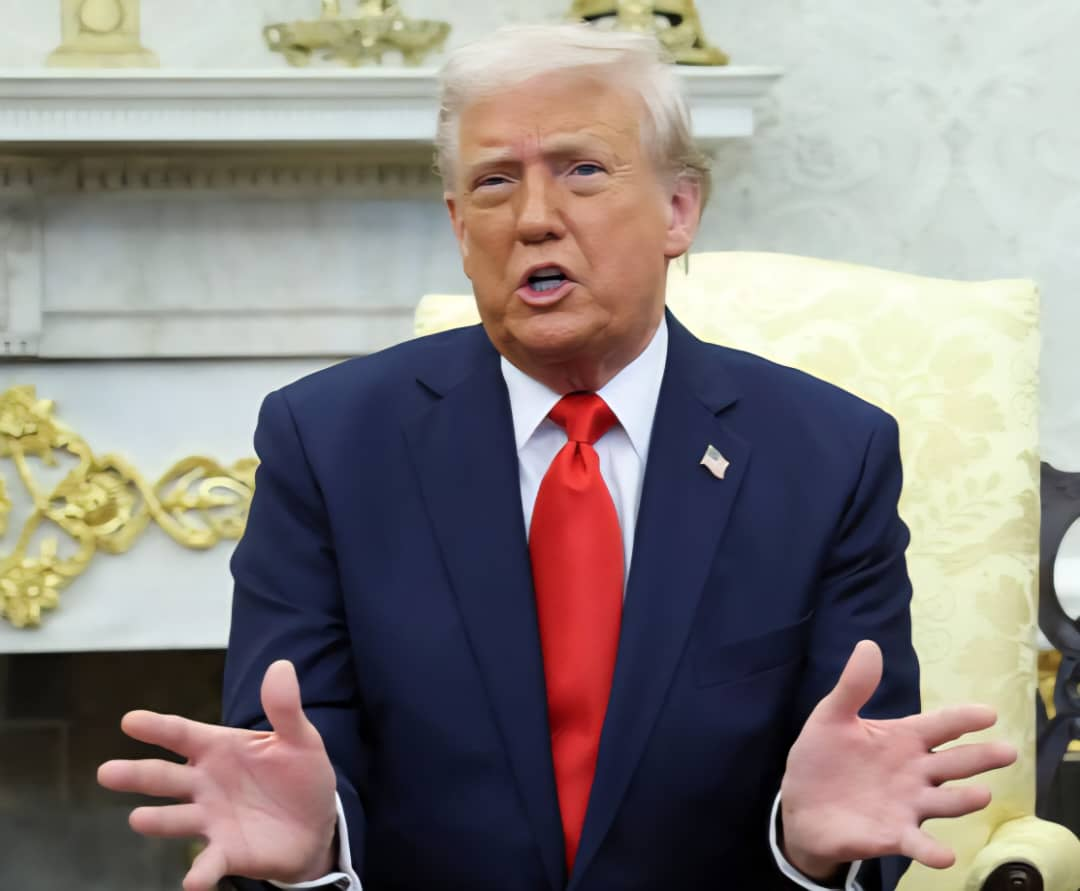
President Trump announced his directive on social media, writing, “I am hereby instructing our Department of War to prepare for possible action.” Defense Secretary Pete Hegseth immediately responded, “Yes, Sir,” and ordered Africa Command to provide strike plans.
Still, several current and former U.S. military officers told The New York Times that any large-scale operation in Nigeria would almost certainly fail. Retired Maj. Gen. Paul D. Eaton described the notion of limited airstrikes as “pounding a pillow” which can only be dramatic but ineffective, and warned that the American public has little interest in another drawn-out foreign intervention.
The Nigerian government has stated that while it welcomes U.S. assistance against Islamist insurgents, any foreign military action must fully respect Nigeria’s sovereignty and territorial integrity.
According to Cooper’s report, Africa Command’s new leader, Gen. Dagvin R.M. Anderson, is scheduled to visit Nigeria in the coming weeks for previously planned consultations. For now, Washington’s plans remain on paper, reflecting the complexity and sensitivity of any potential U.S. involvement in Nigeria’s long-running conflict.