Paul Nwosu
What struck most observers like me about the two-day state visit of President Donald Trump to the United Kingdom with his wife, Melania, was not necessarily the politics or closed-door diplomacy with Prime Minister Keir Starmer. Rather, it was the intense pomp and pageantry, the well choreographed, colorful ceremonies that characterized every step of the visit.
It was Trump’s second state visit to the UK, but King Charles’ first opportunity to play host to an American president.
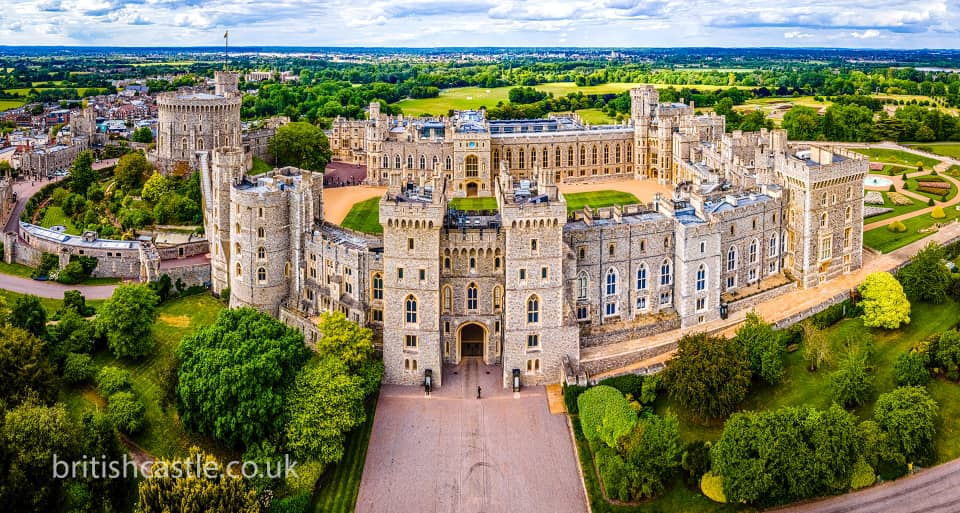
The setting itself was a spectacle. The seemingly polished stone walls of the medieval Windsor Castle belied its age. The lush green lawns and the robust trees lining the castle grounds testified to excellence in horticultural management. The architecture, nearly a thousand years old, blends Georgian and Victorian influences, its defensive bastions jutting into the sky like giant forks. One could imagine scenes from the medieval movies we watched on the Knights Templar and their epic battles in defense of the Christian faith.
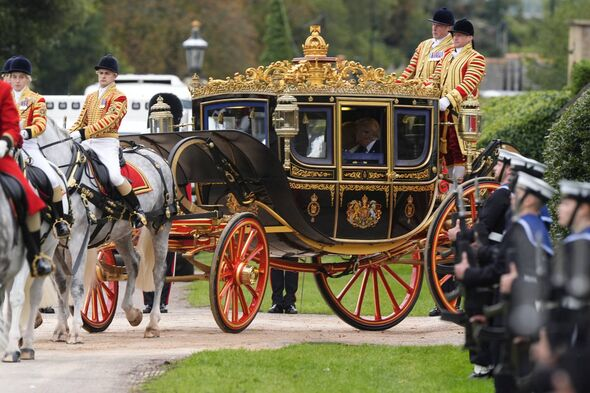
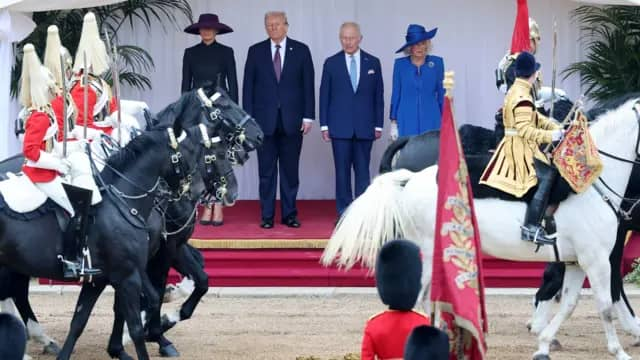
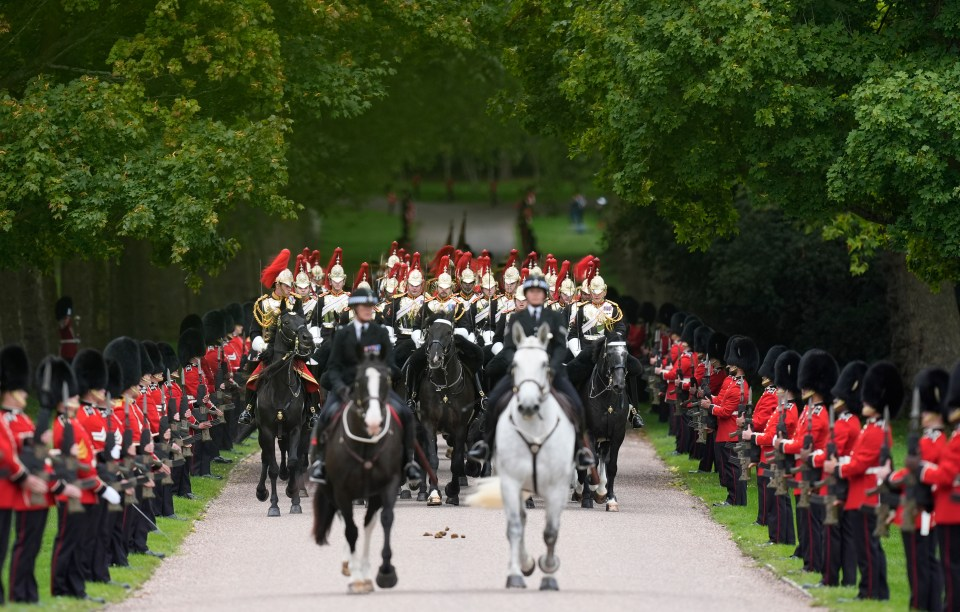
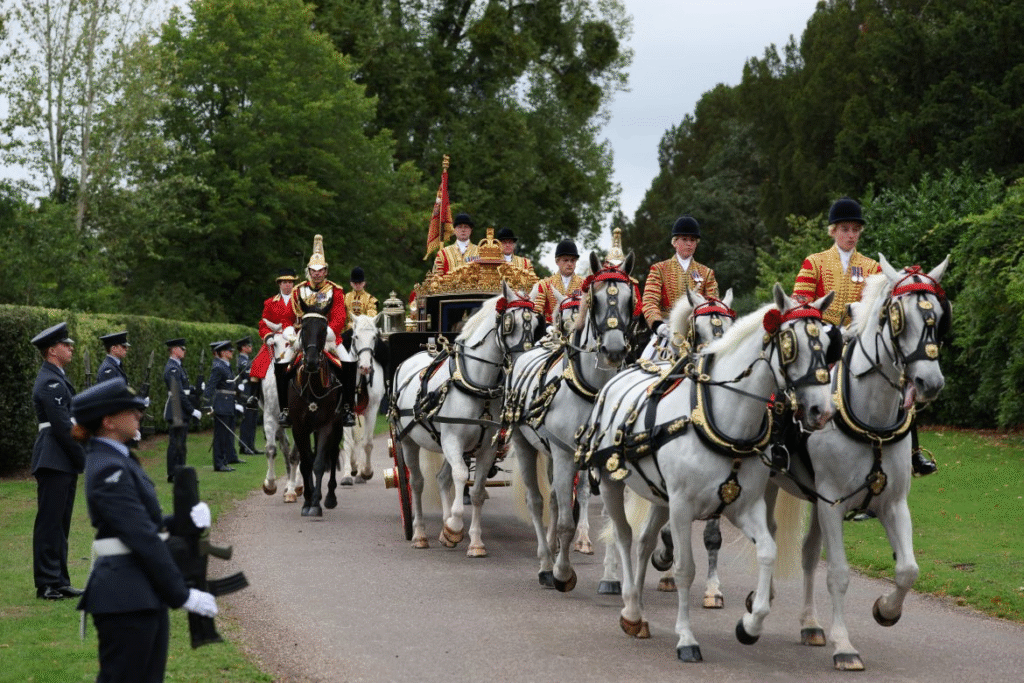
Beyond aesthetics, another standout feature was the preparedness of the Royal Guards. The intimidating bearskins (the long fluffy hats), the horsemen’s shiny ornate headgears adorned with colorful plumes, the antique horse carriages, and the unique regalia of their escorts all made a powerful statement about a nation steeped in tradition and disciplined in protocol. Even the well-groomed horses added to the spectacle – black horses riding together and the white ones together. A friend quipped that the horses responded to the parade commander’s “eyes right” command, a testament to how well they painstakingly groomed for the occasion.
One lesson Nigeria should take seriously is the compartmentalization and discipline of event operatives. Once King Charles, his guest, and their spouses alighted from the horse-drawn carriage and mounted the dais, everyone else, Prince William, his wife, and other dignitaries, assumed their designated positions. There were no photographers, videographers, or amateur phone camera operators milling around where the King and his guests stood. The media were sequestered to their allotted corners. Too bad if their gadgets couldn’t capture the images and sounds as they were expected to respect boundaries.
Similarly, there were no overzealous soldiers or police men running up and down the arena, no sullen-looking aides-de-camp behind the King and his guest, no fidgety secret service agents blocking camera lenses, and no armed guards crowding the periphery of the royal dais. Just the King, the President and their spouses alone, standing with dignity.
In Nigeria, however, our presidents and governors are often trailed by layers of bodyguards and overbearing aides, creating an unnecessary spectacle of fear rather than confidence. If intelligence suggests a venue is unsafe, the logical response is to avoid it, not to clutter the scene with intimidating security details.
Another point worth noting was the absence of sycophancy. There were no opportunistic politicians elbowing their way to be seen by their principal. All invited guests remained in their assigned positions. The environment was orderly, reflecting the meticulous planning of the Royal Protocol Office. Even the weather seemed to cooperate, as though Mother Nature herself had been consulted to provide clement conditions for the outdoor ceremony.
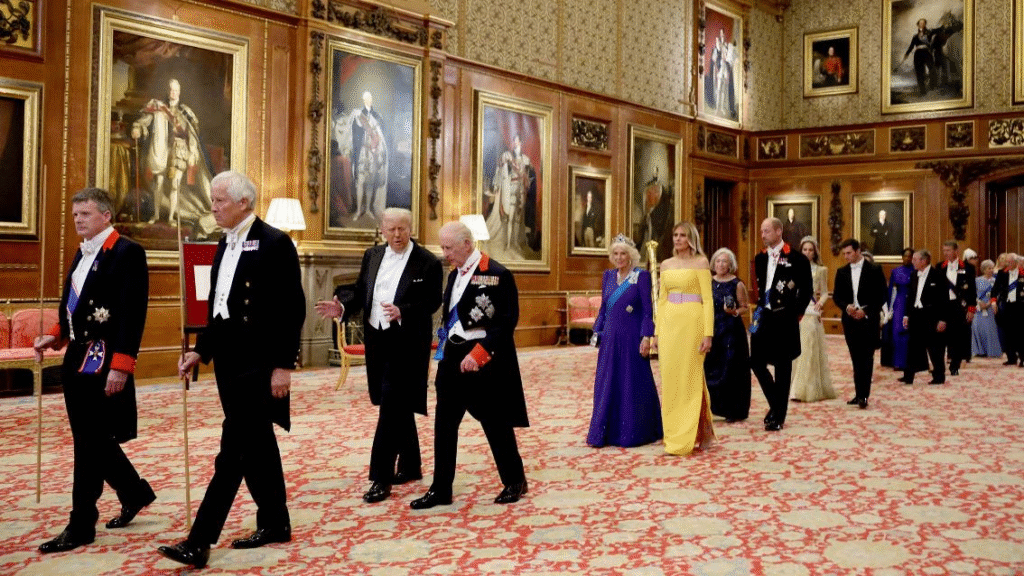
The state banquet that followed was no less striking. The hall was exquisitely decorated, dinner tables neatly laid with gold cutlery and wine chalices, and the procession that ushered in the King and his guests was carried out with impeccable order. Compare this with our country, where invitees often loiter outside the hall until the presidential siren sounds, then stampede in to grab seats. And when the President finally enters, a retinue of sycophants trails behind him in a chaotic show of disorder. Some even help to lift and adjust his “agbada” as if he’s an amputee. The problem is that we admire good protocol when we see it abroad, but consistently undermine it at home.
Perhaps the deepest lesson lies in the culture of maintenance. For a sprawling medieval structure like Windsor Castle, nearly a millennium old, to stand firm, enchanting, and well-preserved is proof of Britain’s obsession with maintenance and preservation. In this country , such a structure would long have crumbled into ruins. Many of our public buildings, not even five percent as old, are already abandoned relics. The State House, Marina in Lagos, once used by colonial governor-generals and later Dr. Nnamdi Azikiwe, lies in neglect. Lord Lugard’s residence at Mount Patti, Lokoja, is a wreck. Arewa House in Kaduna, once the seat of Sir Ahmadu Bello’s regional government of the vast Northern Nigeria, is now a museum, but poorly maintained. The Old Residency Building in Calabar, built in 1884, is preserved in name only. Its present state betrays neglect. The list of dilapidated public structures across the country is endless, all testifying to our chronic failure in maintenance culture.
Trump’s state visit to the UK was more than a diplomatic engagement. It was a masterclass in protocol, order, tradition, and maintenance culture. Every element of the ceremonies, from Windsor Castle’s timeless majesty to the disciplined compartmentalization of roles, underscored the value of structure and respect for process. Our dear country, by contrast, often descends into chaos at official events, undermined by sycophancy, disorder, and disregard for preservation.
If we truly desire to project dignity as a nation, we must learn from such examples. Protocol is not mere ceremony; it is a reflection of national discipline. Maintenance is not an afterthought; it is a commitment to history and posterity. Until we embrace order and a culture of preservation, our public image will remain one of disorganization and neglect, while we continue to admire abroad what we fail to practice at home.
*Paul Nwosu PhD is the Publisher/Editor-in-Chief, Alpha Times