By Paul Nwosu PhD
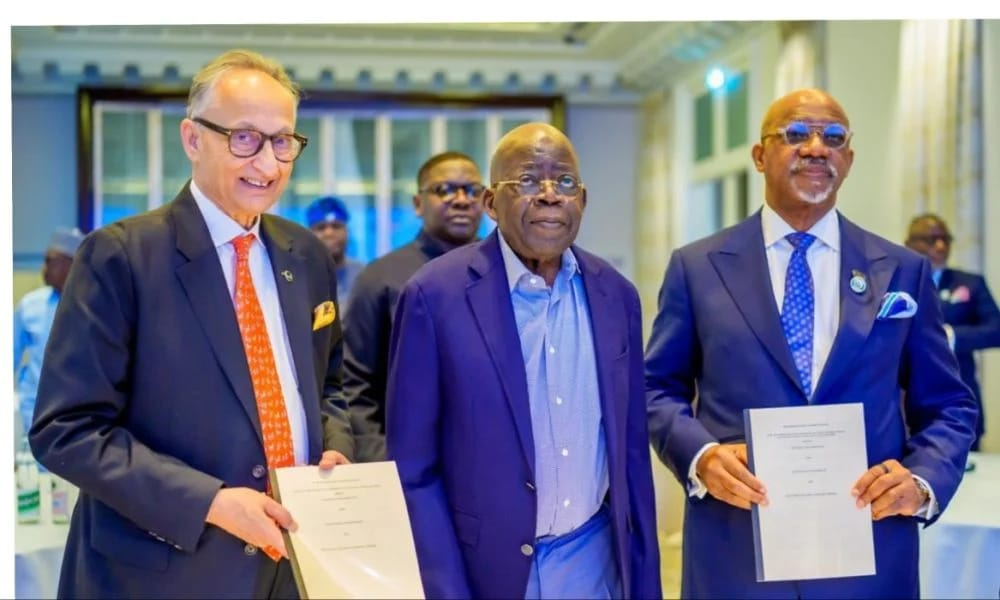
President Bola Ahmed Tinubu, GCFR, recently demonstrated to his traducers that he is indeed on a working vacation when, in Paris, he midwifed a $7 billion (about ₦9.3 trillion) investment package for the development of the Ogun State Blue Marine Special Economic Zone and the Gateway Deep Seaport.
The President said the investment would create over 50,000 direct jobs when fully developed, boost non-oil exports and strengthen Nigeria’s maritime and industrial economy. The Gateway Deep Seaport at Ogun Waterside will have a four-kilometre berth and an 18-metre draft, enabling it to handle large vessels and, supposedly, decongest the Apapa and Tin Can Island ports.
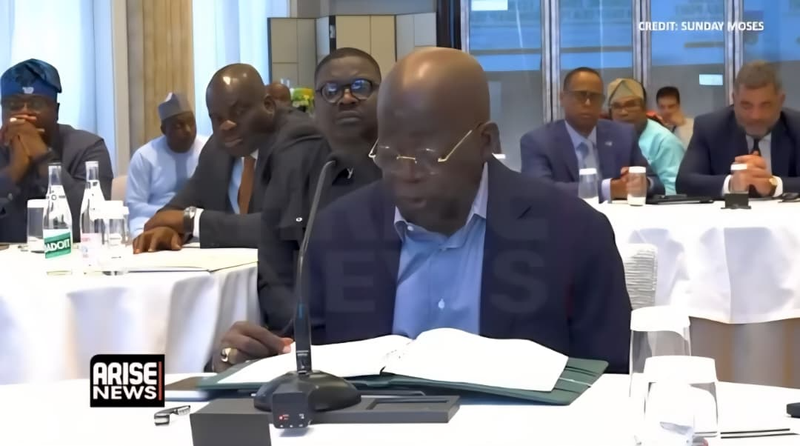
But how does one decongest Apapa and Tin Can by establishing another major port in Ogun Waterside, 55 nautical miles (about two and half hour’s sailing distance) away? Rather than genuinely decongesting the Lagos ports, is Nigeria not simply concentrating even more maritime activity in the Lagos-Ogun corridor?Haba Mr President!
The Lagos-Ogun axis already hosts two of the country’s biggest ports, yet the answer to congestion is another port in virtually the same maritime neighbourhood. This is why some critics have argued that Mr President is unabashedly parochial.
While the Paris agreement was being celebrated, Governor Umo Eno of Akwa Ibom State must have been watching with mixed feelings. His proposed Akwa Ibom Deep Seaport (locally called Ibaka/Mbo ) has been on the agenda for years, yet the state continues to await decisive federal action.
If the truth must be told, many of the merchants and industrialists who made the Lagos ports commercially vibrant from the days of Sir Louis Odumegwu Ojukwu have historically come from the South-East. Yet moving their goods between Lagos and the major commercial centres of the South-East means traversing roughly 467 kilometres to Onitsha and about 610 kilometres to Aba, often over difficult roads.
If port congestion is the problem, why not expand Port Harcourt Port, which is about 180 kilometres from Onitsha and only about 60 kilometres from Aba? Or finally give serious federal backing to the proposed Akwa Ibom Deep Seaport, about 301 kilometres from Onitsha and 230 kilometres from Aba?
And then there is the elephant in the room: the Onitsha River Port. Commissioned more than 43 years ago by President Shehu Shagari, the port was conceived to serve the commercial and industrial heartland of the South-East by providing a navigable route from the Atlantic much closer to the final destinations of cargo. It was designed to handle up to 1,000 containers at a time, with room for expansion.
President Goodluck Jonathan recommissioned it in 2012 and President Muhammadu Buhari did the same in 2018. Yet, more than four decades after its original commissioning, the port remains grossly underutilised.
Stakeholders say it requires about ₦16 billion only to dredge its channels to make them accessible to cargo vessels, a project that could be completed within 12 months. This is a far cry compared to the proposed $7 billion (N9.3 trillion) Ogun investment.
The question is not whether Nigeria needs new ports or industrial zones. Of course it does. The question is whether a country with limited resources should continue to pile massive investments around an already overburdened economic corridor while strategic infrastructure elsewhere is left to decay.
A functional Onitsha River Port would bring cargo closer to one of Nigeria’s largest commercial and industrial concentrations. A properly developed Port Harcourt port would serve the same purpose for the South-East and South-South. An operational Ibaka/Mbo Deep Seaport in Akwa Ibom could open another major maritime gateway into the eastern economy.
These are not demands for sectional favour. They are arguments for economic logic, geographic balance and national efficiency.
President Tinubu should therefore look beyond the familiar Lagos axis and deliberately develop Nigeria’s economic potentials wherever they exist. The objective should not merely be to create more infrastructure; it should be to distribute productive infrastructure intelligently, reduce logistics costs, unlock dormant economic centres and spread opportunities across the federation.
If ₦9.3 trillion can be mobilised for a new maritime and industrial corridor in Ogun, Nigeria should also be asking what it would take to unlock the maritime corridors it has already built and abandoned elsewhere.
A country cannot decongest one economic corridor by continuously pouring everything into it. True national development is not the concentration of opportunities in one region; it is the strategic activation of the potentials of every region.