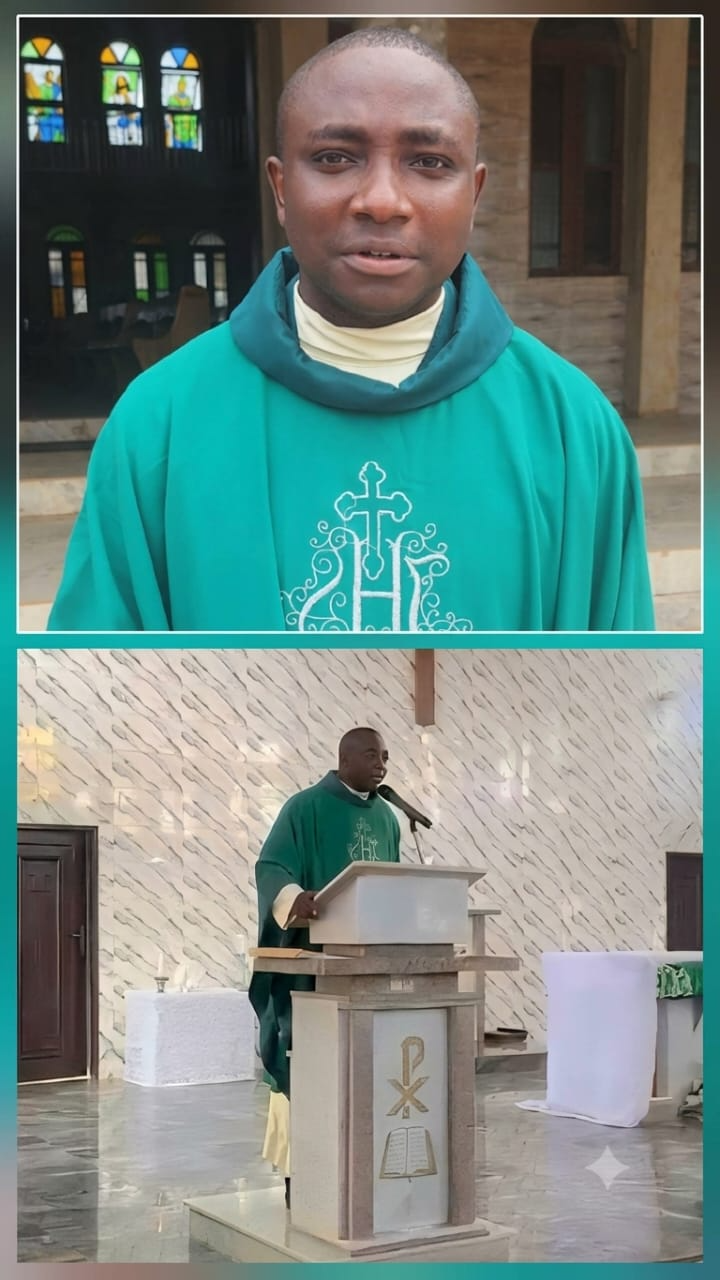
By Paul Nwosu PhD
The first Sunday of September is observed in various Christian lectionaries as the Feast of Creation, a day set aside to praise God as Creator and to remind humanity of its sacred responsibility to care for His creation.
This year, the Church’s environmental message, under Pope Leo XIV, places strong emphasis on ecological conversion, drawing attention to the devastating consequences of human conflict, war, environmental degradation and poverty.
Today’s observance coincided with the Thanksgiving Mass of the Knights of St. Mulumba, Sacred Heart Chaplaincy Sub-Council, Awka, Anambra State.
The visiting priest from UNIZIK Chaplaincy and Director of Fides newspaper, Fr. Cyprian Nwabueze, brought the essence of the Feast of Creation closer to home, offering a message that was both spiritual and practical.
According to him, loving the environment is also loving our neighbours. One cannot claim to love the environment while destroying the same environment in which other people live.
But there is an even deeper reason for caring for creation: God created us within this environment and entrusted it to our care. We are therefore not merely inhabitants of the earth; we are its custodians.
Fr. Nwabueze stressed that failure to take care of God’s creation is not simply an environmental offence, it is also a moral issue. If we deliberately destroy the environment entrusted to us by God, we should recognise the seriousness of such conduct.
And, as he put it in a striking reminder, if we do not learn to live responsibly here on earth and take care of the environment God has given us, we cannot meaningfully aspire to heaven.
Fr. Nwabueze then raised an important question, lest we misunderstand what environmental abuse actually means:
How, in our everyday lives, do we abuse the environment?
He identified several practices that have become almost normalised in our communities:
- Throwing refuse from vehicles and homes into gutters and drainage channels.
- Discharging soakaway waste into streams and rivers.
- Dumping materials used for ritual sacrifices into fresh-water ponds, streams and other water bodies.
- Blocking drainage channels and contributing to the flooding of communities.
- Polluting places that should otherwise serve as recreational spaces where people can relax, enjoy nature and breathe fresh air.
- The irresponsible use and disposal of plastics, Styrofoam and other lightweight materials, including those already prohibited by environmental regulations.
- Noise pollution, which, he noted, is an environmental problem that society often fails to take seriously.
These are not merely ugly habits. They have consequences for public health, safety, livelihoods and the quality of life of our neighbours.
Fr. Nwabueze also pointed to simple but important ways of protecting God’s creation.
We must plant more trees and flowers and preserve the greenery around us.
We should move away from Styrofoam and other environmentally harmful materials and embrace sustainable and environmentally friendly alternatives.
Government-declared sanitation days should not be treated as an inconvenience. Citizens should actively participate in keeping their communities clean.
We must also use water responsibly, avoiding unnecessary waste of a resource that many communities struggle to access.
Even the way we construct our homes matters. From the choice of building materials to the management of waste and drainage, we should be conscious of the environmental consequences of our decisions.
Ultimately, the Feast of Creation is not merely another day on the Church calendar. It is a call to rethink the way we live.
It reminds us that creation is God’s gift, but its care is our responsibility.
As Fr. Nwabueze concluded, these are the issues the Church is asking us to ponder today: How are we treating the world God gave us? How are our actions affecting our neighbours? And what kind of environment are we leaving for those who will come after us?
The answers may well determine whether we are truly living as responsible stewards of God’s creation.