By Valentine Obienyem
On the 22nd of February, after the 8:30 a.m. Mass at our chaplaincy, our committee responsible for planning the upcoming pastoral visit of our bishop, Dr. Paulinus Ezeokafor, was officially inaugurated by our chaplain. After the inauguration, the chaplain asked if I had any comments. I spoke, first expressing my gratitude to the chaplaincy for their confidence, emphasizing that the success of the committee would require the full cooperation of everyone involved.
I went on to highlight that the bishop’s visit is canonical and not a matter of choice. He visits each parish, chaplaincy, or school within his jurisdiction at least customarily once every five years, much like the “Ad Limina Apostolorum” visit, during which bishops report to the Pope on the pastoral, administrative, and spiritual condition of their dioceses. Just as bishops technically and canonically render accounts to the Pope, priests and chaplains are accountable to their bishops. The parish belongs to the Church, not the priest, and the bishop has ultimate authority over all parishes in his diocese.
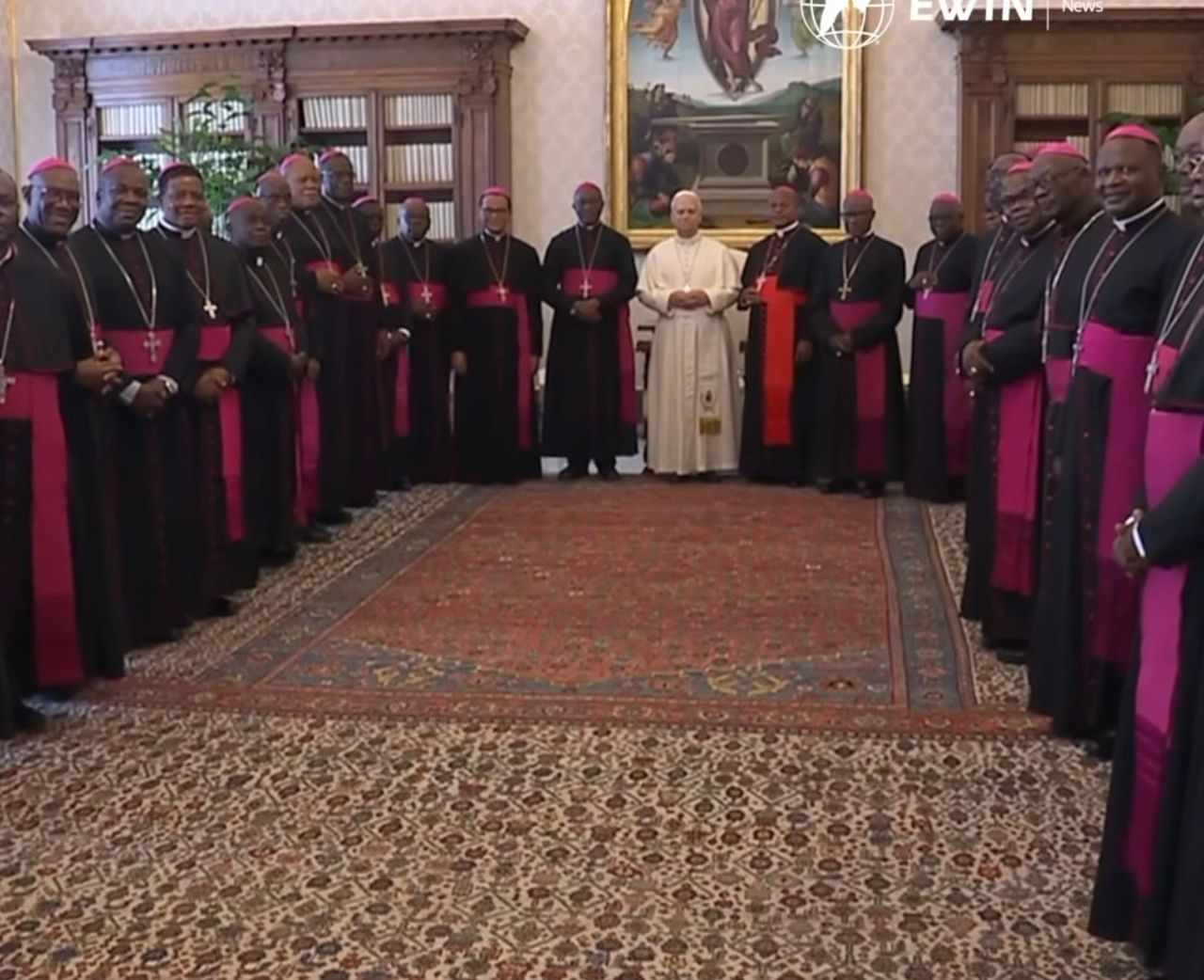
Why this recall? It is customary for us to visit our alma matres, St. Dominic Savio Seminary and St. John Bosco Seminary, on the eve of their feasts. We had visited St. Dominic Savio during their celebration earlier. On our way to Akpu on the eve of their own feast, I received a call from His Excellency, which prompted a change in our plans as it was my vehicle that was being used. We attempted to contact the Rector, who later called to explain that he was in the midst of a retreat. As we were about to call Nnanyukwu Peter Cardinal Okpaleke, one of our team members, Sir Cee Cee Iloghalu, called from Lagos to check on the progress of our mission. When we informed him that we intended to reach out to His Eminence by phone, he told us that the Cardinal and other bishops were in Rome for their “Ad Limina” visit. Immediately, I connected this with what I had shared with the congregation a few days earlier. This brings us to the question: what is “Ad Limina Apostolorum”, and what is its significance?
Throughout history, institutions have risen and fallen with the tides of political and social change. Empires once thought invincible have vanished, leaving behind only traces in books and ruins, sometimes uncovered by archaeologists like Heinrich Schliemann. Many years ago, I read in Prof. Okey Ikechukwu’s writing that Schliemann named his children after Greek characters such as Andromache and Agamemnon. Yet some institutions have demonstrated remarkable continuity, surviving centuries through careful governance, structure, and accountability. The Catholic Church is a prime example of such an enduring institution. Among the many practices that sustain it, apart from its divine foundation, is the “Ad Limina Apostolorum” visit.
The Latin expression “Ad Limina Apostolorum” means “to the thresholds of the Apostles.” It refers to the periodic visit Catholic bishops make to Rome, where they pray at the tombs of the Apostles Peter and Paul and present reports on the pastoral, administrative, and spiritual state of their dioceses. This visit is both a pilgrimage and an official act of accountability, linking local communities to the universal Church.
The practice underscores a defining feature of the Catholic Church: a structured administrative system that unites believers worldwide under a central authority. Bishops govern their dioceses while remaining part of a broader ecclesial communion that maintains unity in doctrine, discipline, and mission (Magisterium). The “Ad Limina” visit exemplifies how structured reporting and consultation preserve this unity, balancing local autonomy with global cohesion.
Historically, this organization has proven remarkably resilient. It has suffered all manner of persecution, including the indignities inflicted on it by Julian the Apostate and others like him, including Martin Luther, whom history has often accused of hatching the egg that Erasmus laid. Long after empires and kingdoms have vanished, the Church’s administrative structure has continued with remarkable continuity. The enduring connection between bishops and Rome has maintained stability and cohesion across continents and centuries.
The Ad Limina Apostolorum tradition is therefore more than a ceremony. It embodies a unique principle of governance: institutions that cultivate order, communication, and accountability endure the pressures of time. By maintaining structured relationships between local leaders and central authority, the Church has sustained a global community that remains remarkably stable despite the catharses of history.