OPINION
By Polycarp Onwubiko
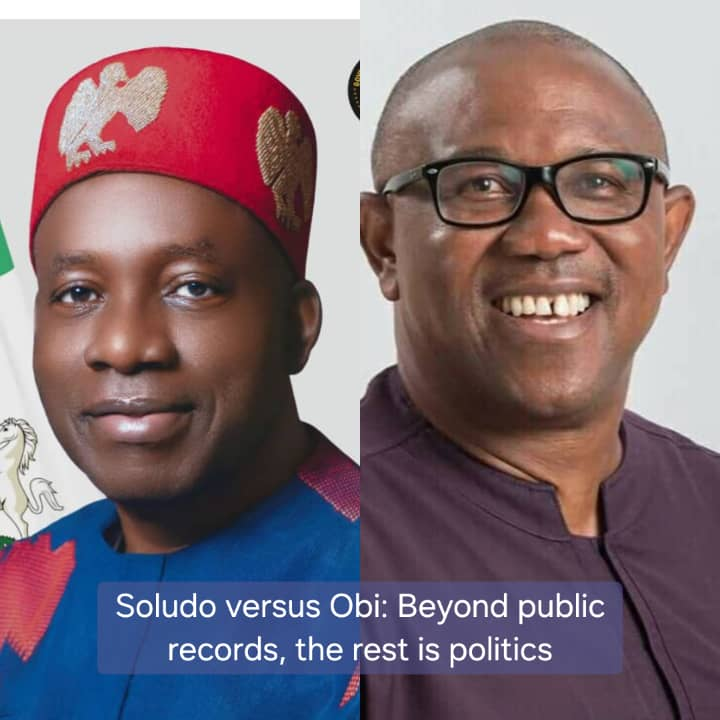
Governor Chukwuma Charles Soludo’s decision to lead President Bola Tinubu’s re-election campaign in Anambra State has sent shock waves through the All Progressives Grand Alliance (APGA). His move, apparently taken without broad consultation within the party, raises fundamental questions about APGA’s identity, political independence and survival beyond the 2027 elections.
By assuming the leadership of the APC presidential campaign in Anambra, alongside plans to mobilise the newly elected local government mayors, Soludo has embarked on a political gamble with potentially far-reaching consequences for APGA and its fortunes across the South-East.
For a party founded on the aspirations of the Igbo people and sustained by the philosophy of “Nke a bụ nke anyị” (This is ours), the governor’s decision represents a troubling departure from its historical identity.
Reports that APGA’s national leader had joined the APC’s presidential re-election campaign came as a bolt from the blue. Many party faithful and ordinary citizens were reportedly stunned by the development. For them, the question is not simply whether Soludo has the constitutional right to support a presidential candidate from another party, but whether his action undermines the very political philosophy that gave APGA its relevance.
A Gamble With APGA’s Political Future
Some of the newly inaugurated local government mayors have reportedly begun mobilising communities to support Tinubu’s re-election, with promises of federal attention and benefits featuring in the campaign narrative.
Such mobilisation could have unintended consequences. By encouraging APGA supporters to vote for a presidential candidate outside the party, the governor risks weakening the party’s political identity and creating uncertainty about its candidates in the National Assembly and state legislative elections.
The origins of APGA must be understood within the broader political history of the Igbo people. The party emerged from a desire to provide the South-East with a political platform through which its people could pursue their collective interests, preserve their identity and engage other ethnic nationalities on more equitable terms.
Chief Chukwuemeka Odumegwu Ojukwu was instrumental in championing that aspiration. APGA was never intended to isolate the Igbo from the Nigerian federation. Rather, it was conceived as a vehicle for political participation that would allow the people to retain a distinct voice within the national conversation.
Soludo’s decision therefore raises a difficult question: if the party’s leading political figure openly mobilises support for another party’s presidential candidate, what becomes of APGA’s ideological foundation?
Across Nigeria, several governors elected on opposition platforms have moved closer to the ruling APC. This trend has heightened concerns about the gradual erosion of multiparty democracy and the emergence of a political environment in which the ruling party becomes the dominant destination for elected officials seeking federal favour.
Former President Olusegun Obasanjo’s administration was similarly accused of pursuing a dominant-party agenda. At the time, Senate President Ken Nnamani played a prominent role in resisting efforts perceived as threatening democratic pluralism.
The current political realignment raises renewed concerns about whether Nigeria is gradually drifting towards a de facto one-party system.
What Happens to APGA Candidates?
The most immediate danger for APGA may lie in the forthcoming elections.
Although APGA has no presidential candidate for the 2027 election, that absence does not automatically require its members to support Tinubu or any other presidential candidate. Party supporters retain the right to make their own choices.
However, the governor’s open endorsement of Tinubu could blur the distinction between APGA and the APC in the minds of voters. If local government mayors and other political actors begin campaigning for the APC presidential candidate, some voters may question why they should continue to support APGA candidates for the Senate, House of Representatives and Anambra State House of Assembly.
After all, if party loyalty is dispensable at the presidential level, what moral or political argument remains for insisting on it at other levels?
This is the central contradiction in Soludo’s political gamble. He may secure temporary goodwill from the federal government, but the long-term cost could be a weakened APGA, an alienated support base and a diminished sense of party identity.
APGA risks becoming a party that contests elections primarily to retain control of Government House, Awka, while losing the ideological foundation that once distinguished it from the major political parties.
Ultimately, voters will make their decisions at the ballot box. They will enter polling booths alone, exercise their constitutional rights and cast their ballots in secret. No governor, mayor or party leader can guarantee how they will vote.
That is where the true consequences of Soludo’s decision will become apparent.
Why Endorse an Underperforming President?
Beyond the implications for APGA, Soludo’s endorsement raises questions about the performance of the Tinubu administration.
Since Tinubu assumed office in May 2023, Nigerians have endured severe economic hardship, rising living costs and persistent insecurity. The administration’s handling of these challenges has attracted widespread criticism, particularly over its failure to provide lasting relief to struggling households and adequately protect vulnerable communities.
The continuing violence, kidnappings and displacement across several parts of the country have further deepened public anxiety. Communities in parts of the North-West, North-Central and Southern Kaduna continue to face serious security challenges, while thousands of displaced Nigerians remain unable to return to their ancestral homes.
The causes of Nigeria’s insecurity are complex, involving multiple armed groups, criminal networks, communal conflicts and failures of law enforcement. Nevertheless, the federal government bears the responsibility of protecting lives and property, irrespective of the identity of the perpetrators.
The persistent attacks on farming communities have also disrupted agricultural production, worsened food insecurity and contributed to the hardship facing millions of Nigerians.
Against this background, the decision to mobilise support for Tinubu’s re-election is bound to provoke questions about the criteria by which political leaders determine whom to support.
Soludo may argue that cooperation with the federal government will bring greater development opportunities to Anambra. Such an argument deserves consideration. However, political pragmatism should not become an excuse for abandoning party principles or overlooking the performance of the government being endorsed.
Another source of public concern is Tinubu’s frequent overseas trips, including journeys associated with medical treatment or described as working visits and working holidays. Such trips have generated questions about presidential accessibility and the administration’s responsiveness to domestic challenges.
At a time when insecurity remains a national concern, Nigerians understandably expect the president to demonstrate visible leadership and sustained attention to the protection of lives and property.
The Unfinished Business of Electoral Reform
Nigeria’s democratic challenges extend beyond party defections and political alliances. The credibility of elections remains a critical concern.
The recommendations of the Electoral Reform Committee chaired by Justice Muhammadu Lawal Uwais remain an important reference point in debates about strengthening the independence of the electoral process.
Among the central issues addressed by the committee was the need to improve the process for appointing electoral officials and insulate the electoral umpire from undue political influence.
The argument for reform is straightforward: an electoral commission must enjoy sufficient independence to conduct credible elections and command public confidence.
When political leaders exercise excessive influence over the appointment of electoral officials, suspicions about the impartiality of the process become difficult to avoid. A transparent, merit-based appointment system would help strengthen confidence in the electoral commission and reduce opportunities for political manipulation.
Successive administrations have faced criticism over their failure to implement key electoral reforms. This has left Nigeria struggling with persistent questions about electoral integrity, political accountability and the credibility of democratic institutions.
The tragedy is that political leaders who benefit from the existing system often appear reluctant to embrace reforms that could limit their influence over electoral outcomes.
For Nigeria to deepen its democracy, electoral reform must move beyond political rhetoric and become a practical commitment shared by all parties.
A Warning for APGA and the South-East
Soludo’s decision may yet prove to be a temporary political alignment. However, its implications for APGA should not be underestimated.
The governor may gain short-term political advantages from his relationship with the federal government. Yet, if the alliance alienates party faithful and weakens APGA’s electoral machinery, the long-term consequences could outweigh the immediate benefits.
For the South-East, the issue also touches on the importance of political representation and the ability of the region’s parties and leaders to negotiate national interests without surrendering their independent identities.
Supporting a president from another party is not inherently wrong. Nor does belonging to APGA prevent anyone from engaging constructively with the federal government. The real issue is whether such cooperation is guided by clearly articulated public interests or by the pursuit of immediate political advantage.
APGA must therefore confront a fundamental question: can it maintain its identity and defend its candidates’ interests when its most prominent political figure is mobilising support for another party’s presidential candidate?
If the party fails to resolve this contradiction, Soludo’s decision could be remembered as a turning point in its political decline.
The ultimate verdict, however, will not be delivered by political endorsements, campaign rallies or promises of federal patronage. It will be delivered by voters who retain the power to decide the future of APGA and the direction of Nigeria’s democracy.