By Charles Nwoke || AlphaTimes
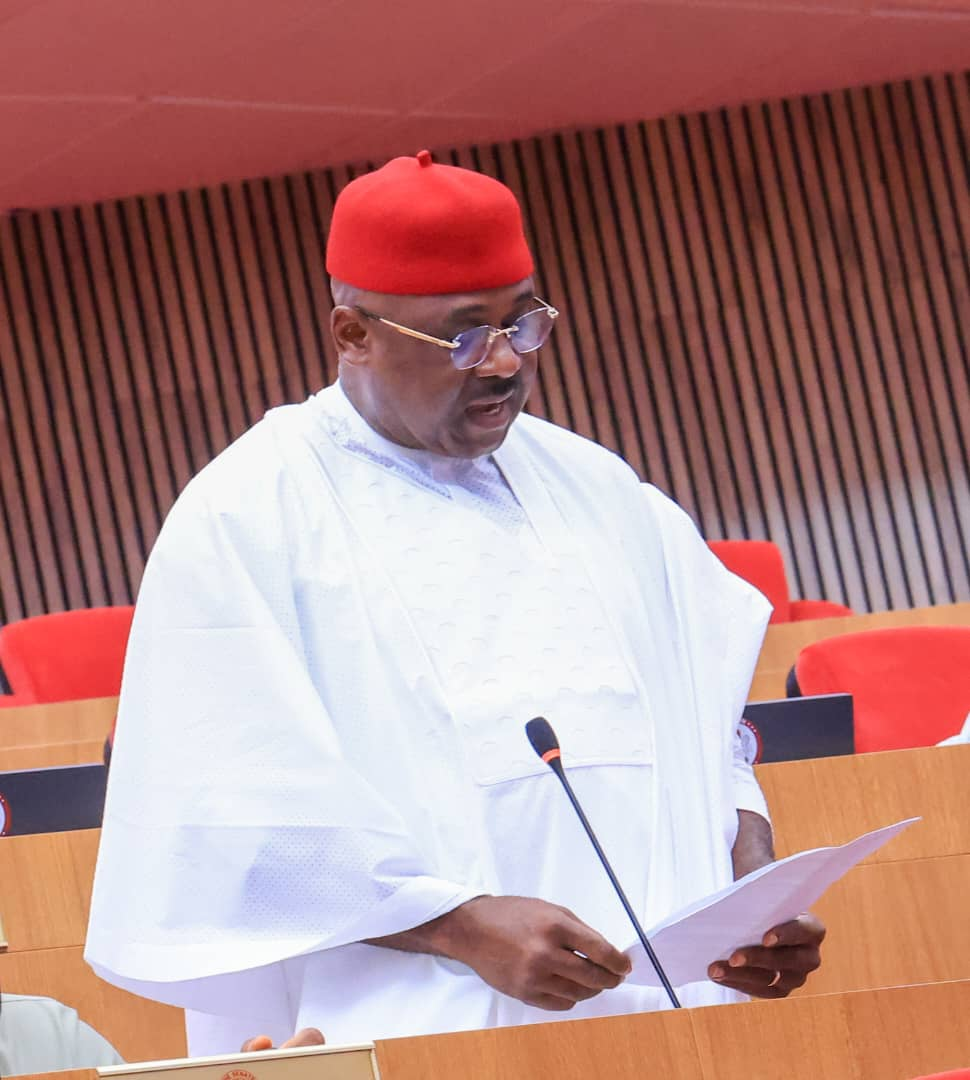
The Chairman of the Senate Committee on Information and National Orientation, Ken Eze, has urged Nigerians to begin a nationwide conversation on extending the presidential tenure to a single 16-year term.
Eze made the call at his country home in Ohigbo Amagu, Ezza South Local Government Area, Ebonyi State. He said the current four-year electoral cycle disrupts governance and weakens policy continuity.
Under Nigeria’s constitution, a president serves a four-year term and may seek re-election for one additional term. Eze proposed replacing the two-term system with a single, extended tenure. He said a longer term would allow leaders to focus on long-term development without the pressure of re-election campaigns.
“Every four years we are back in campaign mode. By the third year, governance slows as attention shifts to re-election. That is why projects are abandoned and policies are never allowed to mature,” he said.
Eze argued that successive administrations often discontinue projects and policies initiated by their predecessors. He said this pattern leaves critical initiatives incomplete and slows national progress.
He identified power, infrastructure, agriculture, and fiscal reform as sectors that require sustained and consistent policies. He cited irrigation projects, mechanised agriculture programmes, and energy reforms as examples of initiatives that demand long-term commitment.
“If you ask me, I would advocate for one tenure of 16 years. It may sound controversial, but it would allow policies to run their full course and stabilise the system,” he said.
The senator also defended recent economic reforms, including the removal of fuel subsidies. He described the decision as necessary to prevent fiscal instability and reduce unsustainable borrowing.
“We were borrowing to pay salaries. That is not sustainable for any country,” he said.
Eze acknowledged that his proposal could generate debate. He described the idea as a governance discussion rather than an attempt to weaken democratic principles. He called for a national dialogue on constitutional reform to examine whether a longer tenure could strengthen policy implementation while preserving checks and balances.
Political analysts stated that any change to the presidential term would necessitate constitutional amendments. Such amendments would need approval from the National Assembly and ratification by state legislatures.
Beyond the tenure proposal, Eze urged Nigerians to demonstrate civic responsibility. He called on journalists, teachers, civil servants, and parents to promote patriotism and national development.
“Everybody has a role to play. If we do not change our orientation, policies alone cannot save the system,” he said.
The proposal introduces a new dimension to Nigeria’s democratic debate. It raises questions about whether a longer and uninterrupted tenure could accelerate development or weaken democratic accountability.