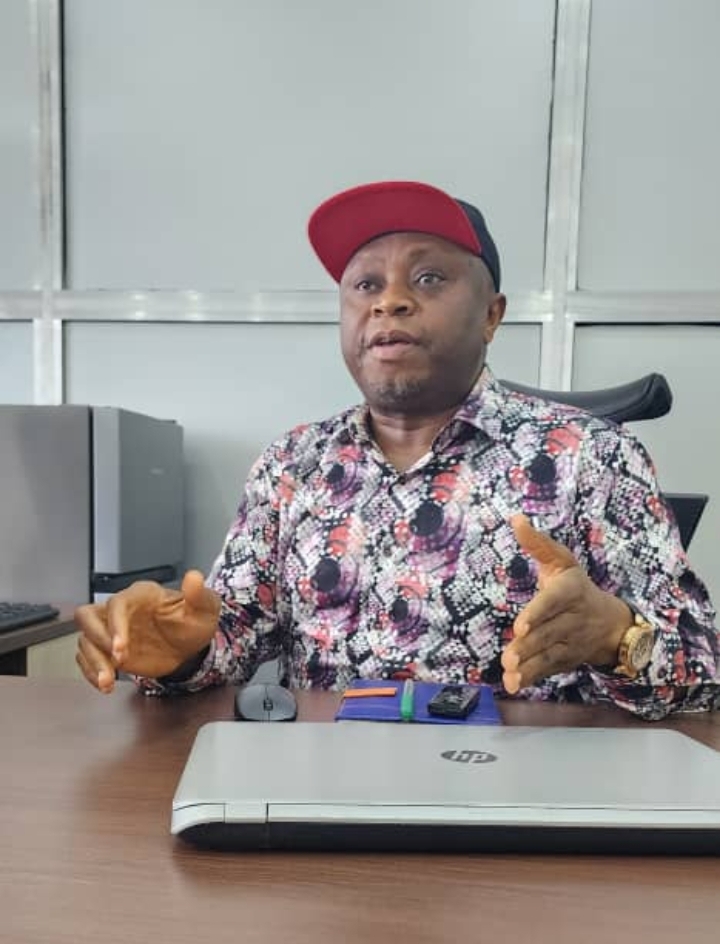
– Arc. Michael Okonkwo, Chairman, Anambra State Urban Regeneration Council
_Anambra State Governor, Prof Charles Chukwuma Soludo CFR, astonished the public when he undertook the trip to the Okpoko slum near Onitsha as his first duty after his inauguration. Governor Soludo has since set up the Anambra Urban Regeneration Council (AURC) under the chairmanship of Architect Michael Okonkwo to undertake the regeneration of the state’s urban towns, notably Awka, Onitsha, Nnewi and Ekwulobia. Anambra State Commissioner for Information, Sir Paul Nwosu, engaged Arc. Okonkwo in an incisive conversation over what prompted the need for urban regeneration and how it will eventually impact Anambra State in the long run. Please read._
*So when we talk about urban regeneration most of the people don’t seem to know what we are talking about. They liken it to town planning/physical planning and all that. So can you just break it down for them to understand? When we talk about urban regeneration in the context of Anambra State, what are we talking about?*
Thank you. As you have identified, I am Michael Okonkwo (Architect). I am currently the Chairman, Anambra Urban Regeneration Council (AURC). The Council was inaugurated by Mr Governor, Prof Charles Chukwuma Soludo CFR on 19th of October, 2022. So we’ve clocked one year. The board is made up of 10 people and the 10-man council is populated with different professionals.
You have an architect – myself, you have engineers, quantity surveyors, land surveyors, legal people and urban planners. And the Governor, when he inaugurated us, charged the Council with a very specific mandate. The Governor let us know that he wants an Anambra where people will choose as a destination to live, work, invest, relax and enjoy; a very desirable place. There’s a need to rearrange Anambra that is erstwhile chaotic into being developed. So, the Governor said that the Council should be what he called a ‘Gold Council’ for the urban regeneration program.
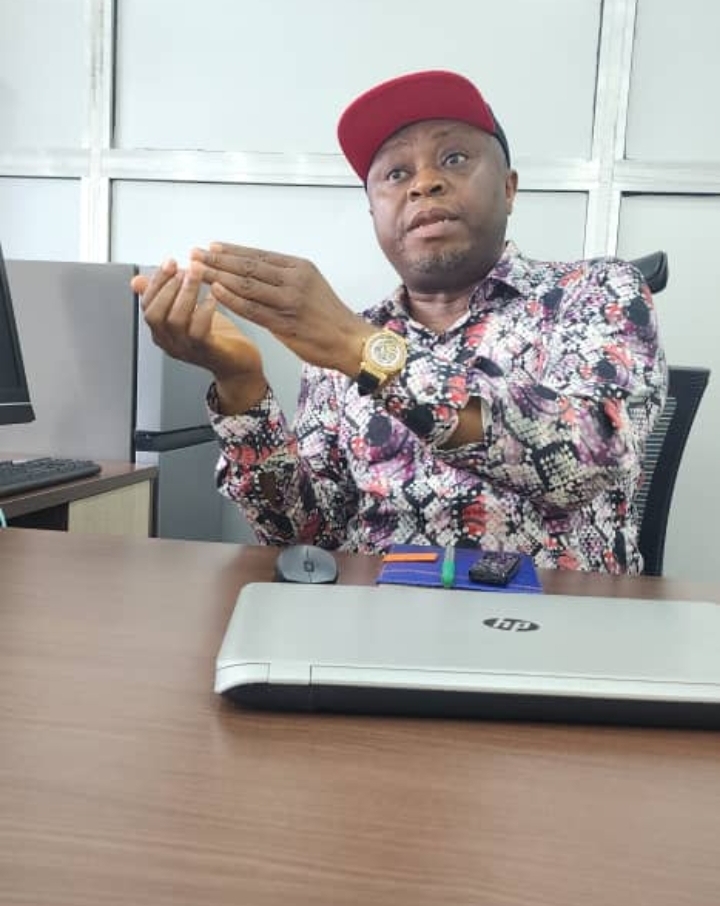
And the urban regeneration program is actually a deliberate initiative to regenerate. Usually, it is called urban renewal but urban regeneration is more specific. So, it is a very deliberate attempt to renew an area or areas that have been identified as degenerated. And so, it cuts across environmental, economic and socio-cultural aspects of living. The Council is to operate in three specific ways within the administration; which is as the Governor said – the Council is to advise the MDAs, coordinate the MDAs’ development activities and then, implement. And the reason he said it is that actually, across the MDAs, there are different aspects of degeneration. But the Council is to purposefully bring them together and amplify that. An example of this is what we call the realm. The public realm has to do with areas in the public domain that is not private property. In other words, in every urban area, you have the people’s private property which ends at a certain point and the public realm takes over; which is what we call the setbacks. From the setbacks to the road is the area we call the public realm. They include streets, which includes sidewalks and all the streets’ architecture – gardens, sidewalks, parks, pedestrian walkways and plazas, outdoors which is public.
So, the Council is supposed to identify throughout the urban areas places that have this public realm to be renewed. At this juncture it is importan to mention that this administration had determined four major cities in Anambra State that are designated as urban areas and they are: Awka, Onitsha, Nnewi and Ekwulobia. When we talk about these areas, they are not just the perimeter of what we know as that area. For instance, in Awka, when we talk about Awka, you are adding Amansea, you are adding neighbouring towns – Nibo and the rest of them. That’s what we mean when we talk about urban areas. The same thing goes for Ekwulobia. Most of the Aguata areas that connect to Ekwulobia, we consider them the urban areas of Ekwulobia. The same thing goes for Nnewi and Onitsha.
These areas are where the core mandate of Urban Regeneration Council lies. We are supposed to first identify areas within these urban areas that require regeneration. Once we identify, the council is to produce a master plan, a work plan, implementation plan, working with the relevant MDAs’ for actual execution of these areas. And so, that in a nutshell is what urban regeneration is all about and what Urban Regeneration Council mandate is.
*Thank you very much. Now, there is a distinction between urban regeneration and urban renewal. One is like trying to recreate an environment from an existing one. Correct?*
Yes.
*Good. I am aware that when the Governor came into office, he started with Okpoko. And you know Okpoko is reputed to be the biggest slum in South East, if not the country. So, has anything been done? What are the kinds of specific problems? If you are charged with moving into Okpoko, what are the specific urban regeneration solutions you are proposing for Okpoko, for instance?*
Okpoko is ground zero for urban regeneration. Okpoko has been identified in 2018 by the World Health Organization as the most polluted place in the world. Okpoko is also cited in so many studies and publications. For instance, UN Habitat lists Okpoko as one of the disturbing degenerated urban areas in the world and then, there have been so many studies done in Okpoko. Mr Governor, Prof Charles Chukwuma Soludo CFR, even from 2010, had identified Okpoko as a place that, if given the chance by God to become the governor of Anambra State, he would work on. And he kept that promise. As soon as he came into office, the very first place he started work was in Okpoko and that is where Urban Regeneration Council has started their work.
As for your question, we are working with the Ministry of Works & infrastructure, Ministry of Education, Ministry of Power and Water Resources, and all the relevant MDAs to see that Okpoko is regenerated. In terms of infrastructure – working with the Ministry of Works, the Governor had awarded not less than 10 roads in Okpoko that are under construction now. Working with the Ministry of Power and Water Resources, there are street lights in Okpoko where erstwhile, there have not been street lights for years. Working with Ministry of Health, a site has now been determined and indeed an award made of a general hospital in Okpoko. Working with the Ministry of Culture and Tourism, we have also identified in the centre of Okpoko, where the Governor insists that we provide leisure park and sports community centre for Okpoko people because the Governor feels that the people have to feel that they belong. They have to have a place to take a load off. So we are doing that with the Ministry of Environment. Okpoko is known for incessant flooding and some erosion sites. And working with the Ministry of Environment, we are charting the course. When I was the Commissioner for Environment, UN Habitat and World Bank, working with the state government at the time, generated what we call ‘Storm Water Master Plan’. And in that Storm Water Master Plan, Okpoko and the rest of Onitsha was redesigned; how flood will be taken away from the area. I have been to two workshops in Lagos and it’s because I am the Chairman of Anambra Urban Regeneration Council and because Okpoko is ground zero for regeneration. The topic of the workshops have always been resiliency in flood prone areas and Okpoko is identified along with other sections of Ogbaru as flood prone areas and we are working on determining the kind of architecture, designs that will be resilient to flooding.
What I also need to let known here is that like I said, the eyes of the world is on Okpoko for the unfortunate characteristics of the place. It’s mostly made up of migrant people – people that do not have sense of ownership. Indeed the world is saying that to help in regeneration of Okpoko, we need to identify the people who occupy that place and have been there for a very long time and that we start to create situations where they actually become part owners of the place. They get land titles and all of that. And then the world will come and say “yes, you have identified that these people belong here, we can help in the development “.
So we have done the feasibility studies and all that we had to do that would attract foreign donors and one of the first things, UNDP – that had come into Anambra State did was to have a meeting with the Urban Regeneration Council with a view to helping us develop Okpoko. So we have a lot of things going on in Okpoko and that is where we want to work with the Governor to make sure that Okpoko becomes a successful case study for how you regenerate a place that is erstwhile chaotic.
*So in your opinion, the case of Okpoko is not beyond redemption?*
Oh my God, it’s not.
*What are you looking at by the end of this tenure; when Mr Governor rounds off its first tenure?*
Great question! The Governor had constantly let us know that his administration/our administration is one with an agenda with a deadline. And therefore, everything we do has to be very deliberate and purposeful. So we have set milestones for ourselves. By the end of this particular tenure, Okpoko would have experienced organised areas of good road network, good street lights; indeed provision of light. I know that the Governor also had just awarded urban water scheme for Okpoko. He was very deliberate about that. We are doing water schemes everywhere and he kept hammering on having a separate package for Okpoko and that is going on through the Ministry of Power and Water Resources. So by the end of the tenure, we would have had good drinking water reticulated to households or at least reticulated to places where the households can then plug into it; great number of good roads, drainage channels, robust waste management and a very sensible master plan for Okpoko. That is our agenda and we must have them by the end of this tenure.
*Thank you. You know our Governor talks a lot about repurposing Upper Iweka. Not just Upper Iweka but where you have huge traffic in Anambra State, because he believes that until a place like Upper Iweka or places looking like Upper Iweka have been repurposed, we cannot actually be able to deal conclusively with the issue of touts and touting because it is the way Upper Iweka is today that breeds touts and touting. What will be the role of your Council in dealing with those kinds of challenges?*
Great question again. Our great Governor, Prof Chukwuma Charles Soludo CFR always talks about thinking things through. You don’t just deal with things on the surface. Usually, the previous administrations just dealt with touting, thinking that if you remove the touts from the streets, the problem will go away but our Governor, Prof Chukwuma Charles Soludo CFR had identified that the touts are to motor parks what moths are to fire. To stop the moths from flying around, you have to quench the fire. To stop touting, something has to be done about the incessant locations of motor parks all over Onitsha in general but particularly in a place where we call Upper Iweka. And in fact, it is very essential to identify where is Upper Iweka.
Upper Iweka happens around the interchanges that we call the clover lift interchanges in Onitsha. Within and around there, you have a lot. We have done an enumeration and found out that there are 68 known motor parks in and around Upper Iweka alone. And then, of course, you have the ones that cannot be counted; the ones that move about everyday. So in repurposing Upper Iweka, we just have to find out what is the problem. The problem is over population, traffic jams, incessant accidents, indiscriminate street trading, murders, drug trafficking and all manner of ills the society cannot thrive with. And so once we found out what those problems are, we then looked at what is causing them and we found out that it’s the fact that we have a lot of motor parks jammed within an area. And so, the Governor is saying we have to repurpose and that means relocating these motor parks. And in relocating them, we have to now purposefully determine where we can have central bus terminals. You know in other parts of the world (developed world), you have central bus terminals which most of the times relate with other modes of transportation. We have the airport now. We are talking about the Onitsha River Port and the rail introduction that Mr Governor is bringing. He has charged the Ministry of Transport with finding intercity transportation with an intracity transportation. Meaning that Anambra State must have their own public transportation system where people can actually not drive; go around with bus mass transit as it were. So, with that, we are about having all those 68 motor parks in and around Upper Iweka relocated to areas where we know that Onitsha is eventually going to grow to. We are looking at along the express. The Governor said you have to make it accessible to the people. So we are looking towards Umunya, Oyi Local Government. Idemmili North is already overpopulated. We are looking at Ogbaru direction. We want to move away from that core because central bus terminal will offer people the opportunity to get to a particular place before you travel out to where you are going. And that will create new businesses plus the sense of Ubers, the taxis and shuttle buses will really make sense; not indiscriminate but now, everybody will know. We are studying Kigali, in Rwanda. They have series of great central bus terminals. So that’s what we are trying to do.
So we are moving away, identifying the areas we can go with them in our master plan. Once we do that, the Governor said: what becomes of the place? Then we can start to look at; if you have been in Lagos, along the Lekki Express Way. Before it was scattered but it was purposely decided it will be an area where we can have high rises flag the express way and business offices can move there. Maybe that will become our own Upper Iweka area where we have institutions, business offices; not necessarily industries because that’s another thing. So that’s what we are saying. We remove that menace and then we bring in something that is more suited for the place.
*Thank you for your last comments because I was looking at when you repurpose, what is the benefit? What will be the situation of Upper Iweka that you were talking about turning into business districts where you don’t see people of questionable characters run around, pickpockets and others. Now, having repurposed a place like Upper Iweka, our Governor do talk about regenerating other areas like New Market Road to now have boulevards, sidewalks and the rest of them. What will be the role of this Council in all that? Is it possible really, given the fact that these areas have been like that for many decades of time?*
Okay yes, it’s possible. Let me start there. The Governor always say that “alụ gbaa afọ, ọ dịka ọ bụzị́ omenala”. But one thing I like about him, is that he is a man that has huge quantum of political will. It’s one thing to give us salt to carry, it’s another thing to bring down the rain. Ị ma-ebunye mmadụ nnu hakpo ya mmiri. So the Governor has reconstituted us and has given us political will which is what we need. In fact, in this thing that we do, I said to the Governor, we need three things. We need political will, freedom to assemble the best minds in tackling this and of course, we need funds. I can tell you, we do have great political will from the Governor and indeed, he has assembled great minds to work on this. We want to think outside the box. Of course, there is paucity of funds. It’s not just the state, everywhere in Nigeria. So we are trying to think outside the box on how to fund some of these and that’s why we are looking for private sector people to help us. We are asking private sector people to partner Anambra State Government through the Anambra Urban Regeneration Council to adopt streets, adopt open places, gardens; adopt centres like the roundabouts and all that. And then, the government wants to do community leisure parks and sports centres throughout every community in Anambra State. So we are looking to work with local governments and people of different communities to do that. So you see how we are thinking outside the box because you can’t depend on the government for all of that.
I started by saying yes, it is possible to regenerate the streets. First, you have to identify what’s the problem. The problem is overcrowding, disintegration of law and order, not adhering to policies, guidelines and standards. So once we identify all that, we have a work plan to go. First, we have to relocate the people. First, we have to introduce the No Street Trading Law. In Anambra State, we have a law called No Street Trading. So No Street Trading Law needs to be enforced. And in that law, nobody is supposed to trade on the streets and that means in the public realm that I talked about – from the road to the private property, be it the shop or whatever. One might ask: Where do you take all these people to? That’s what the Governor said. Now we might have to get proper markets; not those ad hoc markets. We want to get markets that are planned to accommodate what the market is meant for. If it is a specialty market, it will be designed for that. If it is what we call the free market, it will be a free market. You must provide all the amenities. You have to provide the adequate stalls for those places. You have to provide amenities. That means there will be restrooms and the likes, health centres, firefighting architecture and proper access but the Governor keeps hammering on parking. We must provide the number of parking relative to the size of the market. So once we do that, we start to relocate the people. But in the meantime, we start with the enforcement of the No Street Trading Law. Once we get those people; because most of our markets have stores inside but people choose to come to the road. We want people to go back inside the market so we can take back the streets.
We are talking about repurposing Upper Iweka but what most people do not know is that Upper Iweka as we know it today; that started as Igwe Iweka Road didn’t just happen. Nobody planned it that way. It was because after the war, the Eastern Region of Nigeria did not get what they were promised which was that the Federal Government will come in and help and all that. So the Igbos took it upon themselves to help themselves and the best place to come was Onitsha. So we have concentration of people around where the industries and markets were at that time. And everybody was coming around what is now Upper Iweka that started as Eze Iweka Road. And then the Eze Iweka himself actually brought about what we know now as Moore Street. It is no wonder the Governor wants to start with Moore Street through Ochanja Roundabout, where we are doing a roundabout that has water fountain just to bring life into the area. And from there, we are moving through Iweka to the interchanges. We talked about the pullover. That’s what the Governor wanted us to do so that we have an iconic pullover that we can look to in doing other places. And he didn’t stop there. When you have that spine going from Moore Street through Ochanja Roundabout to Upper Iweka, then Governor wants to talk about Zik’s Avenue, Port Harcourt Road and the rest of them that formed that area. It is purposeful. He wants to deliberately develop that area; then we can move to other parts.
And of course, you touched on the markets, what we are doing in the markets. The Governor wants us to refurbish, renew, regenerate them. It’s systematic. And how do we do that? We have to look to how these markets were supposed to be; the original master plan. We want to bring it back.
There was a Commissioner for Trade & Commerce that I will not forget anytime soon. That’s my very good friend, Ifeatu Onejeme. He was the one I remember was the Commissioner for Environment at one time. We worked together. I was Managing Director of Anambra Capital Territory. What he was trying to do was to actually say “look, let’s look at the master plan. If you are sure it’s not supposed to be here, we remove it”. And my God, he did it! Those days, if you moved into Main Market, you are able to move around. Where there are supposed to be parking, people put shops there. Where we are supposed to have firefighting equipment, they removed the fire hydrants. In fact, they fought him a lot I remember. So those were the kind of things we want to do.
I had meetings with market leaders. We are going to look at guidelines, standards and policies that guide the markets. People can no longer have all these independent generators (I pass my neighbour) and the rest of them. We have told them they will have what we call ‘ Captive Power Supply ‘. They must have central power system where everybody will pay and get connected from. That way, we can actually control connections. We have to go back to making sure that people do not have shanties because really, we are not supposed to construct markets with woods and timber. They are doing that now because they are doing attachments. So we want to remove all that. We want to systematically, deliberately reclaim the markets the way they used to be. So all these things go hand in hand with urban regeneration of an urban area.
*We cannot end this conversation without actually talking about our state capital in Awka and I have been privileged to see a number of designs of Amansea. This is the gateway into Anambra from Enugu. Does Awka need to be regenerated and how, where and where do you specifically looking at?*
When we talk about Awka, and I like to talk about Awka Capital Territory because I happen to be the pioneer Managing Director and Chief Executive Officer of Awka Capital Territory (2014 – 2018). We did a preliminary master plan for the Awka Capital Territory which is really 24 towns within six local governments. Some of them are the whole like the whole of Awka South. Some of them are parts – which is Awka North. You have Orumba North, where we have Ndiukwuenu and the rest of them. And of course, Dunukofia, Njikoka and even Anaocha. You know these places are six local governments. People look at Awka Capital Territory, they forget that all these areas I mentioned have the possibility of expanding. So if you should talk about the old Awka city as we know it, then we feel limited. But I will answer your question systematically.
We will need to regenerate parts of Awka and then, we need to repurpose or rather; we repurpose parts of Awka in particular and then, we regenerate Awka Capital Territory in general. In repurposing, we have proposed to repurpose where you now call Eke Awka. Can you imagine having Eke Awka become the core, the centre of the city where you actually have central space for Awka? But if you have that place, that will be the downtown with the new life. That means the market will have to go. They keep saying Eke Awka is this and that. You can actually have neighborhood market within the centre but then, all these markets, we are systematically removing them; that’s why we have Umuokpu Timber Market. And eventually, we will remove all those specialty markets. Then we have neighborhood market within where you have the centre. That’s one because we have identified Eke Awka stretch as urban regeneration area. We have also identified Ifite Awka as urban regeneration area. There is a lot of slums (people do not know) within the backside of the UNIZIK back gate.
*Really?*
Yes and it’s growing chaotically if not arrested. That’s why you see all these crimes happening in that area. Even, UN Habitat identified Ifite Awka as a degenerated area; as a slum that needs regeneration. But if we don’t have these kinds of conversation, you may not even know. So we have identified Ifite Awka as a slum, we have identified Eke Awka stretch as a slum and once it has been identified as a slum, the next thing is to regenerate. So we are doing that. And then because Awka population keeps growing, we are talking about new Awka. I am sure you hear in the Exco that there have been some acquisition made of land – 3000 here, 5000 there. Now we can have a new Awka so that Awka will eventually decongest. And that decongestion brings me to the other question you asked which is: How do you make people feel good coming into Anambra State?
Right now, the Governor is not very happy that if you are coming into Anambra through Awka in Amansea area by the express, the first thing you see is cow dungs. You see indiscriminate cow selling posts, cow pens that are not controlled, suya (not even nicely done) areas and if you are coming from the old road, the same thing.
So there is a committee called Committee on Beautification of the Gateways but that’s ad hoc. But responsibility lies with the Urban Regeneration Council and we have been working on what to do when people are coming in – that feel good factor. And so in Amansea, we are thinking of that feeling you get when you come into urban square. I mean let’s talk about a place that is very close – Enugu. That is the kind of feeling we want you to have when you are in a whoozy area; garden type. They would welcome you into Anambra State through this side. And from Onitsha, we are working very hard to clean up the Head Bridge so that area would also look good and then the spine that connects Amansea and Head Bridge, which is the express way, the Governor insists on making sure that we keep it clean of weeds, desilted drainage, well arranged courts and streetlights. He wants to be able to come all the way from Onitsha to Awka at night and perhaps, anytime. So we have that going on.
And then, the first thing we did as Urban Regeneration Council was to make a presentation to the Executive Council. We called it the’ Big Regeneration Program ‘. We identified spines of Awka. We said there is a need to widen some of these streets, open some of the streets in what we called ‘Opening Up Awka’. But before we even came in, the Governor had already started widening the road from UNIZIK Junction where we have the pedestrian bridge; that is called Obi Okoli. It’s turning into a dualised boulevard. If you go there now, it’s happening. And then, of course we proposed and we are getting the same thing. The Club Road in that axis which is fun centre of the area is also being regenerated. All the roads – the old INEC Road that leads you into Okpuno and meeting Y Junction and Obi Okoli – all of them leading through Okpuno to Mgbakwu and the rest. That’s why I said the Urban Regeneration Program connects every MDA but the thing is that Urban Regeneration Council is purposefully created to advise, coordinate and implement. So that’s what we are doing.
Now, what gives me joy is that ANSEC has approved the award of what we call the Solution Fun City, which is happening at where we now have Awka Township Stadium. It’s gonna be a life centre of Awka, where people can come in and enjoy amusement park, water rise, miniature gulf and the rest of it. That is going to be the centre of family relation.
*Finally, give me one punchline on how you will describe the regenerated urban Anambra. What will it look like? What would be the takeaway by any first time visitor?*
The regenerated Anambra would have a robust waste management system, streets lined with trees and all the street/road architecture which are waste bins, street benches, proper setbacks, areas where people will have what we call open spaces; not a place where you designate it open, people go there to mess up. A regenerated Anambra would be where people build with adherence to building standards, policies and regulations, including robust law and order.
*Mr Michael Okonkwo, Chairman of Urban Regeneration Council, Anambra State, thanks for your time.*
Thank you and I want to use this opportunity to call on Ndị Anambra to join the administration of Prof Charles Chukwuma Soludo CFR through the Urban Regeneration Council so that we can work together to regenerate Anambra State. Daalụ.