By Kanayonmuo Azaka || AlphaTimes
A confrontation between armed police officers and electricity workers in Imo State has escalated into a potential nationwide shutdown of the power grid, exposing deep fractures between government enforcement tactics and labour rights within Nigeria’s already fragile energy sector.
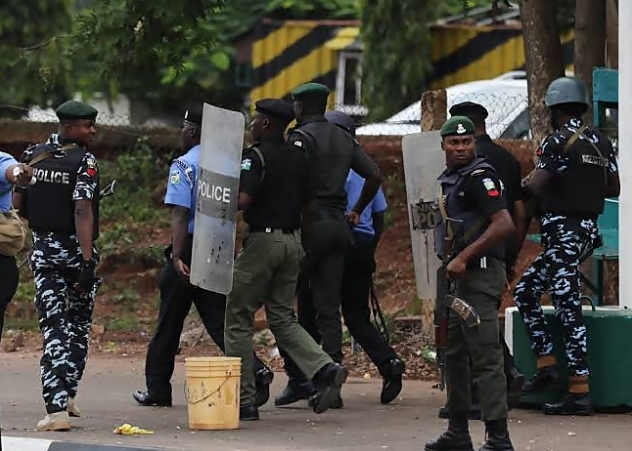
The dispute stems from an incident at the Egbu 132/33kV Transmission Substation in Owerri, where officers allegedly stormed the facility, forcibly halted operations, and reportedly assaulted staff on duty. The National Union of Electricity Employees (NUEE) accused the police of acting under instructions from the Imo State government—a claim yet to be officially confirmed.
Union officials say the operation went beyond intimidation, describing it as armed coercion that disrupted a critical service and endangered lives. The officers allegedly vandalised equipment, destroyed employee property—including mobile devices and vehicles—and disabled CCTV systems before taking several workers to an unknown location.
Rather than treating the matter as an isolated misconduct case, NUEE has framed it as a direct attack on the integrity and safety of essential service personnel. The union has now suspended all operations across Imo State and is threatening to escalate toward a national blackout if government authorities fail to respond decisively.
“This level of force and intimidation against civilian workers is unacceptable and dangerous,” said the union’s acting general secretary, Dominic Igwebike, adding that electricity workers cannot function “under gunpoint or political intimidation.”
NUEE is demanding the immediate release of detained staff, replacement of vandalised infrastructure and property, and an enforceable guarantee of worker safety signed by the Federal Ministry of Power, TCN management, and the Inspector General of Police.
Industry analysts warn that if the shutdown threat materialises, the consequences will be severe: ongoing instability in Nigeria’s grid—already suffering from vandalism, gas supply constraints, labour disputes, and system collapses—may worsen.
The situation also raises bigger questions:
Why were police deployed to a power installation?
Was this a lawful intervention or political overreach?
Who controls security response in strategic infrastructure spaces—the state or federal authorities?
With both sides standing firm, the confrontation has moved beyond a workplace dispute into a governance test involving labour rights, security ethics, and national infrastructure management.
Unless an urgent diplomatic and legal resolution surfaces, the country could once again face a preventable energy crisis—this time triggered not by system failure, but by confrontation between the state and those who keep the lights on.