…Say Success Depends On Effective Revenue Generation
…Debt Management, Addressing Inflation, FX Volatility
…Atiku Says Budget Lacks Fiscal Discipline To Address Problems
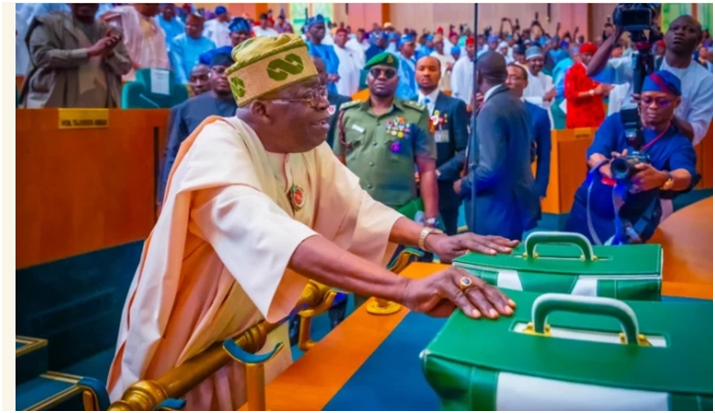
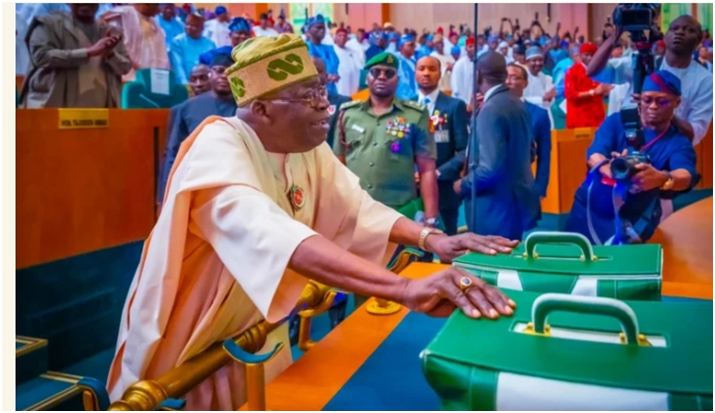
The N47.9 trillion 2025 budget, which was presented last week to the National Assembly by President Bola Ahmed Tinubu, has been described by experts as a bold and optimistic step towards Nigeria’s economic recovery but with unrealistic assumptions.
The president had explained that in 2025, his administration would direct N4.91 trillion to defence and security; N4.06 trillion to infrastructure, with health sector getting N2.48 trillion, while education would gulp N3.52 trillion.
Accordingly, N34.82 trillion is targeted as revenue, with expenditure projected at N47.90 trillion, including N15.81 trillion for debt servicing.
Describing the fiscal policy as ‘2025 Budget of Restoration, Securing Peace, Building Prosperity,’ Tinubu acknowledged that though the projections were ambitious, they were, however, necessary to secure the country’s future.
This is as he highlighted a total of N13.08 trillion, or 3.89 percent of GDP, as deficit, and a decline in inflation from 34.6 percent in 2024 to 15 percent in 2025.
Tinubu said, “The 2025 budget projects that inflation will decline significantly from the current 34.6 percent to 15 percent by the end of next year. Concurrently, the exchange rate will improve from approximately N1, 700 per dollar to N1,500 and a base crude oil production assumption of 2.06 million barrels per day (mbpd).”
The president explained that Nigeria’s economy grew by 3.46 percent in the third quarter of 2024, up from 2.54 percent in the third quarter of 2023 with the nation’s foreign reserves standing at nearly $42 billion.
“In 2025, we are targeting N34.82 trillion in revenue to fund the budget. Government expenditure in the same year is projected to be N47.90 trillion, including N15.81 trillion for debt servicing. A total of N13.08 trillion, or 3.89 percent of GDP, will make up the budget deficit.”
Analysts at Financial Derivatives Company Limited, a firm of economic think tank, believe that major inflationary drivers may begin to show signs of abating in the new year but the inflation target of 15 percent in the budget is too optimistic.
“We expect inflation of around 25 percent and base case for GDP growth at 4 percent, however 6 percent is feasible if the right things are done, said analysts at FDC.
The proposed budget, described as a blueprint for economic recovery, is built on key assumptions to spur growth. These include a crude oil production target of 2.06 million barrels per day, a significant reduction in petroleum product imports through expanded domestic refining capacity, and enhanced agricultural output facilitated by improved security measures.
Nigeria’s proposed 2025 budget has seen a significant increase of 74.18 percent, reaching N47.9 trillion in nominal terms, signaling a bold fiscal strategy aimed at addressing persistent infrastructure gaps and development challenges.
However, in dollar terms, the budget contracted by 23.22 percent, dropping from $36.7 billion in 2024 to $28.18 billion in 2025. This reduction in real value limits the potential impact of the budget on economic growth and the well-being of the population.
Beyond the decline in the real value of the budget, several key factors will influence whether it can truly unlock Nigeria’s growth potential. These factors are:
The Nigerian Federal Government aims to generate over N30 trillion in revenue, underpinned by an oil price target of $75 per barrel and a production target of 2.06 million barrels per day (mbpd).
Significantly, analysts at Parthian Partners said some of these assumptions are unrealistic.
They said, “While the oil price target is reasonable, the production target of 2.06mbpd appears overly optimistic. OPEC reported Nigeria’s oil production reached just 1.4mbpd in October, well below the target. Although production is expected to rise due to efforts to combat theft and pipeline vandalism, achieving the 2mbpd target in the short term seems unlikely”.
They argued that the government’s ability to manage its debt will be crucial in determining the space available for growth-enhancing spending. Excessive borrowing without a clear repayment plan could further exacerbate the nation’s debt burden.
“The successful implementation of the budget hinges on the government’s ability to carry out the proposed projects efficiently, ensuring proper oversight, monitoring, and institutional reforms to minimize corruption and waste.
“Rising inflation and currency depreciation could erode the purchasing power of the budget, undermining its effectiveness, particularly for essential imports and capital expenditure.
“Ensuring that the budget prioritises job creation, poverty reduction, and social welfare programmes will be key to making growth sustainable and inclusive, benefiting a wider portion of the population.
“While the nominal increase in the 2025 budget reflects an ambitious policy shift, its success will depend on effective revenue generation, debt management, project execution, and addressing inflation and exchange rate volatility. Without tackling these challenges, the budget’s ability to deliver meaningful growth could be limited”, the analysts added.
Atiku Says Budget Lacks Fiscal Discipline To Address Nigeria’s Problems
Similarly, former Vice President Atiku Abubakar has said that his assessment of the 2025 budget with a revenue forecast of N35 trillion will only amount to a business as usual fiscal practices.
A statement on Sunday signed by the presidential candidate of the Peoples Democratic Party (PDP) in the 2023 election, noted that the budget lacks the structural reforms to address Nigeria’s multifaceted problems.
According to Atiku, under the All Progressives Congress (APC)-led administration since 2016, budget deficits have been consistently presented.
Atiku in the statement titled, ‘My Assessment of the 2025 Federal Budget’, said, “The 2025 federal budget, amounting to N48 trillion with a revenue forecast of N35 trillion, resulting in a deficit exceeding N13 trillion or 4% of GDP reflects a continuation of business-as-usual fiscal practices.
“This represents a persistent trend under the APC-led administration since 2016, wherein budget deficits have been consistently presented, accompanied by an increasing reliance on external borrowing.
“To bridge this fiscal gap, the administration plans to secure over N13 trillion in new borrowings, including N9 trillion in direct borrowings and N4 trillion in project-specific loans. This borrowing strategy mirrors the approach of previous administrations, resulting in rising public debt and exacerbating the attendant risks related to interest payments and foreign exchange exposure.
“The 2025 budget’s capacity to foster sustainable economic growth and tackle Nigeria’s deep-rooted challenges is questionable. Key issues arise from several factors:
“Weak Budgetary Foundations: The 2024 budget’s underperformance signals poor budgetary execution. By Q3 of the fiscal year, less than 35% of the allocated capital expenditure for MDAs had been disbursed, despite claims of 85% budget execution. This underperformance in capital spending, crucial for fostering economic transformation, raises concerns about the execution of the 2025 budget.
“Disproportionate Debt Servicing: Debt servicing, which accounts for N15.8 trillion (33% of the total expenditure) is nearly equal to planned capital expenditure (N16 trillion, or 34%). Moreover, debt servicing surpasses spending on key priority sectors such as defence (N4.91 trillion), infrastructure (N4.06 trillion), education (N3.52 trillion), and health (N2.4 trillion). This imbalance will likely crowd out essential investments and perpetuate a cycle of increasing borrowing and debt accumulation, undermining fiscal stability.
“Unsustainable Government Expenditure: The government’s recurrent expenditure remains disproportionately high, with over N14 trillion (30% of the budget) allocated to operating an oversized bureaucracy and supporting inefficient public enterprises. The lack of concrete steps to curb wastage and enhance the efficiency of public spending exacerbates the fiscal challenges, leaving limited resources for development.
“Insufficient Capital Investment: After accounting for debt servicing and recurrent expenditure, the remaining allocation for capital spending, ranging from 25% to 34% of the total budget, is insufficient to address Nigeria’s infrastructure deficit and stimulate growth. This equates to an average capital allocation of approximately N80,000 (US$45) per capita, insufficient to meet the demands of a nation grappling with slow growth and infrastructural underdevelopment.
“Regressive Taxation and Economic Strain: The administration’s decision to increase the VAT rate from 7.5% to 10% is a retrogressive measure that will exacerbate the cost-of-living crisis and impede economic growth. By imposing additional tax burdens on an already struggling populace while failing to address governance inefficiencies, the government risks stifling domestic consumption and further deepening economic hardship.”