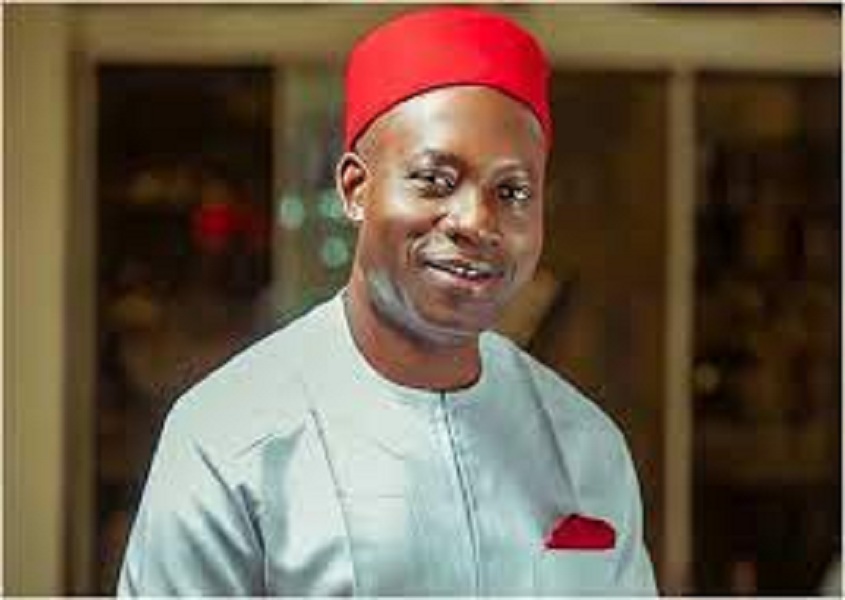
Valentine Obienyem
A few days ago, news drifted in that music icon Kwam 1 had, with full recklessness, obstructed an aeroplane at the airport – a grave safety breach – and was allowed to go his way untouched. Days later, Comfort Emmason, an ordinary citizen and “unknown quantity,” was accused of a far lesser offence, yet was seized, detained, and brought before a court.
By what standard of justice can this be justified? Plato reminded us that justice is giving each his due. If that is so, are we to believe that Kwam 1’s due was freedom, and Kwam 2’s due was arrest, detention, and arraignment?
The ancient Scythian philosopher Anacharsis once observed that “laws are like spider webs; they catch the weak and poor, but the rich and powerful break through them.” His words echo painfully in our time.
The fairest modern lens for weighing this paradox is John Rawls’ Theory of Justice. Rawls bids us to imagine a “veil of ignorance” – a mental covering that strips us of all knowledge of our wealth, fame, class, or station in life. Behind that veil, we would design a society whose laws are impartial, for we could just as easily be the powerless as the powerful.
His first principle grants equal basic rights to all: the same law for the mighty and the meek. His second allows inequality only if it serves to lift the least advantaged. Here, however, the scales have been tilted: Kwam 1’s exemption aids no one but himself, while Comfort Emmason’s punishment pushes her further down.
Justice, in her purest form, is blind to identity. In Nigeria, she recognises faces, names, and bank accounts. She has long laid down her sword and scales, and now kneels before privileges.