Ifeanyi E. Ihegwuruike
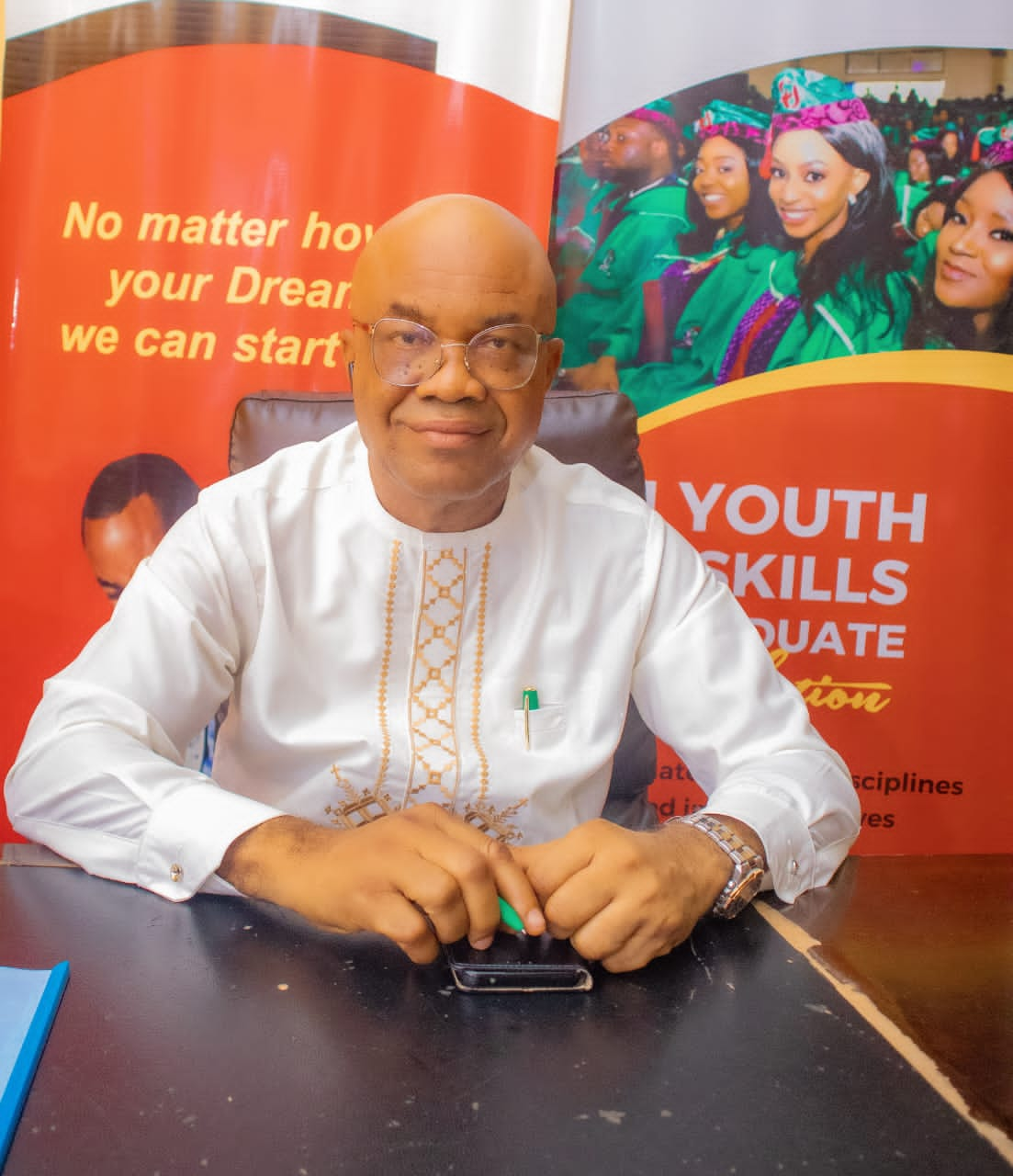
Chief Athanasius Chibuike Asika, Chief Executive Officer (CEO) of Fenico Global Resources Ltd, one of the biggest traditional apparel dealers in Nigeria, is worried.
Suffice it to say that Asika is not worried because of his business but disturbed that an indigenous woven fabric, Akwete, originally rooted in the Igbo culture of the Akwete Ndoki people in the Ukwa East LGA of Abia State, is facing an existential threat.
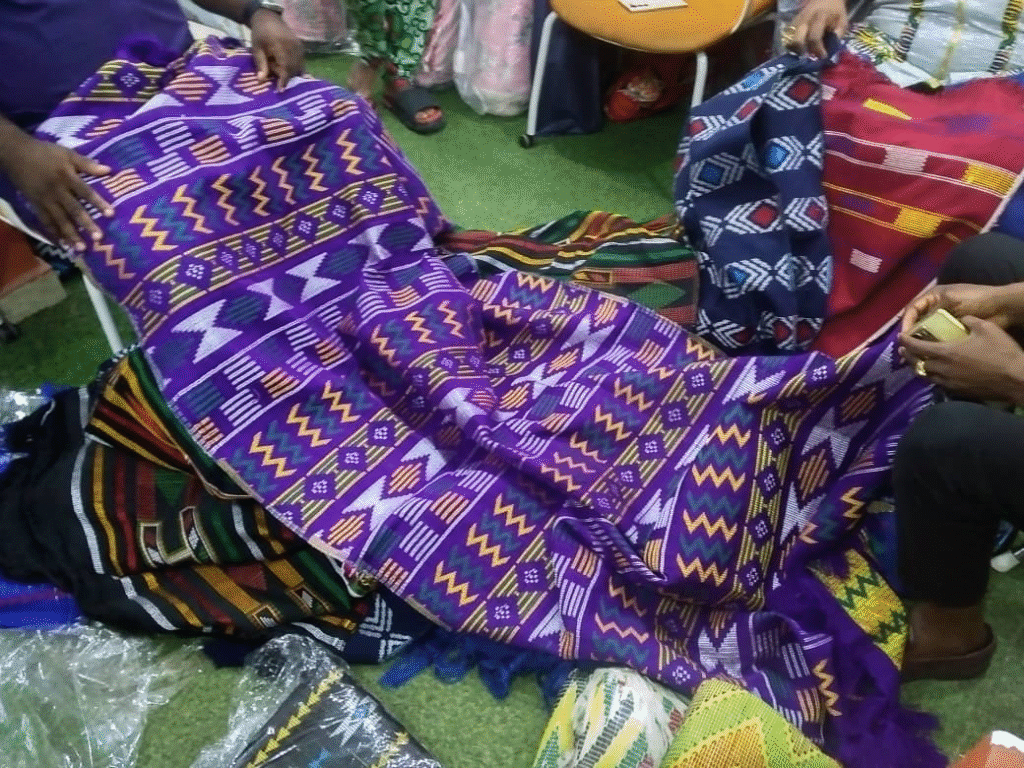
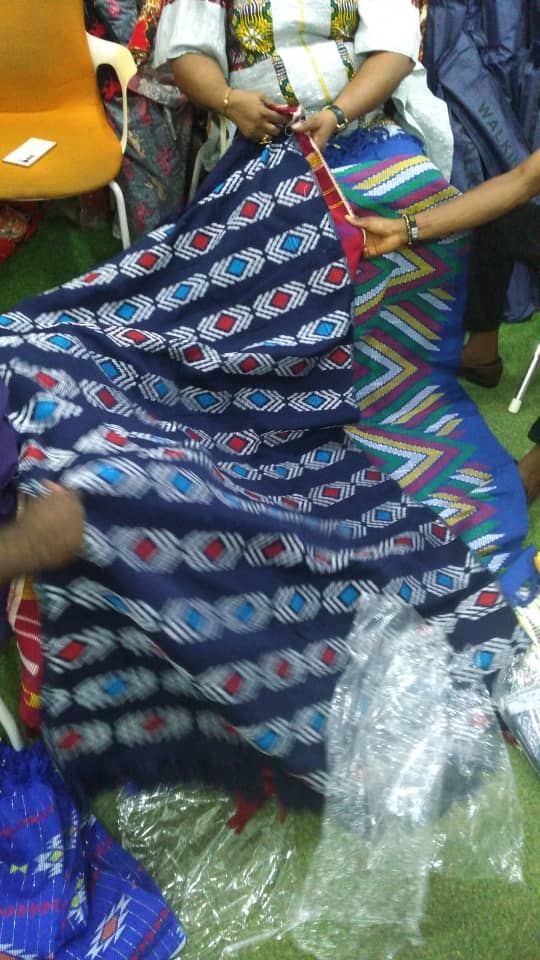
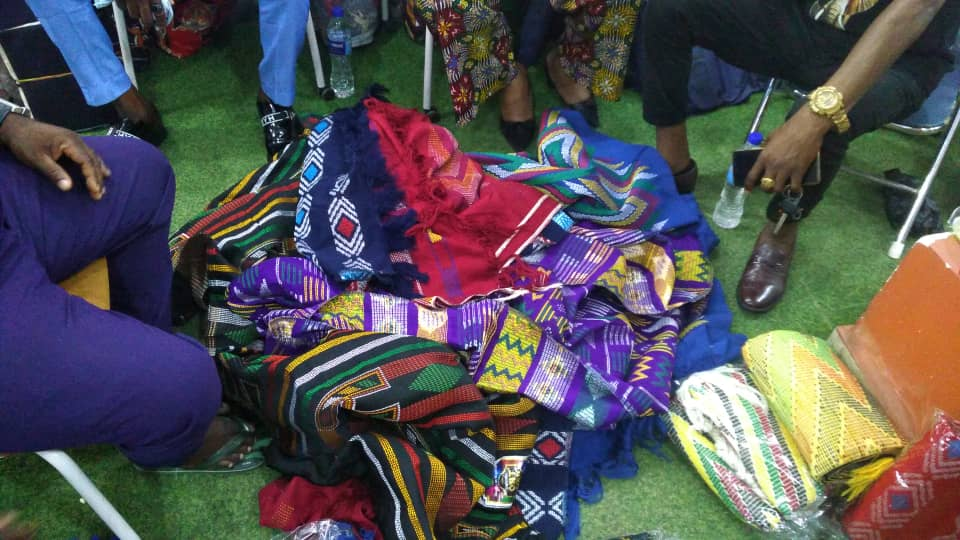
Henceforth, Asika has warned that the popular Igbo woven fabric, Akwete, is at risk of going extinct if its production process is not mechanised, to meet demands.
HISTORY OF AKWETE FABRIC
According to all community sources consulted by AlphaTimes, Akwete weaving is an industry owned by women only. Since the 15th century, the women of Akwete Ndoki have been weaving the cloths.
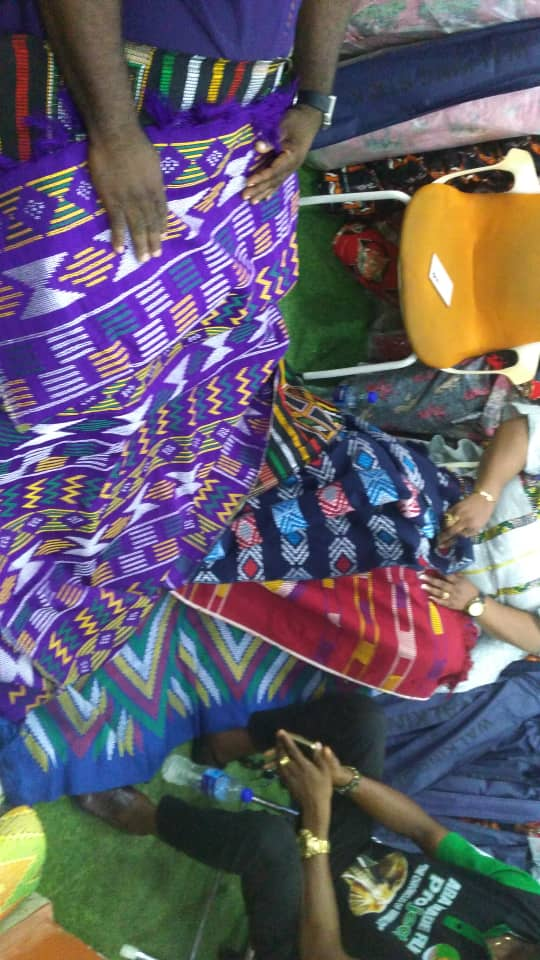
To them, fabric weaving is not rocket science. It is a feminine gift, an art that has matrilineal tradition dimensions, which must not be tampered with.
The community is so unique that the woven fabric made within it originated from its name, a very rare scene anywhere around the globe.
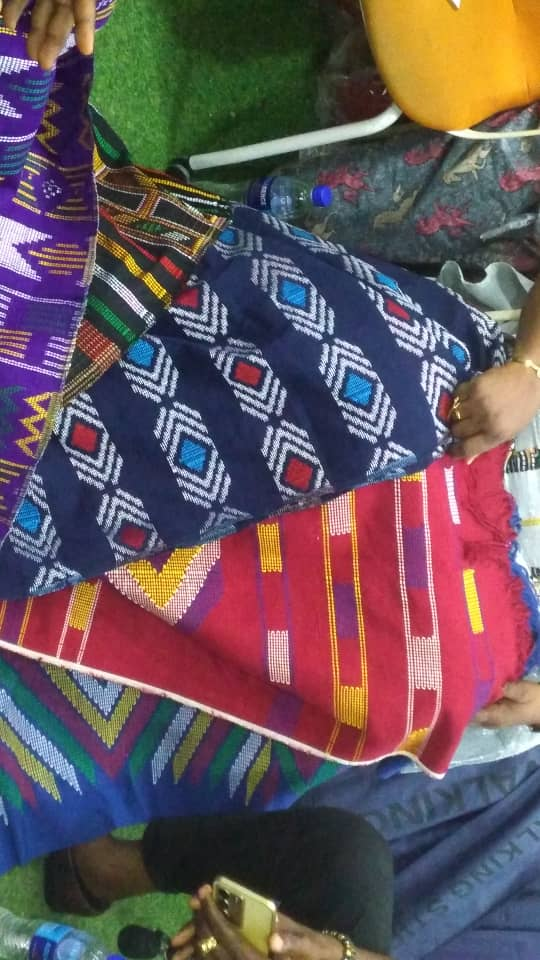
Akwete as a community is an agrarian, semi-riverine town in the Ukwa East Local Government Area of Abia State, occupied by the Ndoki clan of Igboland, whose kith and kin are also found in Rivers and Akwa-Ibom States.
The sources said that in the Akwete community, it is an abomination for a man to get involved in the cloth-weaving business, as it is traditionally gender-defined.
Giving the historical background of the Akwete weaving, the sources corroborated each other and said, “From the beginning, our people (men) were traders and fishermen because Akwete is a riverine town.
“Oral history told us that the cloth industry began around the 15th century, about 1485 or so, even before the British colonialists were said to have ventured into the interior.
“Akwete people supplied slaves to the British slave traders following contact with the Aro and others, but when the slave trade ceased, the challenge now was what next would the average Akwete man or woman do?
“The men, who acquired minimal literacy, took to improving their lives, while others kept their fishing businesses. Our women were left with the weaving of this cloth we’re talking about now.
“However, the weaving didn’t fall from the sky. There was a woman called Dada Nwakata, who initiated this local technology called Akwete cloth.
“The ancestors showed the vision of the Akwete cloth to Dada Nwakata in her dream. We were told that some men of that era who tried to venture into weaving were visited by the gods, and they stopped.
“In our own generation, we also avoid it so we don’t repeat history. In fact, as a little boy, the women may ask you to get this and that for them during weaving, but immediately you come to the age of knowledge, they’ll push you out of the scene.
“Men who tried to venture into it, even in distribution, but they didn’t do well. This is engraved in our belief system, and the men have that consciousness that weaving is not for them.”
The sources continued and said that they were born in Akwete, married in the town and started to weave at about 12 years old.
“We teach our daughters from childhood because we don’t joke with it. It’s a household business for all the girls and women.
“Dada Nwakata, who founded it, said she was shown the thing in a dream by our ancestors as women’s business, and it’s not what our men will dare to venture into.”
They said, “Akwete weaving is only for women. It’s a gender-defined job because it is in our tradition, just as Dada Nwakata was shown.
“We cannot leave it for men, and even the men will not even go into it because it will not sell in the market, and they know the other consequences.
“Many women in Akwete produce it. It’s not something you’ll begin to say we’re of, and that number is involved in making the cloth. All families do it as long as there’s a woman there.”
REASONS TO BE WORRIED
The traditional beliefs of the people, which are sacred to them, and the possibility of them losing out in the competitive market led to the worries of Asika.
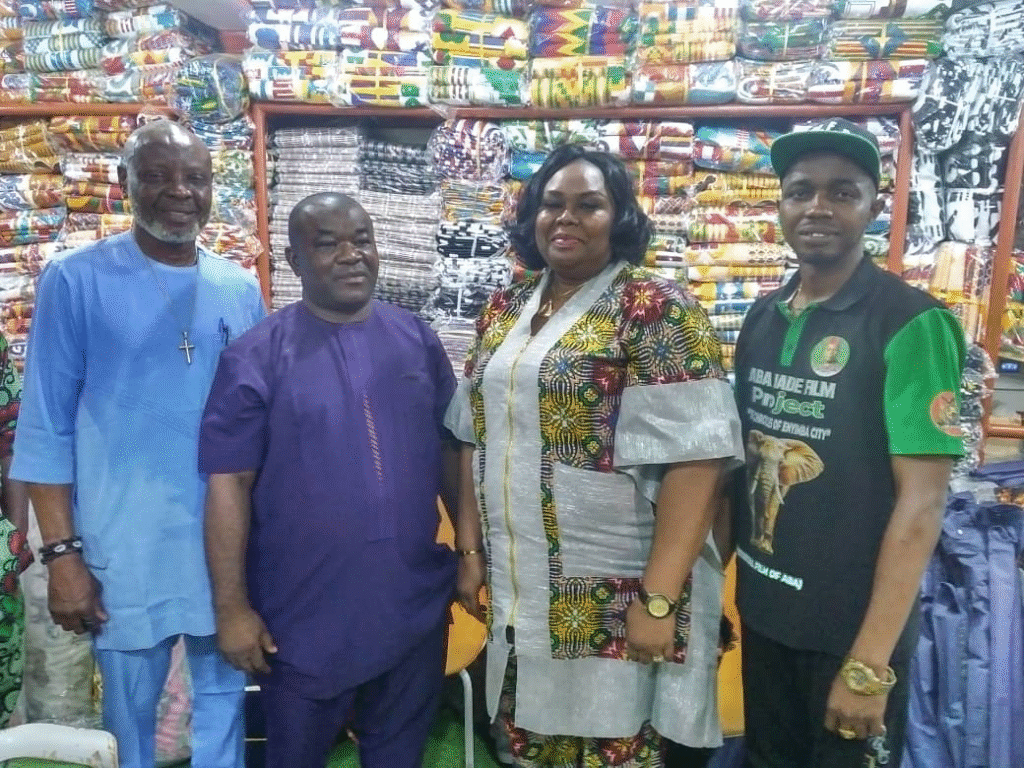
He had the opportunity to give the warning when a team from the Aba Made Film Project, led by the Associate Producer and Special Assistant to Governor Alex Otti on Art, Culture and Creative Economy, Hon. Matilda Chinonyerem Anyamele, paid him a visit in his office at Ariaria International Market.
AlphaTimes, present at the visit, reports that recently, the Aba Made Film Project, producers of the much talked about and expected international blockbuster docu-movie “Chronicles of Enyimba City”, appointed Fenico Global Resources Ltd, owned by Asika, as the “Native Wears Ambassador” of the soon-to-be-released movie.
By becoming the “Native Wears Ambassador” for the “Chronicles of Enyimba”, there is absolutely no way Akwete will not feature in the movie, as it remains the most revered native fabric of the Igbos and has its origin in an Ndoki community that is not up to 20 minutes’ drive from Aba.
Speaking during the visit, Asika said that inasmuch as the Akwete fabric makers are trying to protect their cultural and traditional heritage through weaving, they need to see the danger looming from foreign producers.
SOLUTIONS TO THE WORRY
Asika advised that to understand that there is danger of them going extinct following how similar handmade products, produced and imported from India, are sold at cheaper rates in many fabric markets across Nigeria.
“We can modernise this thing. What we need is to get a better environment for these people, get necessary modern machines for them, and call in experts to guide them on how to use the machines.
“Our local people here have the design idea, which is the most important creative skill needed. Even without machines, we can all see the beautiful things they’re making.
“Imagine when the machine is added, they’ll produce faster, better and cheaper quality products. They don’t need too much of an industrial machine.
“What they need are the moderate ones, so that they’ll be guided on and helped to enhance speedy production because this hand-making process, or weaving, is not allowing them to meet up with demands.
CALL FOR FABRIC WEAVING CLUSTERS
Asika further reiterated his warning that with the speed that the Indians are going, very soon, the Akwete people will be out of business.
“We know the ones made with hands and imported and the ones made with machines. There is danger. If we do nothing, very soon, Akwete will be out of business.
“The earlier they listen, the better for them. When you see an imported machine-made Akwete fabric that sells for N35,000 in this market, a similar size in our locally made is N80,000. It’s not something to joke with.
“Buyers can hardly differentiate between the two. Those who are placing the demands for these foreign products are here, and they want the best for their business.
“The inability to get these products in larger quantities led to the push for foreign manufacturers to help bring these ones in.
“If we have the machines here, the government can come in and use law to regulate the importation of these Akwete-like clothes. Machine production will reduce price and improve supply.
“The mentality of an average dealer is to make his money and get profit to improve his business. The producers must wake up because the dealers have options to buy from elsewhere.
For me, the government should build an Akwete fabric-making cluster, not just make it in homes. Within that cluster, let machines be placed in shades to help fast production.
“While that’s ongoing, the government should take them for further training on the usage of machines, the formation of designs, and the making of warps and looms.
“I was born into this business, and I have extensive ideas about this thing. If these steps are taken, success is achieved, and every other thing can be controlled.
“The local manufacturers are feeling the heat already because their sale strength is reducing, and we’re ready to partner with the government to see that we protect our heritage and make money with it as well.
“Even without a machine, we can partner with a thread company in China to supply them with as much thread as possible for weaving.
“This one is where I think government should come in urgently to help, even before mechanisation. Lack of funds to buy tools like thread is their major problem. Let the thread prices be reduced or subsidised for them.”
GOVT’S RESPONSE TO EXPERT’S CONCERNS
Hon. Matilda Chinonyerem Anyamele recognised that Akwete is a cultural thing that the community made to allow women only to get involved in the weaving process.
She, however, said that with the current looming danger of going out of business, it is high time they are revisited for proper sensitisation and orientation on what is currently happening in the fabric-making business.
“This issue has been a bone of contention for years, but it’s been difficult. You must be a woman born or married in Akwete or Ndoki generally.
“So, the last time I had a meeting with them, I suggested we find a way to open something like a skill acquisition centre or a school where we can get more children to learn this skill so that they can actually be doing it culturally before we can move ahead, but it led to arguments.
“I equally told them about educating people from other communities about it and not just Akwete people.
“These are the options I gave them. I’m sure the governor wants this thing to grow well and be a source of revenue to the state, but the community needs to understand this.”
Anyamele hailed the creativity and uniqueness of the fabrics made by Akwete women, tagging it as special and the best among the rest, but said that henceforth, efforts must be put in place to let them know that there is danger.
“If people can stay in faraway countries to make Akwete, it means that Akwete has already gained ground.
“If it means and requires going to their villages again to remind them that the world is already moving ahead of them, we need to do it to ensure that we get the right outcome.
“They need to see the dangers that this business is going out of their hands, and they need to sit up to meet what you dealers want. We cannot just watch our people lose out.
“We must plan how to meet the stakeholders there with you dealers together with the government and plan how to protect our heritage.”
NEED FOR PATENT ON AKWETE
Hon. Anyamele, while speaking further on the concerns of the dealer, suggested that there is also a need to have the name patented to give more ownership to the state.
“This is our indigenous fabric; we can’t just sit down and watch anybody take it away from us. In some states, even in the Middle Belt and many places, people are making Akwete, but I think we need to get a patent for this because every design our people have has a cultural meaning.
“We must maintain our own. Akwete has been there for ages. I love the ideas you’ve brought, but all will take time to be accomplished. However, we need to collaborate to build in them the need for changes.”
On the area of supplying thread at a subsidised rate, she added that before the government will come in, it needs to know that they have more hands in the community that will use the quantity to meet up with the demands. “So, supplying threads may not be the problem; labour may be the problem.”
She thanked and congratulated Asika for becoming an Ambassador of the Aba Made Film Project, which will help to tell our stories better to the whole world.
LINKING AKWETE TO CHRONICLES OF ENYIMBA CITY
Adding his voice, Mr Francis Ifeakandu, the producer of the “Chronicles of Enyimba City”, suggested that the Akwete indigenous weavers need to embrace changes or watch others dribble them in a game they are masters of.
“Obviously, time is gradually running out on them, following what is happening and coming in from other countries. Yes, they are wonderfully creative, but it’s theirs to sustain it or lose it.
“If we go to Akwete and show them what other countries are producing, I’m sure they’ll see why they should embrace new technology.
“If they don’t accept this new technology, I’m sure, with what I’m hearing here, they’ll be out of business.
“I love culture, and I respect it, but in protecting your cultural heritage, I don’t think there’s anything wrong in accepting a better way of improving what you’re doing, to produce more and maximise profit.
“We have concluded plans to feature Akwete in our movie, and it starts from the era of using rope, down to thread, and now to machines, and that’s evolution.
“So, we’re telling the story, and we need it to be on, as Akwete has been adopted as part of the story of Aba. So, they need to understand that people are thinking ahead.
“We need to sensitise them fast to see the reality on the ground. You cannot sit on the fence and do nothing when the danger of going extinct knocks at your door,” Ifeakandu advised.
END