By Paul Nwosu || AlphaTimes
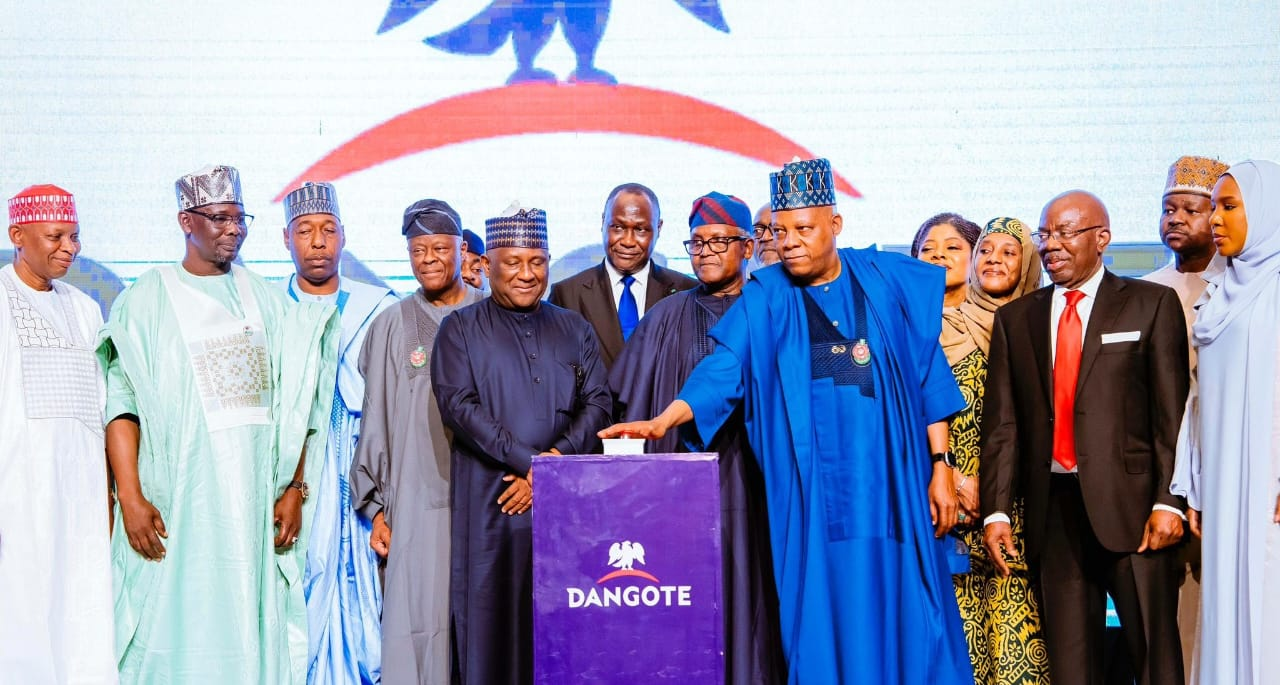
Nigeria’s richest industrialist, Aliko Dangote, has launched a landmark N100 billion-a-year education intervention, a decade-long commitment worth over N1 trillion, aimed at pulling more than 1.3 million young Nigerians back into the classroom.
Speaking at the launch in Lagos, Dangote said the initiative is designed to dismantle the financial barriers that keep millions of children out of school. Beginning in 2026, the programme will support 45,000 new students annually, climbing to 155,000 beneficiaries by year four and sustained for 10 years across all 774 local councils.
The scheme comprises four targeted programmes, with the flagship Aliko Dangote STEM Scholars funding 30,000 undergraduates in Science, Technology, Engineering and Mathematics across public universities and polytechnics each year. Another 5,000 students in technical and vocational institutions will receive tools, materials and training support under the Aliko Dangote Technical Scholars initiative, complementing the Federal Government’s new free-tuition TVET policy.
The Presidency hailed the project as the largest private education support programme in Nigeria’s history. Vice President Kashim Shettima, attending the launch, said the intervention aligns with the Federal Government’s human capital development drive, warning that “a population becomes a liability only when it is uneducated.”
He commended Dangote’s decision to dedicate 25% of his personal wealth to the Foundation, calling it a defining example of private-sector commitment to nation-building. State governors, represented by Lagos Governor Babajide Sanwo-Olu, also pledged full support.
Education Minister, Tunji Alausa, described the initiative as “pure human capital development,” saying it fits squarely into the Tinubu administration’s plan to transition Nigeria from a resource-based economy to a knowledge-driven one.
Dangote stressed that the programme targets the most vulnerable learners, insisting that financial hardship, not lack of talent, is at the root of school dropouts. He said progress will be reviewed in 2030 under the Dangote Group’s Vision 2030 strategy, with a focus on outcomes such as retention, completion and post-school impact.
“No nation can rise above the quality of education it offers its young people,” he said, a principle that, he added, has guided the Foundation’s three decades of work in health, nutrition, empowerment and humanitarian intervention.