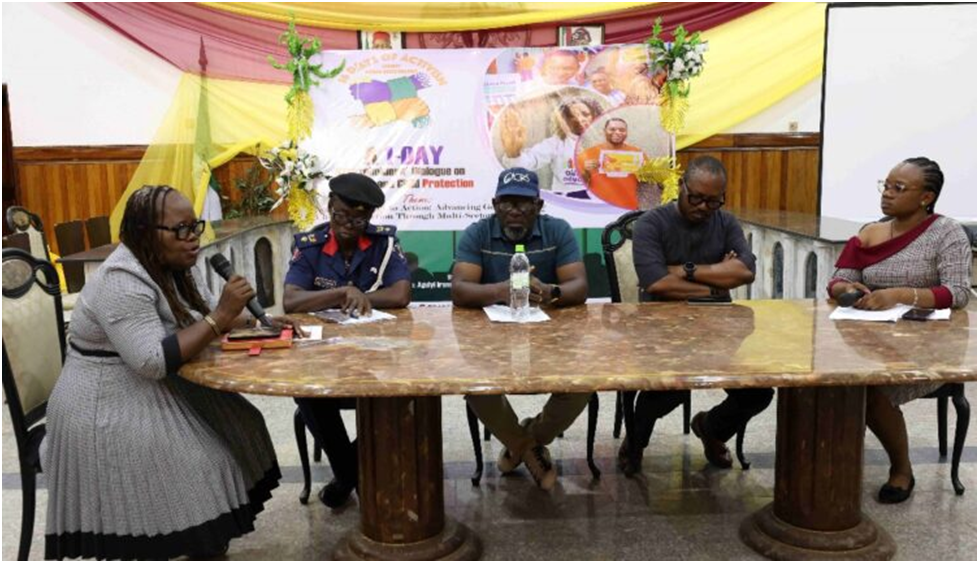
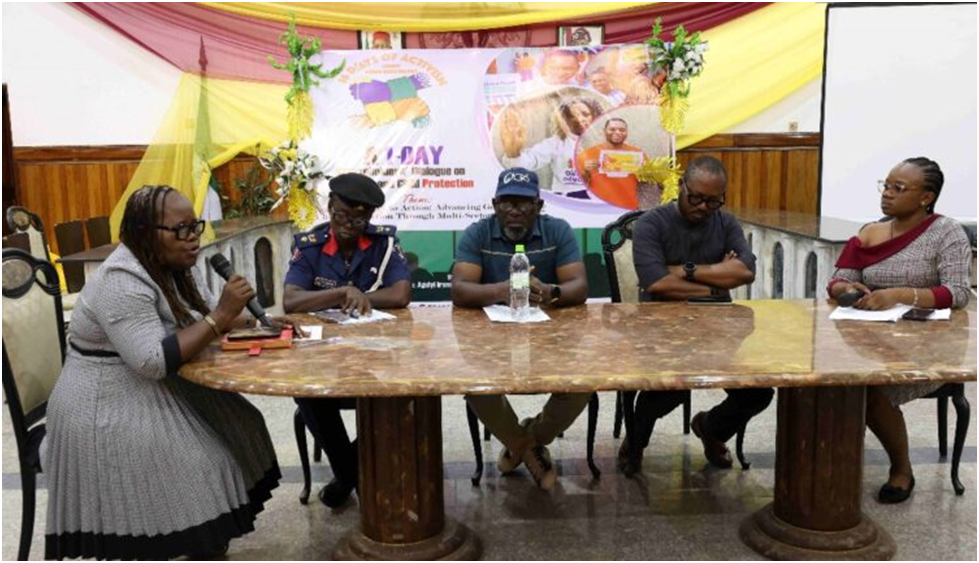
Caritas Nigeria, a faith-based organization dedicated to public health and social justice, has convened a Multi-Stakeholders Dialogue on Gender and Child Protection.
The event, organized as part of the 2024 global campaign for the 16 Days of Activism Against Gender-Based Violence, centered on the theme: “UNITE! Invest to Prevent Violence Against Women and Girls.”
In his opening remarks, the Abia State Team Lead of Caritas Nigeria, Dr. Chukwuemeka Amuta, underscored the urgent need to translate policies into tangible actions.
Speaking on the theme, “Moving from Policy to Action: Advancing Gender Justice and Child Protection through Multi-Sectoral Response,” Dr. Amuta emphasized the significance of the dialogue as a platform for fostering consensus among stakeholders. He urged participants to focus on identifying practical strategies to strengthen existing policies and laws addressing gender justice and child protection.
In his keynote speech, public health expert Dr. Charles Ukauwa delved into the pressing issues of gender-based violence and child abuse in Abia State.
Dr. Ukauwa highlighted the critical challenges faced in combating these societal ills, offering an insightful overview of existing legal frameworks and support systems. Among the mechanisms discussed were the Violence Against Persons (Prohibition) Act (VAPP Act), the Female Persons Right of Inheritance Law, and the roles played by key institutions such as the Nigeria Security and Civil Defence Corps (NSCDC), the National Agency for the Prohibition of Trafficking in Persons (NAPTIP), the judiciary, and civil society organizations.
These initiatives, he noted, underscore the importance of a collective approach in addressing the pervasive issues of abuse and ensuring the protection of vulnerable groups.
Dr. Ukauwa again noted that despite commendable efforts, significant gaps persist in the enforcement and coordination of responses to gender-based violence (GBV).
He stressed the urgent need for reforms to strengthen legal and institutional frameworks.
Highlighting critical areas of concern, He called for the establishment of forensic centers to enhance evidence management, the creation of specialized courts to expedite GBV cases, and the development of effective referral centers for prompt intervention in cases of violence.
He emphasized the need to address cultural norms through comprehensive legal, policy, and behavioral change initiatives, while advocating for a redefinition of the Ministry of Women Affairs to enhance its effectiveness and impact.
He further highlighted the pivotal role of families, religious and traditional institutions, as well as the hospitality industry, in advancing gender justice and supporting child protection efforts.
During the panel discussions, stakeholders underscored the importance of establishing a functional and well-coordinated state response to tackle gender-based violence and safeguard children’s rights.
The President of the International Federation of Women Lawyers (FIDA) Abia State Chapter, Barr. Akudo Amanamba, in her submission, she expressed concern over the reluctance of survivors of Gender-Based Violence (GBV) to pursue justice. She attributed this hesitancy to the fear of stigma and the absence of adequate support systems to assist survivors in their quest for justice.
Echoing these concerns, the Executive Director of Rural Development Planners (RUDEP), Mr. Richard Okoro, criticized the government for its lack of commitment to tackling GBV and child protection issues. He highlighted the absence of emergency shelters for survivors as a glaring gap, emphasizing the need for measurable actions to address these pressing challenges.
The dialogue concluded with a resolute call to action, as stakeholders underscored the urgency of implementing existing laws, including the Violence Against Persons Prohibition (VAPP) Act and the Female Inheritance Law. They stressed the importance of creating safe spaces for survivors of gender-based violence (GBV) and enhancing the quality of public education as a preventive measure.
Participants highlighted the need to empower women and girls through education and economic opportunities, while actively engaging religious and traditional leaders to challenge harmful cultural norms. They also emphasized that survivors of GBV must remain at the forefront of all response mechanisms to ensure their voices and experiences shape effective solutions.
Caritas Nigeria has set the stage for a renewed commitment to tackling the pressing challenges of gender-based violence (GBV) and child abuse in Abia State. With actionable outcomes identified during its recent event, the onus now lies on the government, civil society, and other stakeholders to transform these discussions into tangible and impactful change.
As the lead implementing partner providing comprehensive HIV treatment and care services in Abia State under the CDC/PEPFAR program, Caritas Nigeria has made significant strides in combating gender-based violence. Through its dedicated gender program, the organization has provided post-GBV care to over 2,500 survivors, addressing their critical needs for safety, recovery, and reintegration.