Why Anambra Needed a New Identity
By Paul Nwosu PhD || AlphaTimes
But the new administration reasoned that the strategic sequence of governance it had designed for itself could only work better if it had a people with the right civic culture and attitude to support and sustain the emerging style of governance.
For Anambra State to realise this vision in the long run, it was considered necessary that Ndi Anambra should, as much as possible, begin to appreciate the need to consciously share and imbibe common values as a people. Such shared values would enable the administration, and indeed any future administration, to plant the seeds of good governance and, ultimately allow the people to enjoy a bountiful harvest of its fruits for their common good.
In other words, it was important, perhaps for the first time, to intentionally shape and manage the collective mindset of the people so that they could positively embrace the values that would be introduced as a consequence of State rebranding.
If the people were key to this entire matrix, what then should be done?
The first step could not be by coercion. You do not begin by forcing people to reform their character, attitudes and established patterns of interpersonal relationships, especially in a democracy. And given that “Change” is inherently difficult, it became necessary to evolve a set of persuasive messaging strategies, expressed through normative symbols and narratives, that could serve as communication pathways and veritable touch-points that could be imparted and gradually assimilated by every citizen.

These messages, symbols and narratives were designed to be taught repeatedly, gradually understood and, over time, internalised by citizens in a sustainable manner until they could proudly take ownership of them.
Once understood and accepted, these shared values would gradually become a template for the attitudinal and behavioural code that would distinguish an Onye Anambra from the rest of his or her fellow compatriots. These values would, in effect, become an intrinsic badge of honour, a set of characteristics through which anyone could identify an Onye Anambra wherever they might be found.
The administration therefore chose to pursue this objective through the Rebranding of the State, even though Anambra already carried the powerful sobriquet, “Light of the Nation.”
The idea was not simply to create a new logo or cosmetic identity. It was to develop a comprehensive set of brand assets and tangible touch-points with which Ndi Anambra could connect psychologically and emotionally. These would become elements of identity that every citizen could relate to, take pride in and recognise as expressions of what it means to be an Onye Anambra.
The brand collaterals were also intended to leverage the people’s sense of self-esteem and dignity among their fellow compatriots, while encouraging them to conduct themselves in ways that would bring glory and fame to their State, rather than gloom and shame.
Consequently, the administration invited reputable brand management firms from across the country to pitch for the assignment. At the end of the process, Brande Aristotle Ltd, led by Tony Odili Ujubuonu, alongside his partner, late Mike Obiajulu Meze, emerged as the preferred firm. The company would later become known as Brande Aristotle/Winning Concepts.
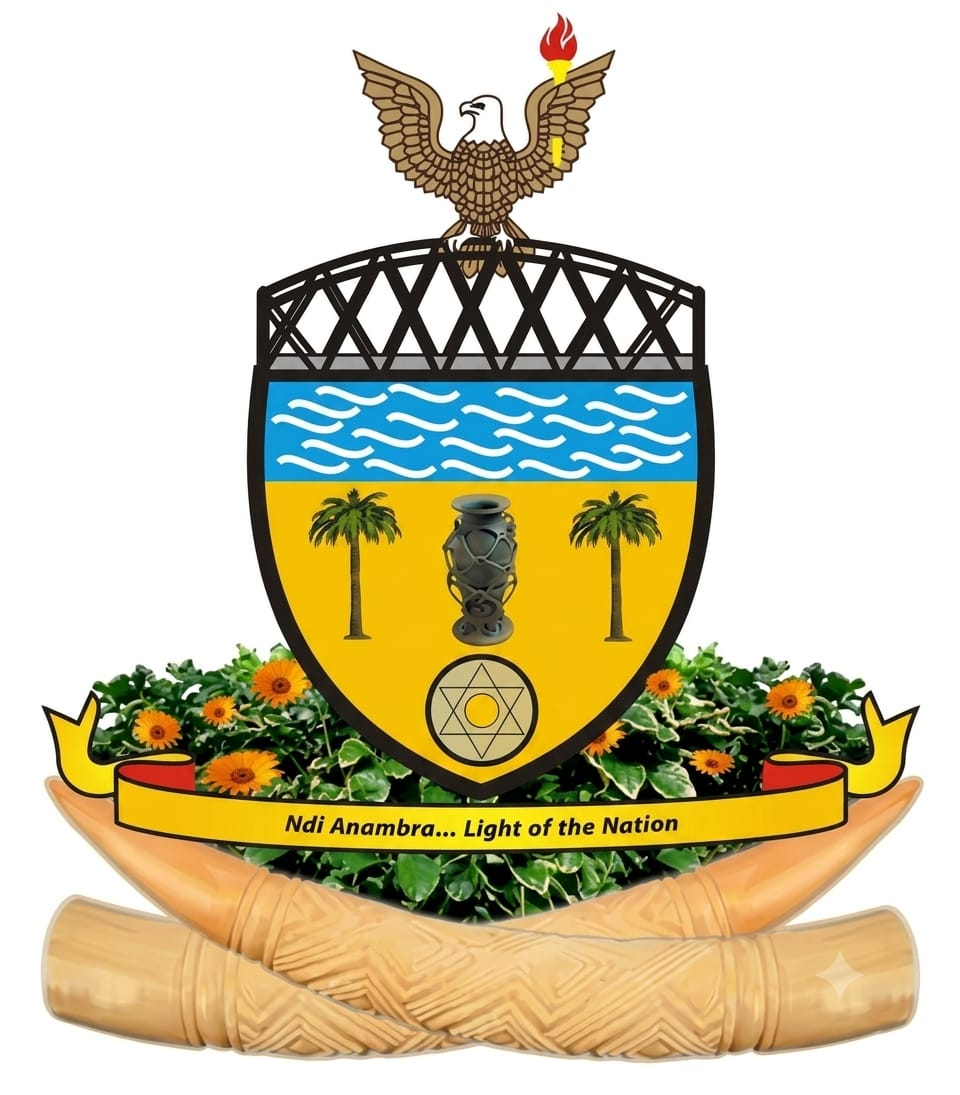
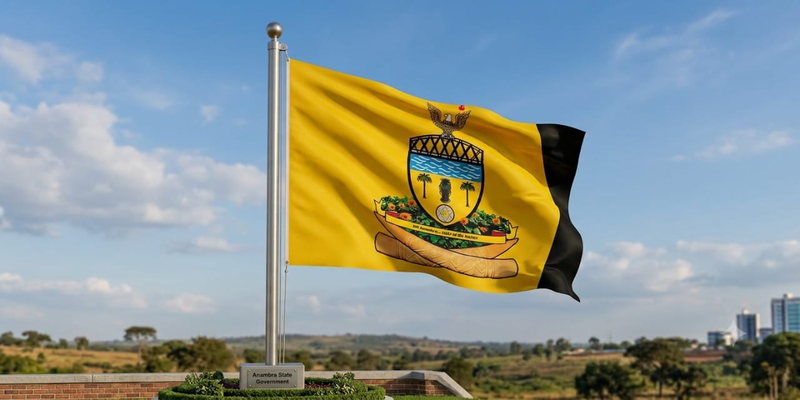
Following a series of subsequent presentations and meetings aimed at reviewing and fine-tuning the creative concepts, the firm eventually developed the major elements of the new State identity. These included the Anambra State anthem, the Anambra State logo, the Anambra State Government logo, the State flag and the State colours. The State anthem was personally composed by Ujubuonu, the Anambra-born award-winning novelist.
But the exercise did not end with the creation of these visual and symbolic elements. The administration went further by identifying ten Shared Values, which eventually became known as the ANAMBRA CREED.
All these elements – the anthem, logos, flag, colours and the ten Shared Values were subsequently sent to the Anambra State House of Assembly for approval and passage into law.
Thus began a conscious journey to intentionally shape a shared civic culture that would influence attitudes and behaviours, and give Ndi Anambra a common identity around which they could collectively build a better State.
The ultimate motive was clear: to make the identity of Anambra not merely something displayed on government documents, buildings or official occasions, but something lived and expressed by its people. A emblem of pride that would make the phrase “Onye Anambra” mean something distinctive wherever it was encountered.
(To be continued tomorrow)