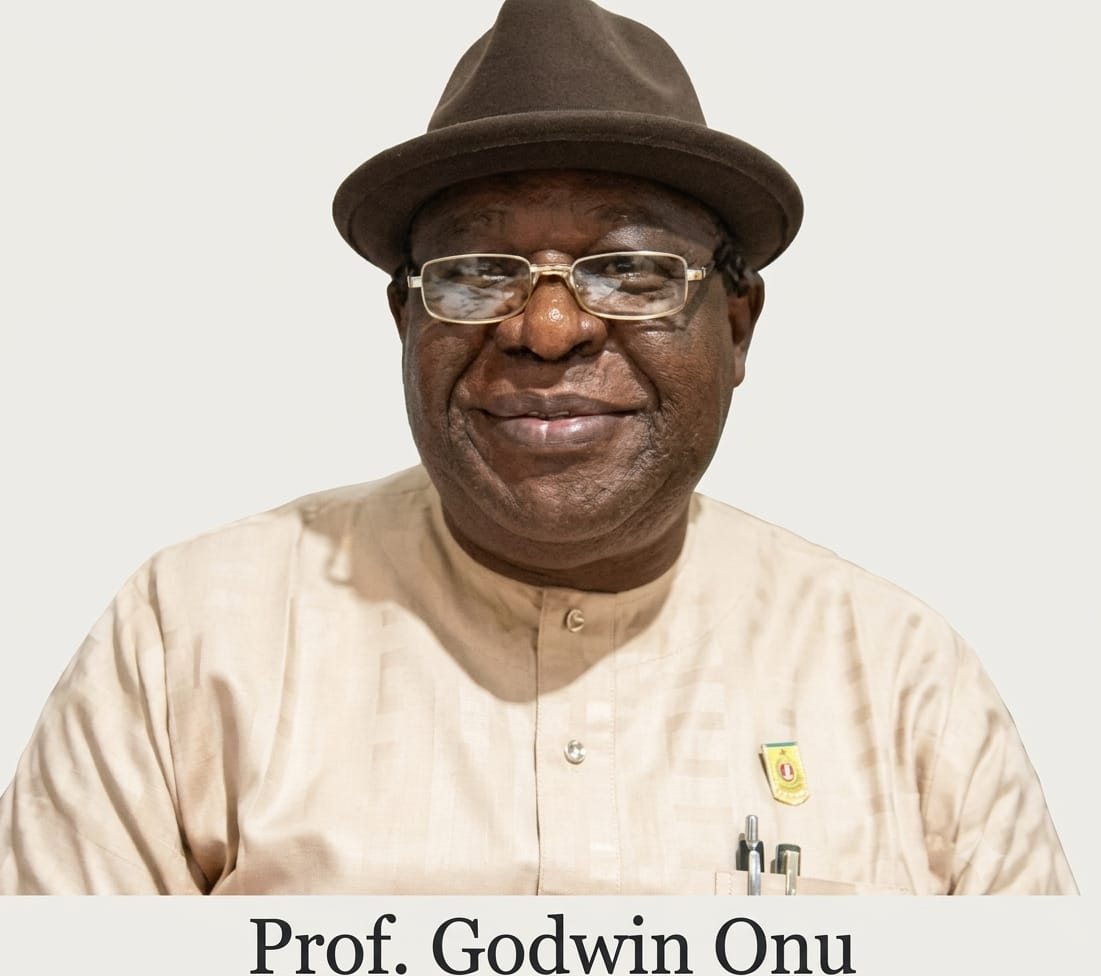
By Prof. Godwin Onu
When Professor Chukwuma Soludo assumed office, he inherited a state standing at a crossroads. Swept into power on a wave of popular expectations, he promised to transform Anambra into the “Dubai and Taiwan” of Africa, anchored on the vision of a “Digital Anambra” and a futuristic “Silicon Valley.”
Today, however, that grand vision appears increasingly disconnected from the realities confronting citizens across the state. What should be a story of transformation is being overshadowed by deteriorating infrastructure, worsening environmental challenges and growing concerns about the state’s capacity to protect the lives and welfare of its people.
A State-Wide Outcry: The Geography of Neglect
Across the three senatorial districts, citizens are increasingly confronted by deteriorating roads, failing drainage systems and projects whose durability has come under serious question. Roads constructed or rehabilitated under the administration are, in some places, showing signs of rapid deterioration after heavy rains, raising questions about engineering standards, supervision and contractor performance.
In Orumba North and Orumba South, communities face the persistent threat of being cut off by unchecked gully erosion and deteriorating arterial roads.
In the Idemili axis, particularly Oba and Obosi, vital commercial corridors have become increasingly difficult to navigate, with potholes, deep craters, mud and flooding disrupting movement and economic activity.
Across Njikoka and Idemili South, including Abagana and Nnobi, strategic transit routes are also deteriorating, turning ordinary journeys into hazardous experiences.
Even the state’s major commercial and administrative centres, Nnewi, Awka North, Awka South and Anambra East and West, are not insulated from the crisis. The state capital itself continues to grapple with blocked drainage channels, flooding and concerns over the quality and durability of some road projects.
The Ultimate Indictment: Human Life
The gravest consequence of infrastructure failure is not the damage to vehicles, loss of business or inconvenience to commuters. It is the loss of human life.
The recent tragedy in Awka South, where a school shuttle bus became trapped in floodwaters, has brought this reality into painful focus. Six-year-old Success Ezenwafor reportedly lost his life after displaying extraordinary courage by breaking a window of the submerged vehicle, helping classmates and adults escape.
The tragedy raises fundamental questions about governance and public safety.
Where is the disaster-response infrastructure? In emergencies, citizens should not have to depend almost entirely on the courage and quick thinking of bystanders.
Where is the basic civil engineering? When drainage infrastructure in a state capital becomes so overwhelmed that vehicles, and ultimately human lives, are endangered by floodwaters, serious questions must be asked about urban planning and flood-control systems.
Where is the duty of care? Government has a fundamental obligation to provide safe roads, effective drainage and an environment in which citizens can live and move without avoidable risks.
Systematic Administrative Breakdown
There is also a troubling disconnect between revenue collection and the quality of public services delivered to citizens.
While government enforcement agencies such as ARTMA continue to enforce traffic and related regulations, citizens understandably expect the revenues generated by government to translate into better roads, safer public spaces and improved infrastructure.
There is equally a growing gap between the administration’s ambitious economic rhetoric and the everyday realities of governance. References to “Silicon Valley” and a digitally transformed Anambra mean little to a citizen struggling through a flooded road, a collapsing drainage channel or a dangerous pothole.
The challenge is not the absence of lofty ideas. It is the translation of those ideas into tangible improvements in the lives of ordinary people.
Rather than responding to legitimate public concerns with explanations and excuses, the administration must confront the problems directly, identify failures and accept responsibility where necessary.
Call to Immediate Action and Accountability
The situation demands urgent and structural intervention. First, the Commissioners for Works and Environment should be called to account for the state of road infrastructure, drainage and flood-control projects under their supervision. Where there has been demonstrable failure of responsibility, their continued retention in office should be seriously reviewed.
Second, the government should declare a state of emergency on roads and drainage, particularly in flood-prone and erosion-affected areas. Superficial patching should give way to properly engineered roads, functional drainage systems and durable flood-control infrastructure.
Priority attention should be given to affected communities in Orumba North and South, Awka North and South, Nnewi, Oba, Obosi, Abagana and Nnobi, among others.
Most importantly, Governor Chukwuma Soludo must move beyond promotional rhetoric and confront the realities on the ground. The people of Anambra deserve transparency in the management of public resources, competent project execution and, above all, a government that places the safety and welfare of its citizens at the centre of governance.
The real measure of government is not the grandeur of its promises but the safety of its people, the quality of its infrastructure and the dignity of everyday life.
That is where the true test of the Soludo administration lies.
*Prof Onu teaches political science at Nnamdi Azikiwe University, Awka.