OPINION
By Polycarp Onwubiko
One of the recurring challenges with public policies borrowed from advanced countries and implemented in Nigeria is that they are often domesticated in ways that undermine their original objectives. While the policies themselves may be laudable, certain modifications introduced during implementation frequently diminish their effectiveness and ultimately shortchange the intended beneficiaries.
The Anambra State Health Insurance Agency (ASHIA) presents a compelling example. The agency was established to expand access to affordable healthcare, particularly for low-income earners, public servants, pensioners and other vulnerable members of society. However, some aspects of its implementation have raised legitimate concerns about whether the programme is fulfilling its social welfare mandate.
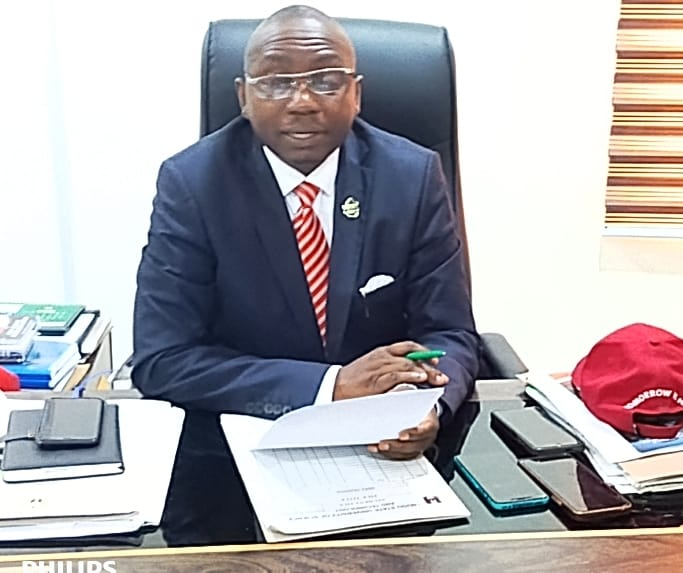
Governor Chukwuma Soludo, in keeping with his administration’s policy of periodically renewing public institutions through leadership changes in line with the APGA philosophy of “Onye aghana nwanne ya,” recently appointed Dr. Augustine Ezeka as the new Managing Director of ASHIA.
Shortly after assuming office, Dr. Ezeka announced the resumption of enrolment into the Basic Healthcare Provision Fund (BHCPF) programme across the state. According to him, 329 Primary Healthcare Centres have been designated for the exercise, and eligible residents were encouraged to enrol at the centre nearest to them. He also reaffirmed ASHIA’s commitment to expanding access to quality and affordable healthcare as part of the state’s drive towards achieving Universal Health Coverage.
This presents an appropriate opportunity to draw Governor Soludo’s attention to what many consider an unjustifiable aspect of the scheme—the refusal of ASHIA to fully cover certain categories of treatment, particularly surgical procedures and prescribed eyeglasses, on the grounds that they exceed the agency’s approved financial ceiling.
Given Governor Soludo’s commitment to policies that promote “the greatest good for the greatest number,” it is necessary to review this limitation. Good healthcare is not merely a social service; it is an investment in human productivity, economic growth and social development.
The argument that certain treatments are too expensive to be covered defeats the very purpose of a government-backed health insurance programme. If essential treatments prescribed by qualified medical professionals are excluded because of cost, then the scheme falls short of its objective of protecting citizens from catastrophic healthcare expenses.
Governor Soludo has already demonstrated remarkable commitment to the health sector through the recruitment of additional healthcare personnel, the strengthening of health facilities and the provision of free antenatal care and delivery services. It would therefore be consistent with this progressive healthcare agenda for the government to extend the scope of ASHIA’s coverage to include all medically necessary treatments, including surgical procedures, prescribed medications, laboratory investigations and eyeglasses.
The probability that every registered member will require expensive treatment within the same year is extremely low. This is the very principle upon which health insurance operates. Annual premiums paid by enrollees, complemented by adequate government budgetary support, should provide sufficient resources to cover the healthcare needs of those who eventually require treatment.
Indeed, in countries where health insurance systems function effectively, governments substantially subsidise healthcare through budgetary allocations rather than relying solely on premiums paid by enrollees. Health insurance is fundamentally a social protection programme, not a revenue-generating venture.
Unfortunately, patients continue to encounter situations that contradict this philosophy. One particularly disturbing example involved a woman at an ASHIA-designated eye hospital who broke down in tears after being informed that she would have to pay about ₦80,000 for eyeglasses prescribed by her doctor because ASHIA does not cover them. Similar complaints have been made regarding certain surgical procedures that patients must finance themselves despite being registered under the scheme.
Such experiences raise fundamental questions. What is the true purpose of government health insurance? Is it primarily intended to generate revenue or to protect the poor and vulnerable from the financial burden of illness?
Surely, this was not the vision of former President Olusegun Obasanjo when Nigeria adopted the health insurance model inspired by successful systems elsewhere, including South Africa. The objective was to make quality healthcare accessible and affordable for ordinary Nigerians, not to deny beneficiaries essential treatments because of cost limitations.
If annual contributions by enrollees produce surpluses after claims have been settled, such funds should not become an additional revenue source for government. Rather, they should be reinvested into the scheme to expand treatment coverage, improve services and ensure that beneficiaries receive all medically necessary care prescribed by healthcare professionals.
Healthcare remains one of the most fundamental responsibilities of government. A health insurance programme that excludes essential components of treatment risks defeating the very purpose for which it was established.
As Dr. Augustine Ezeka begins his tenure at ASHIA, this is an opportune moment for a comprehensive review of the agency’s benefit package. Such reforms would strengthen public confidence in the scheme, advance Governor Soludo’s healthcare vision and bring Anambra State closer to achieving genuine Universal Health Coverage, where no citizen is denied necessary treatment simply because they cannot afford to pay.