By Ikpechukwu Ojobor
Senator Victor Umeh has called on governors of the Southeast to move beyond individualism and pursue genuine regional cooperation that would drive development across the zone.
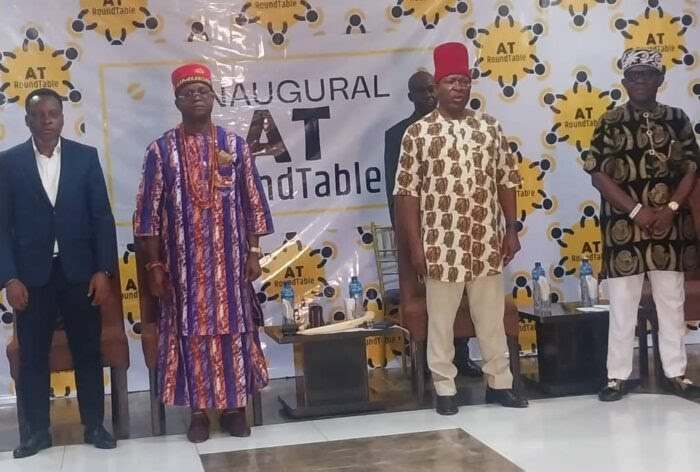
The lawmaker representing Anambra Central made the call on Thursday in Awka while chairing the maiden edition of the Alpha Times Roundtable. The event, convened by former Anambra State Commissioner for Information, Mr. Paul Nwosu, marked the formal transition of Anambra Times into Alpha Times, a media outfit now repositioned to cover the entire Southeast region.
Addressing participants, Umeh said it was time for governors of the five Southeastern states to come together to revive moribund industries and build new ones, in order to create employment for the region’s growing youth population.
He applauded President Bola Tinubu for setting up the Southeast Development Commission and for appointing individuals he described as capable and visionary to steer its affairs. But he insisted that the real responsibility for the zone’s progress lies with the governors.
“There is an urgent need for the governors of the Southeast to take the bull by the horns by driving development programmes, including security, in areas where they have a comparative advantage and in a cooperative manner, instead of pursuing individualism and competing among themselves on who is the best performing,” he said.
Umeh reflected on the region’s history of industrial greatness and challenged current leaders to reignite that legacy.
“I’m here to be part of the discourse about how we can ensure collaboration in the zone. We can say that the Southeast is not where it should be. In 1964, we were branded as the fastest-growing economy in the world because of the ingenuity of the Igbo people, and the industrialisation policy was top-notch.
“That was when most of the industries you see today were built. In hospitality, we had chains of hotels, and in agriculture, we were the best, and the Southeast was the development corridor of the world,” he recalled.
He stressed that the zone had no reason to lag behind, given the entrepreneurial spirit of its people.
“We should not be waiting for anyone to make the Southeast an industrial cluster because we have the ingenuity. I challenge our governors. They are supposed to lead the quest for industrialisation; that was what M.I. Okpara did.
“All the industries built by Okpara have all died. What are the governors doing to revive them? Our people are very ingenious; we are very creative. If we are talking about industrial parks, let them come alive. If it is in Nnewi, let us see those industries. Roads are not the only things we need; we need industries to engage our people. We want to see what happened in Japan happen here.
“I’m in the Senate, and people are coming to ask for white-collar jobs, but we know that people can acquire skills that can help them be useful. Small and medium-scale industries are what helped to boost China and Japan. When you aggregate what everyone is doing, it boosts the economy of the zone,” Umeh said.
On his part, Dr. Paul Nwosu, publisher of Alpha Times, explained that the roundtable was designed to deepen conversations on how states in the region can work more closely together to unlock the Southeast’s full potential.
He said the rebranding of the newspaper was inspired by a desire to give the region a credible voice that truly reflects its strengths and aspirations.
“While the federal government rightly pursues regional integration through development commissions, the states within the Southeast can—and indeed must—collaborate more deliberately and strategically, building on their respective strengths and comparative advantages. Such collaboration is not only desirable, it is imperative and promises a win-win outcome for the entire region,” Nwosu said.
He lamented the region’s often negative portrayal in the national media and vowed that Alpha Times would offer a fresh, more balanced narrative.
“The Southeast is a region flowing, literally and metaphorically, with milk and honey. It is economically vibrant, politically aware, socially engaging, and culturally profound. Yet, when it comes to national media focus, our region is either ignored or unfairly framed in negative stereotypes.
“The rebranded Anambra Times intends to change that narrative. It will be a regional voice of substance and nuance, celebrating our people, telling our stories, and amplifying our potential,” he stated.